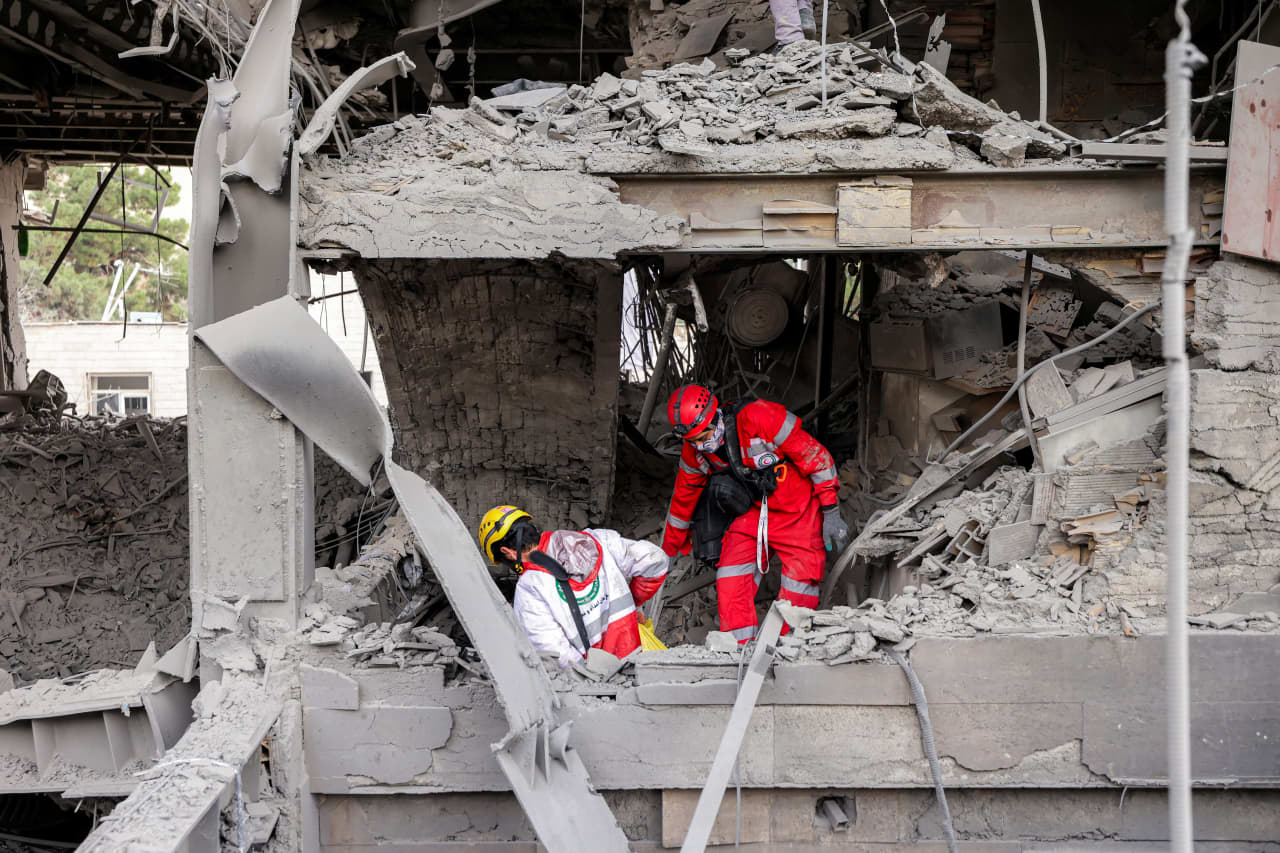
NEW YORK, NY – October 27, 2024 – Global financial markets are facing severe turbulence as the conflict in Iran enters its fifth week, with U.S. stock index futures plummeting and crude oil prices soaring in Sunday trading. This sharp reaction follows significant losses on Wall Street on Friday, indicating a growing realization among investors that the economic repercussions of the protracted conflict are likely to be far more enduring and impactful than initially anticipated. The persistent geopolitical instability is forcing a stark re-evaluation of risk across asset classes, with energy markets bearing the immediate brunt of the crisis.
Unpacking the Crisis: Geopolitical Tensions and Market Volatility
The current market upheaval is directly linked to the escalating military engagement in Iran. Initially, many market participants had discounted the conflict's long-term economic implications, operating under the assumption of a contained and relatively brief disruption. However, with the conflict showing no signs of abating and indeed, appearing to widen in scope, that complacency has dissolved. The region's critical role in global energy supply chains means that any prolonged instability inevitably sends shockwaves through commodity markets, translating quickly into broader economic anxieties. This mirrors historical patterns where Middle Eastern conflicts have consistently led to periods of heightened oil price volatility and broader market uncertainty, dating back to the 1973 oil crisis.
Key Market Movements and Economic Indicators
Early Sunday trading saw S&P 500 futures down 1.8%, while Dow Jones Industrial Average futures dropped by 1.6%. The technology-heavy Nasdaq 100 futures experienced an even steeper decline, falling 2.1%. Concurrently, West Texas Intermediate (WTI) crude futures surged 3.5% to over $98.00 per barrel, and Brent crude, the international benchmark, jumped 3.2% to above $103.50 per barrel. These figures represent a significant upward revision in risk premium associated with energy supplies, reflecting fears of potential supply disruptions from a region that accounts for roughly 20% of global oil production. Gold, typically a safe-haven asset, also saw an increase of 1.1%, trading around $2,080 per ounce.
Broader Economic Repercussions and Sectoral Impact
The persistent rise in oil prices is a significant headwind for global economic growth, threatening to reignite inflationary pressures that central banks have struggled to tame. Sectors highly dependent on energy, such as transportation, manufacturing, and consumer discretionary, are particularly vulnerable. Airlines, logistics companies, and automotive manufacturers face increasing operational costs, which will likely translate into higher prices for consumers or narrower profit margins. Conversely, energy companies, particularly those involved in oil and gas extraction and refining, may see short-term gains, although the overall uncertainty can depress investment. The prospect of sustained high energy costs also dampens consumer spending power, posing a risk to retail and services sectors.
Expert Insights on the Protracted Conflict
Financial analysts are largely in agreement that the market's initial optimism was misplaced. "The market was pricing in a quick resolution, but we're now seeing the full reality of a protracted conflict unfold," stated Dr. Evelyn Reed, Chief Global Strategist at Zenith Financial Group. "The supply-side shocks from the Middle East are structurally inflationary and will force central banks to maintain a hawkish stance for longer, or even consider further rate hikes, increasing the risk of a global recession." Another notable voice, Mr. David Chen, Head of Commodities Research at Quantum Analytics, emphasized, "The geopolitical risk premium in oil is no longer a temporary blip; it's becoming embedded in pricing, reflecting genuine fears of widespread supply disruptions and regional instability reaching critical energy infrastructure."
Looking Ahead: Navigating the Uncertainty
The immediate future hinges critically on the trajectory of the conflict. Markets will be closely monitoring any diplomatic efforts, military escalations, or developments related to shipping routes through the Persian Gulf. Investors are advised to prepare for continued volatility and potentially significant portfolio reallocations. Key indicators to watch include inventory levels of crude oil, global demand forecasts, and statements from major oil-producing nations. Central banks will face immense pressure to balance inflation control with supporting fragile economic growth. The ongoing crisis underscore a heightened period of geopolitical risk, demanding agile and cautious strategies from investors and policymakers alike. The coming weeks are expected to reveal whether the world's major economies can absorb these persistent shocks without tipping into a deeper downturn.