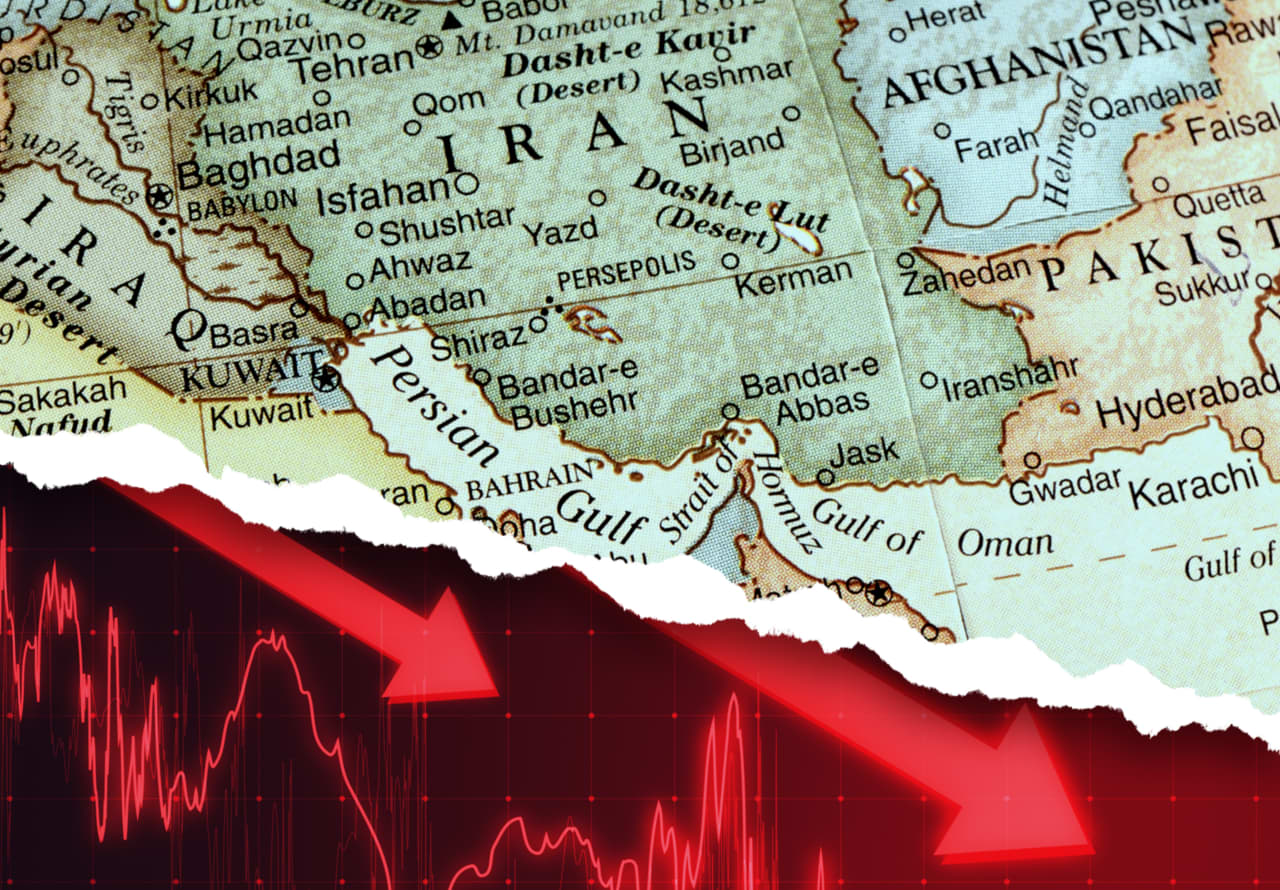
London, UK – October 26, 2023 – A mere four weeks after the initial eruption of hostilities in Iran, global financial markets are increasingly demonstrating acute signs of strain, presenting a formidable challenge for investors seeking stability. The ongoing geopolitical turmoil, marked by escalating tensions and unpredictable outcomes, has triggered a broad-based repricing of risk assets, leading to a palpable sense of anxiety across equity, commodity, and currency markets worldwide. This pervasive unease underscores the interconnected nature of global finance and the far-reaching economic consequences of regional conflicts.
The Unfolding Crisis and Its Historical Echoes
The current market turmoil is not merely a transient blip but rather a profound reaction to an escalating situation with significant geopolitical implications. The conflict, centered in a region vital for global energy supply, has immediately drawn parallels to historical oil shocks of the 1970s and early 1990s, when geopolitical events in the Middle East led to severe global economic downturns. While the global economy is arguably more diversified today, the foundational reliance on Gulf oil remains a critical vulnerability. The specter of supply disruptions and inflationary pressures casts a long shadow over an already fragile post-pandemic recovery.
Key Indicators of Market Distress
The impact of the Iran conflict is manifesting through several key financial indicators. Benchmark Brent Crude futures have surged by over 18% since the conflict began, breaching the $95 per barrel mark, a level not seen consistently in over a year. This sharp rise in energy costs is directly fueling inflationary pressures globally, complicating the monetary policy decisions of central banks already grappling with persistent price increases. Concurrently, major equity indices have experienced significant corrections; the S&P 500 has shed nearly 7% in the past four weeks, while Europe's Euro Stoxx 50 is down by almost 8.5%. Safe-haven assets, while initially benefiting, are now seeing increasing volatility, with gold prices rising over 10% to approximately $1,980 per ounce, but government bond yields also fluctuating dramatically as investors weigh inflation against recession fears. The CBOE Volatility Index (VIX), often called the market's 'fear gauge,' has spiked above 25, indicating heightened investor anxiety.
Broad-Based Economic Repercussions
The ripple effects of this market distress are extending far beyond financial trading floors. Industries heavily reliant on energy, such as manufacturing, transportation, and aviation, are facing significantly increased operating costs, threatening margins and potentially leading to price increases for consumers. Consumer spending, a critical driver of economic growth, is at risk of contraction as discretionary income is eroded by higher prices for fuel and essential goods. Furthermore, the uncertainty is prompting businesses to delay investment decisions, which could stifle long-term economic expansion. Supply chains, still recovering from pandemic-era disruptions, are bracing for potential new bottlenecks and increased shipping costs.
Expert Outlook: Navigating Uncharted Waters
Financial analysts and economists are offering a cautious, if not grim, outlook. "Investors currently have nowhere truly safe to hide," remarked Dr. Helena Schmidt, Chief Global Strategist at BlackRock, in a recent client note. "The traditional flight to safety is complicated by simultaneous inflation concerns and the potential for a global recession. We are entering a period of prolonged volatility where geopolitical risk premiums will remain elevated across all asset classes." JPMorgan Chase economists recently downgraded their global growth forecast for Q4 2023 by 0.3 percentage points, citing the Iranian conflict as a primary factor. They warn that a sustained oil price above $100 could shave an additional 0.5% off global GDP growth in 2024.
The Path Forward: Uncertainty and Vigilance
The immediate future remains highly uncertain, tethered directly to the trajectory of the Iran conflict. Investors and policymakers alike are closely monitoring diplomatic efforts, potential escalations, and the broader regional response. The market's stability will largely depend on clear signals of de-escalation, or conversely, a definitive assessment of the conflict's contained impact. Central banks face a challenging balancing act: curbing inflation without stifling economic growth already under pressure. Businesses are advised to review supply chain resilience and hedging strategies, while investors are urged towards diversified portfolios and a focus on companies with strong balance sheets and pricing power. The next few weeks will be critical in determining whether markets find a floor or continue their downward trajectory amidst mounting geopolitical risk.