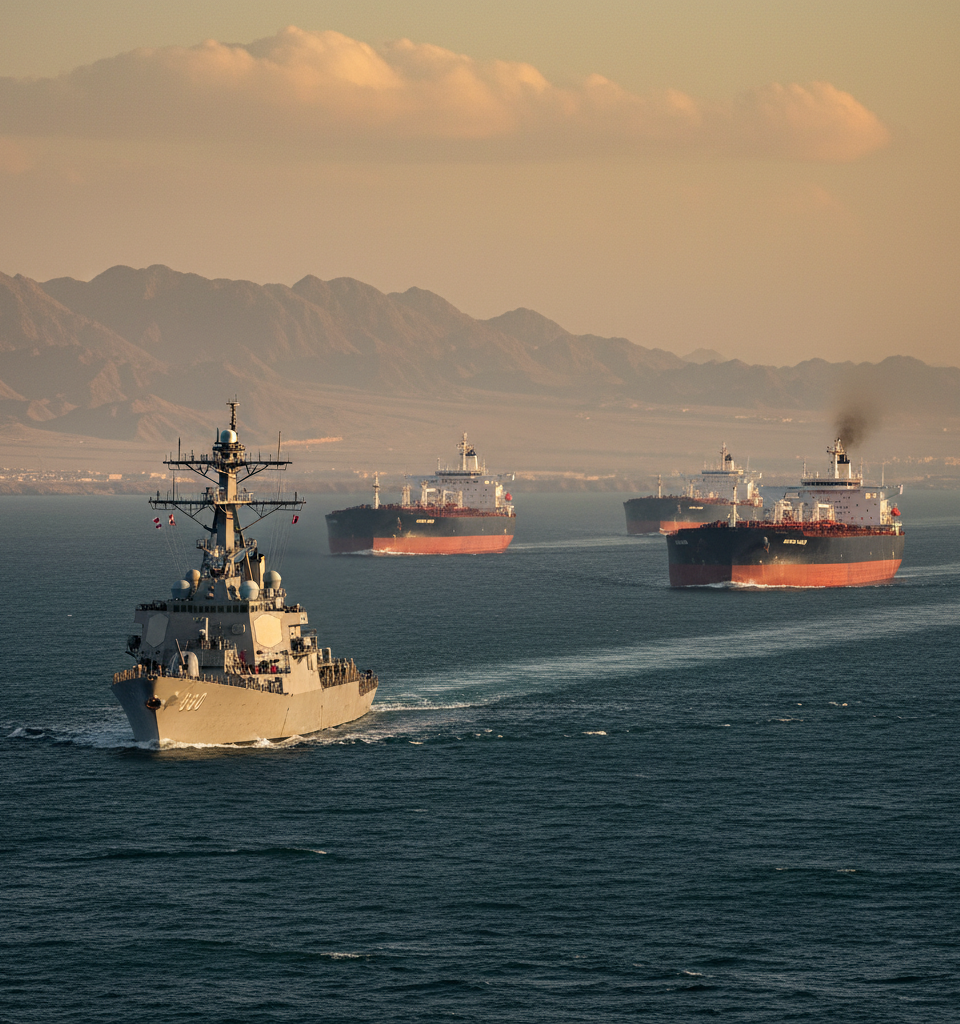
WASHINGTON D.C. – October 26, 2023 – Global stock futures plummeted and international oil benchmarks surged today, following an assertive pronouncement from the U.S. Central Command (CENTCOM) indicating a strategic hardening of posture aimed at curtailing Iran's economic activities and challenging its long-standing influence over the Strait of Hormuz. The military's declaration, emphasizing that "CENTCOM forces will not impede freedom of navigation for vessels transiting the Strait of Hormuz to and from non-Iranian ports," signals a significant escalation in geopolitical tensions, prompting a volatile reaction across financial markets.
This latest development marks a critical juncture in the fraught relationship between the United States and Iran, intertwined with the security of a maritime corridor through which approximately 20% of the world's total petroleum liquids transit daily. Washington's stated objective is to disrupt Iran's ability to exert economic pressure and potentially interfere with international shipping, a move viewed by analysts as a direct challenge to Tehran's regional leverage and a strategy to further isolate its financial streams. The implications are far-reaching, touching upon global energy security, international trade, and regional stability.
Key details of the U.S. strategy remain somewhat opaque, though the declaration strongly implies increased surveillance, potential interdictions of vessels suspected of aiding illicit Iranian trade, and a more robust naval presence designed to deter any Iranian actions perceived as threatening to freedom of navigation. While CENTCOM’s statement explicitly protects "freedom of navigation for vessels... to and from non-Iranian ports," the implicit threat to Iranian-linked shipping is clear. This comes amidst ongoing concerns about Iran's nuclear program and its support for various regional proxy groups, further complicating the geopolitical landscape.
The immediate impact on global markets has been stark. Brent crude futures, the international benchmark, jumped over 4% to nearly $93 per barrel, while West Texas Intermediate (WTI) futures rose by a similar margin, approaching $89 per barrel. Concurrently, major stock market indices futures, including the S&P 500, Dow Jones Industrial Average, and Nasdaq 100, saw declines of 1% to 1.5% in pre-market trading, reflecting investor anxiety over potential supply disruptions and broader economic instability. Shipping insurance premiums for vessels operating in the Persian Gulf have also reportedly spiked.
Energy market analysts and geopolitical experts are closely monitoring the situation. "This isn't merely a show of force; it's a strategic economic squeeze play," commented Dr. Eleanor Vance, a senior fellow at the Council on Foreign Relations. "The U.S. is signaling that its patience with Iranian behavior in the Strait is wearing thin, and they're willing to actively disrupt Iranian economic lifelines. The risk of miscalculation, however, is exceptionally high, and any direct confrontation could have catastrophic consequences for global energy prices and the world economy." Others point to the potential for Iran to retaliate, possibly by instigating proxy attacks or engaging in naval maneuvers designed to test U.S. resolve.
The coming weeks will be critical. Observers anticipate an increased tempo of U.S. naval exercises in the region, alongside potential diplomatic efforts to de-escalate tensions while maintaining pressure on Tehran. The effectiveness of this strategy in achieving its stated goals without triggering a wider conflict remains to be seen. Energy markets will continue to be highly sensitive to any developments, with oil prices expected to remain elevated and volatile. Investors will also be watching for reactions from other major global powers, particularly China, a significant importer of Middle Eastern oil, and their stance on the freedom of navigation argument.
Future developments could include new sanctions targeting specific Iranian entities or individuals involved in maritime trade, or a more direct challenge to Iranian naval assets deemed to be harassing international shipping. The U.S. administration's long-term objective appears to be to diminish Iran's regional influence and compel it to re-engage on nuclear non-proliferation and regional security issues, but the path to achieving these aims through military-economic pressure alone is fraught with peril and uncertainty.