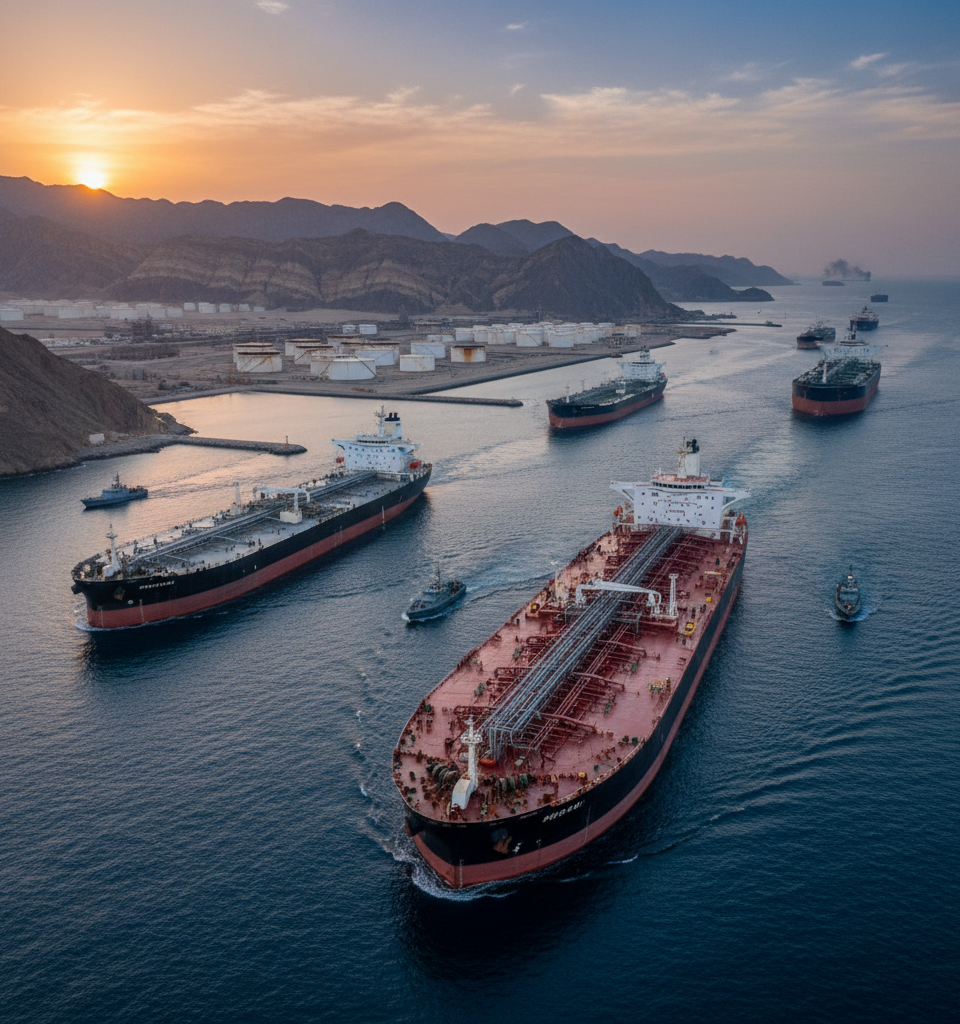
The world's strategic oil stockpiles face an imminent threat of depletion, potentially reaching all-time lows by the end of May, should the vital Strait of Hormuz remain impassable. This dire projection, issued by prominent financial services firm UBS, underscores the profound vulnerability of global energy supplies to geopolitical disruptions in the Middle East. The closure of this narrow yet crucial maritime chokepoint, through which a significant portion of the world's oil transits, risks triggering a severe supply shock that would reverberate across international economies.
Context and Significance
The Strait of Hormuz, nestled between Oman and Iran, is arguably the most strategically important oil chokepoint in the world. Approximately 20% of the world's petroleum liquids, or roughly 21 million barrels per day (bpd), passed through the Strait in 2023, according to the U.S. Energy Information Administration (EIA). Any impediment to this flow, whether due to military conflict, political tension, or technical issues, has immediate and far-reaching consequences for global energy security and commodity markets. Past disruptions, though often brief, have historically led to sharp spikes in oil prices and heightened market anxiety, illustrating its irreplaceable role in the intricate web of global trade and energy supply.
Key Details and Projections
According to UBS analysts, the rapid drawdown of global crude inventories would occur swiftly if the Strait were to remain closed. Their analysis indicates that existing stockpiles, including strategic petroleum reserves held by various nations, would be insufficient to offset the sustained loss of supply for an extended period. With an estimated 21 million bpd of oil traversing the Strait, a prolonged blockage would necessitate drawing down an equivalent amount from global reserves. "If the Strait of Hormuz remained closed, we would see global oil stockpiles rapidly deplete, approaching all-time lows within weeks," stated Giovanni Staunovo, a commodity analyst at UBS. This scenario posits a catastrophic imbalance between supply and demand, leading to an unprecedented scarcity of crude oil on the international market.
Industry and Market Impact
Such a scenario would send immediate shockwaves through the global oil industry and broader financial markets. Crude oil prices, already sensitive to geopolitical tensions, would likely skyrocket well beyond $100 per barrel, potentially reaching record highs unseen in over a decade. Energy companies would grapple with disrupted supply chains, while refiners would face acute shortages of feedstock, leading to reduced output of gasoline, diesel, and other essential petroleum products. The shipping industry would also be severely impacted, facing rerouted voyages, soaring insurance premiums, and demurrage charges, further exacerbating costs. Consumers worldwide would experience sharply higher fuel prices, fueling inflationary pressures and potentially stifling economic growth in major importing nations.
Expert Perspectives
Energy analysts widely concur on the criticality of the Strait of Hormuz. "The Strait of Hormuz isn't just a shipping lane; it's the jugular vein of the global oil market," remarked Dr. Carole Nakhle, CEO of Crystol Energy. "A sustained closure would be an economic catastrophe, far beyond anything we've witnessed in recent memory, even eclipsing the impacts of the 1973 oil crisis in magnitude due to today's interconnected global economy." Other experts highlight the limited viability of alternative routes, such as pipelines through Saudi Arabia and the UAE, which possess significantly less capacity than the Strait itself and are not designed to handle the massive volumes currently transported by sea.
Future Implications and Outlook
The potential for such a crisis underscores the urgent need for robust strategic petroleum reserves and diversified energy sources. Governments and international bodies are likely to intensify discussions on emergency response protocols and collaborative efforts to secure alternative energy supplies. While the immediate focus would be on restoring transit through the Strait, a prolonged closure would undoubtedly accelerate the transition away from fossil fuels in the long term, as nations seek to bolster their energy independence and reduce their vulnerability to geopolitical chokepoint risks. The current situation serves as a stark reminder of the geopolitical fragility inherent in the global energy supply chain and the critical importance of maritime security.
In the short term, market participants will be closely monitoring any developments in the region and assessing the likelihood of a swift resolution should a blockage occur. The stakes are extraordinarily high, with the stability of the global economy hanging in the balance of a narrow strip of water.