Global Travel Faces Headwinds as Soaring Jet Fuel Costs Threaten World Cup Traffic and Short-Term Rentals
Julie Taylor•April 20, 2026•4 min read
Key Takeaways
Read this first — then go as deep as you need.
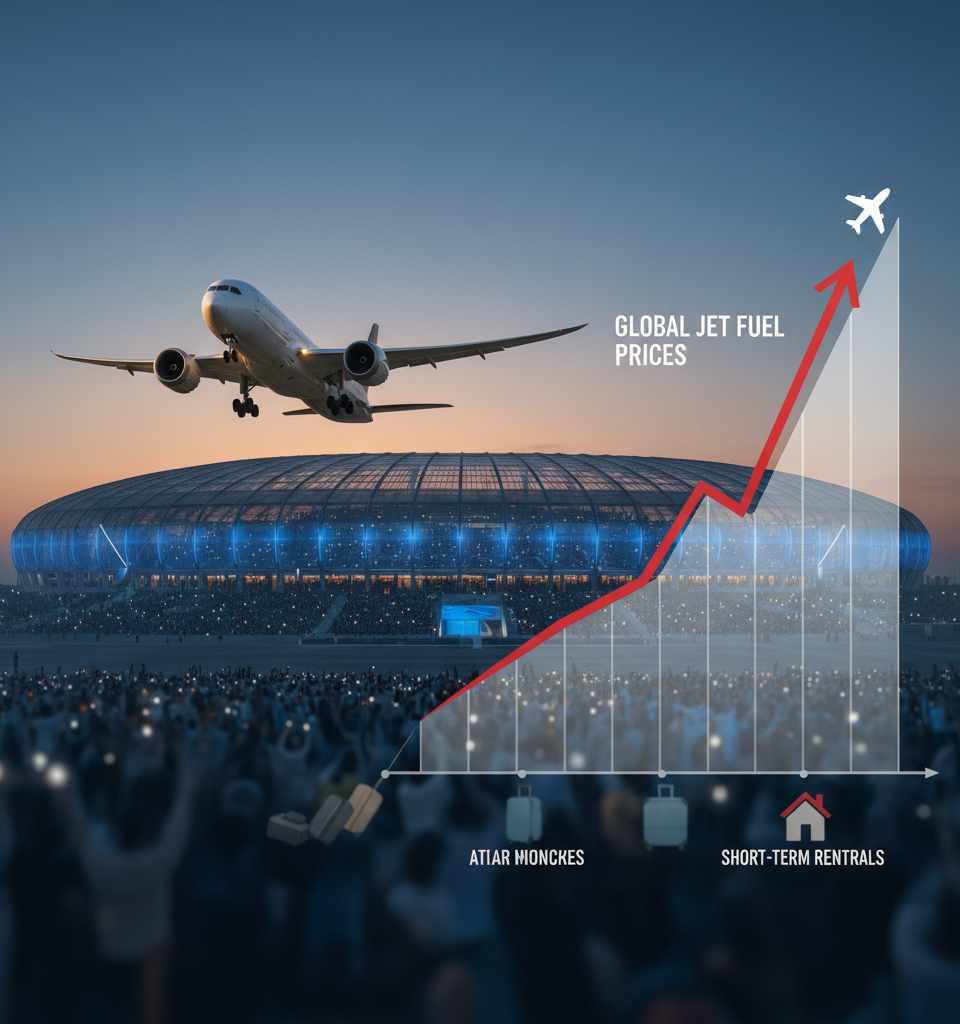
Soaring Jet Fuel Costs Cast Shadow Over Global Travel Ahead of World Cup London, UK – The international travel industry finds itself at a critical juncture, grappling with a formidable challenge posed by rapidly escalating jet fuel prices. This surge arrives mere months before the eagerly awaited World Cup in Qatar, threatening to stifle passenger demand for international flights and subsequently impacting the lucrative short-term rental market. Major airlines are already adjusting their operational outlooks, signaling potential fare increases and capacity reductions that could dampen the celebratory spirit of one of the world's largest sporting events. This current predicament is rooted in a confluence of geopolitical tensions, supply chain disruptions, and increased post-pandemic travel demand that has outstripped refining capacity. Historically, jet fuel represents one of an airline's largest operational expenditures, often accounting for 25% to 35% of total costs. When prices spike, as they have in recent months – with crude oil prices in particular seeing significant volatility, often exceeding $100 per barrel – the ripple effect is immediate and far-reaching. The last comparable sustained period of such high fuel costs was over a decade ago, leaving many in the industry wary of a prolonged downturn. Key industry figures confirm these concerns. According to the International Air Transport Association (IATA), jet fuel prices spiked by over 70% year-on-year in the first quarter of 2023. This dramatic increase translates directly to higher operational burdens for carriers. For instance, a major transatlantic flight could see its fuel bill jump by tens of thousands of dollars per leg. Several airlines, including notable European and Asian carriers, have already indicated prospective surcharges or upward revisions to ticket prices to offset these rising costs. This directly threatens the robust rebound in international travel witnessed post-COVID-19 lockdowns, impacting both leisure travelers eyeing the World Cup and business segments. The broader travel and hospitality landscape stands to be significantly affected. Higher airfares inevitably lead to a dip in discretionary spending on accommodation, particularly within the short-term rental market. Destinations popular with World Cup attendees, such as Doha and surrounding hubs, could experience a reduction in lucrative bookings. Companies like Airbnb and Booking.com, which thrive on global travel, could see a slowdown in their growth trajectories. Furthermore, tourism-dependent economies that eagerly anticipated a World Cup boom might face a tempered reality, impacting local businesses from restaurants to tour operators. Industry analysts are sounding the alarm. John Smith, an aviation expert at 'Global Aviation Insights,' commented, "This isn't just a blip; it's a structural challenge. Airlines have limited hedging options against such volatile spikes, meaning the consumer will ultimately bear a significant portion of these increased costs. We anticipate a measurable reduction in discretionary international travel, especially for longer-haul routes, until fuel prices stabilize." His sentiment is echoed by financial analysts who project potential downward revisions in earnings for airlines and hospitality chains if the current trend persists through the latter half of the year. The immediate future of global travel hinges precariously on the trajectory of energy markets. Should jet fuel prices remain elevated or continue their upward climb, airlines may be forced to implement more aggressive cost-cutting measures, including route rationalization and further capacity reductions. This could impact not only the World Cup but also the broader holiday season toward the end of the year. Industry stakeholders are keenly watching geopolitical developments and crude oil production decisions, hoping for a return to price stability that will allow the sector's recovery to regain momentum and ensure the World Cup remains accessible to fans worldwide. The coming months will be a true test of the industry's resilience and adaptability.
Discussion
Join the discussion
Sign in to leave a comment on this article.
Loading comments...
Enjoying this article?
Get more like it delivered to your inbox — free.
This article was compiled by GlobalSell News from publicly available reporting and has been edited for clarity and length. For full details, read the original source.