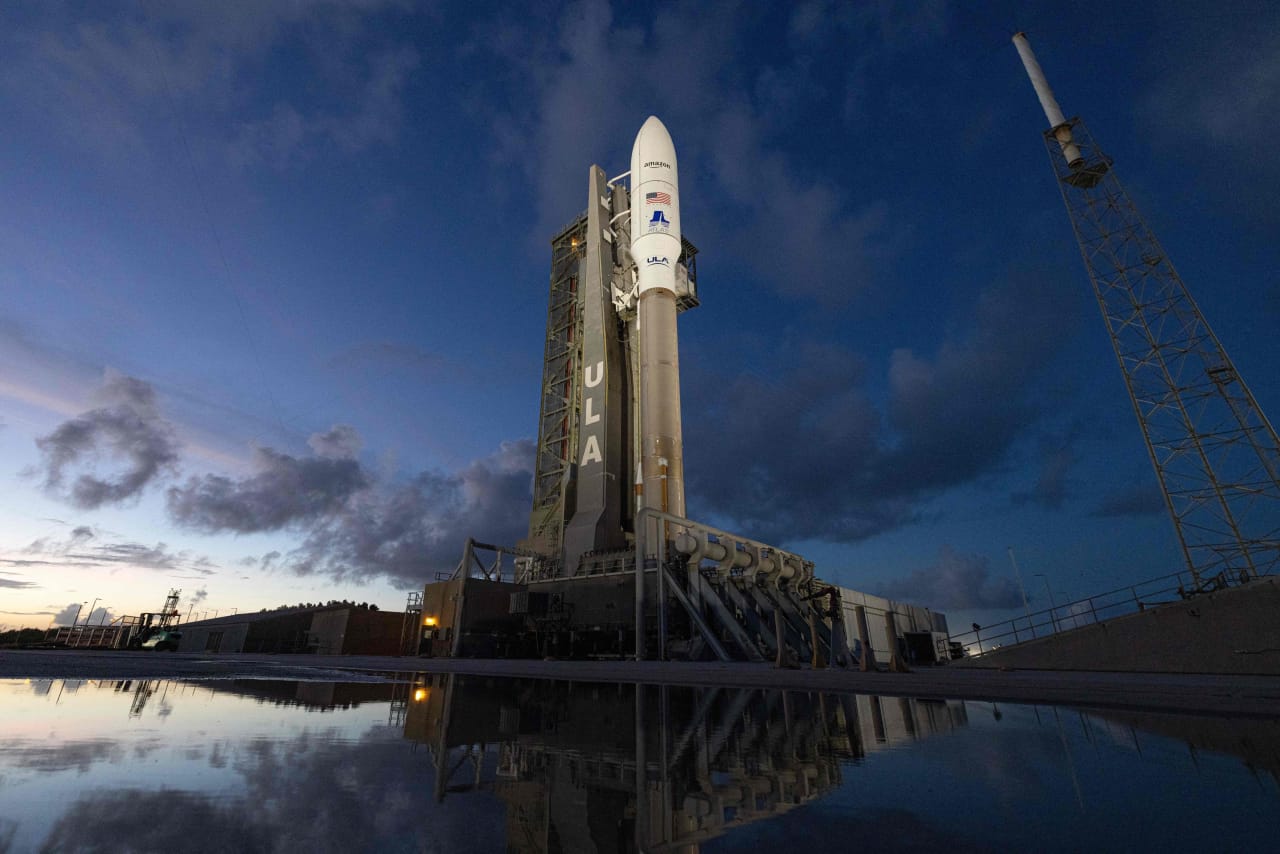
New York, NY – [Date] – Globalstar (NYSE American: GSAT), a leading provider of mobile satellite services, has witnessed a remarkable surge in its stock price recently, fueled by intense speculation that both Amazon and SpaceX are considering strategic bids to acquire the company. This emergent storyline underscores a pivotal moment in the rapidly evolving satellite communications market, as major tech players vie for dominance in low-Earth orbit (LEO) internet and next-generation connectivity solutions. The potential acquisition of Globalstar would grant the successful bidder invaluable spectral assets, established infrastructure, and a substantial competitive edge against rivals.
The Strategic Imperative: Why Globalstar Matters Now
Globalstar’s sudden prominence as an acquisition target is rooted in its highly coveted S-band and L-band spectrum licenses, specifically its 2.4 GHz S-band allocation, which is ideal for terrestrial broadband services. For Amazon, acquiring Globalstar would provide a critical accelerator for its Project Kuiper satellite internet constellation, enabling it to offer robust mobile and terrestrial services. This move would directly counter SpaceX's Starlink, which currently holds a dominant position in the LEO satellite internet space. For SpaceX, absorbing Globalstar could consolidate its leadership, offering a broader array of services, including direct-to-device connectivity, an area where Globalstar has significant expertise and upcoming capabilities with companies like Apple.
Key Assets and Market Position
Globalstar currently operates a constellation of 48 LEO satellites and boasts a significant portfolio of terrestrial spectrum rights across 12 countries. Its partnership with Apple for the iPhone 14's 'Emergency SOS via Satellite' feature has significantly raised its profile and demonstrated the viability of its technology for mass-market direct-to-device communication. This partnership alone is estimated to generate substantial revenue for Globalstar, projected to reach hundreds of millions of dollars over the coming years. The company's unique spectrum holdings, particularly the 2.4 GHz S-band, are seen as highly valuable, capable of supporting advanced 5G applications and enhancing ground-based network coverage in underserved areas.
Reshaping the Satellite Communications Landscape
Should an acquisition materialize, the implications for the broader satellite communications and telecommunications industries would be profound. A successful bid by Amazon would significantly level the playing field against SpaceX's Starlink, fostering intense competition that could drive down costs and accelerate innovation for consumers globally. Conversely, if SpaceX were to acquire Globalstar, it would further entrench its market leadership, potentially creating a formidable near-monopoly in certain LEO satellite services. Beyond the direct competitors, traditional telecom operators and terrestrial internet service providers would need to reassess their long-term strategies as satellite-based broadband becomes increasingly competitive and pervasive.
Expert Analysis: Valuation and Competitive Dynamics
Industry analysts are closely monitoring the unfolding situation, with many suggesting Globalstar is currently undervalued given the strategic importance of its assets. "Globalstar's spectrum is like beachfront property in the wireless world – it's finite, incredibly valuable, and critical for future connectivity," states aerospace analyst Sarah Jenkins of Stratos Insights. "For a company like Amazon, this isn't just about satellites; it's about owning a piece of the foundational infrastructure for a truly global, ubiquitous internet." Estimates for Globalstar's value in an acquisition scenario vary widely, from a few billion dollars to upwards of $10 billion, depending on the premium placed on its spectrum and existing infrastructure.
Challenges and Future Implications
While the prospect of an acquisition offers significant upside, challenges remain. Any deal would be subject to rigorous regulatory scrutiny, particularly regarding spectrum holdings and potential market concentration. Furthermore, integrating Globalstar’s technologies and operations into a larger enterprise like Amazon or SpaceX entails significant logistical and technical hurdles. Looking ahead, the outcome of this potential acquisition will not only dictate Globalstar's future but also serve as a barometer for the escalating strategic arms race in space-based internet. It signals a move towards a future where satellite connectivity is not merely a niche service but a core component of global digital infrastructure, driving advancements in IoT, autonomous systems, and universal broadband access.
The Broader Race to Dominate Space Connectivity
The interest in Globalstar is indicative of a broader, accelerating trend: the race among tech giants to dominate the final frontier of connectivity. Companies like OneWeb (partly owned by the UK government and Eutelsat) and Telesat are also actively deploying LEO constellations. The strategic value of established players like Globalstar, with their existing spectrum, ground infrastructure, and operational satellites, significantly reduces the time-to-market for newcomers. This competitive environment is pushing valuation metrics for space assets to unprecedented levels, transforming the once-niche satellite industry into a battleground for multi-trillion-dollar tech empires.
As the speculation continues, all eyes remain on Globalstar, whose fate could soon be determined by a bidding war between two of the world's most ambitious technology pioneers, ultimately reshaping the future of global communication.