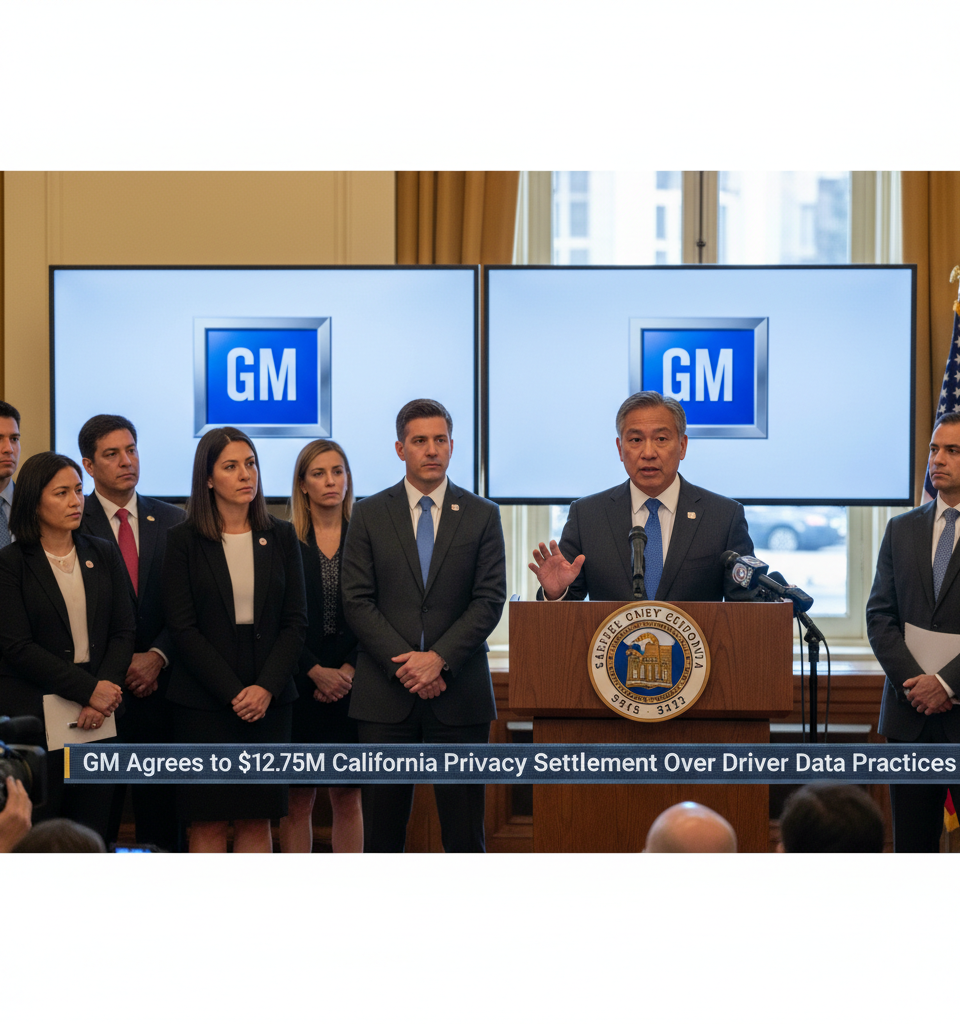
General Motors (GM) has agreed to pay $12.75 million in a settlement spearheaded by California Attorney General Rob Bonta, addressing a multi-state investigation into its alleged privacy infringements concerning vehicle owner data. Announced recently, the resolution concludes a probe into GM's practices surrounding the collection, use, and disclosure of information gathered from drivers through its connected car services, primarily focusing on its OnStar Smart Driver program.
Context and Background
This settlement emerges at a time of heightened public and regulatory concern over data privacy across various industries, with the automotive sector facing particular scrutiny due to the proliferation of interconnected vehicles. Modern cars are essentially rolling data centers, equipped with sophisticated sensors and telematics systems that collect vast amounts of information on driver behavior, vehicle performance, and location. The core of the investigation centered on whether GM adequately informed consumers about the extent of its data collection and sharing practices, especially concerning programs like Smart Driver, which offers personalized advice based on driving habits but potentially shares that data with third parties, including insurance companies, without explicit, granular consent.
Key Details of the Settlement
Under the terms of the agreement, GM will pay a total of $12.75 million, with a significant portion earmarked for California and other participating states to cover enforcement costs and consumer protection initiatives. Beyond the financial penalty, the settlement mandates substantial changes to GM’s privacy practices. The automaker must provide clearer disclosures to consumers regarding its data collection policies, particularly concerning the OnStar Smart Driver program. It is also required to obtain explicit, affirmative consent from owners before sharing their driving data with third parties, such as insurance providers. Furthermore, the agreement stipulates that GM must establish and maintain robust data security measures to protect the collected information from unauthorized access or breaches.
Industry and Market Impact
The GM settlement sends a strong signal across the automotive industry, reinforcing the imperative for transparency and robust consent mechanisms in data collection. Other automakers with similar connected car programs, such as FordPass, Tesla's data collection, and Stellantis' Uconnect, are likely to review and potentially revise their own privacy policies to align with these new benchmarks. This push for greater data stewardship could foster increased consumer trust, but it also presents operational challenges for companies relying on aggregated driving data for product development, service enhancement, and revenue generation through partnerships. The market may see a shift towards more opt-in, privacy-centric services, potentially impacting revenue streams derived from data monetization.
Expert Perspective
Data privacy experts view this settlement as a critical development. "This is not just about a financial penalty; it's about setting a precedent for how automotive data is handled," stated Dr. Evelyn Reed, a leading privacy law analyst. "The focus on explicit consent and clear disclosures will redefine how customers interact with their vehicles' data capabilities. Companies can no longer rely on convoluted terms of service hidden deep within user manuals." Industry analysts also suggest that this could accelerate the development of anonymization techniques and data governance frameworks within the automotive sector, as companies seek to harness data's value while mitigating privacy risks.
What's Next
Looking ahead, this settlement is likely to prefigure further regulatory actions and legislative efforts regarding automotive data privacy. Consumers can expect to see more transparent pop-up notifications or in-app prompts for data sharing permissions from their vehicle manufacturers. Moreover, the Federal Trade Commission (FTC) and other state attorneys general may initiate similar investigations into other automakers or telematics providers, building on the framework established by this GM agreement. Future developments could also include new federal legislation specifically addressing automotive data ownership and usage, potentially creating a national standard for connected car privacy that supersedes existing state-by-state variations. The long-term impact will be a more accountable and consumer-centric approach to data in the evolving landscape of smart mobility.