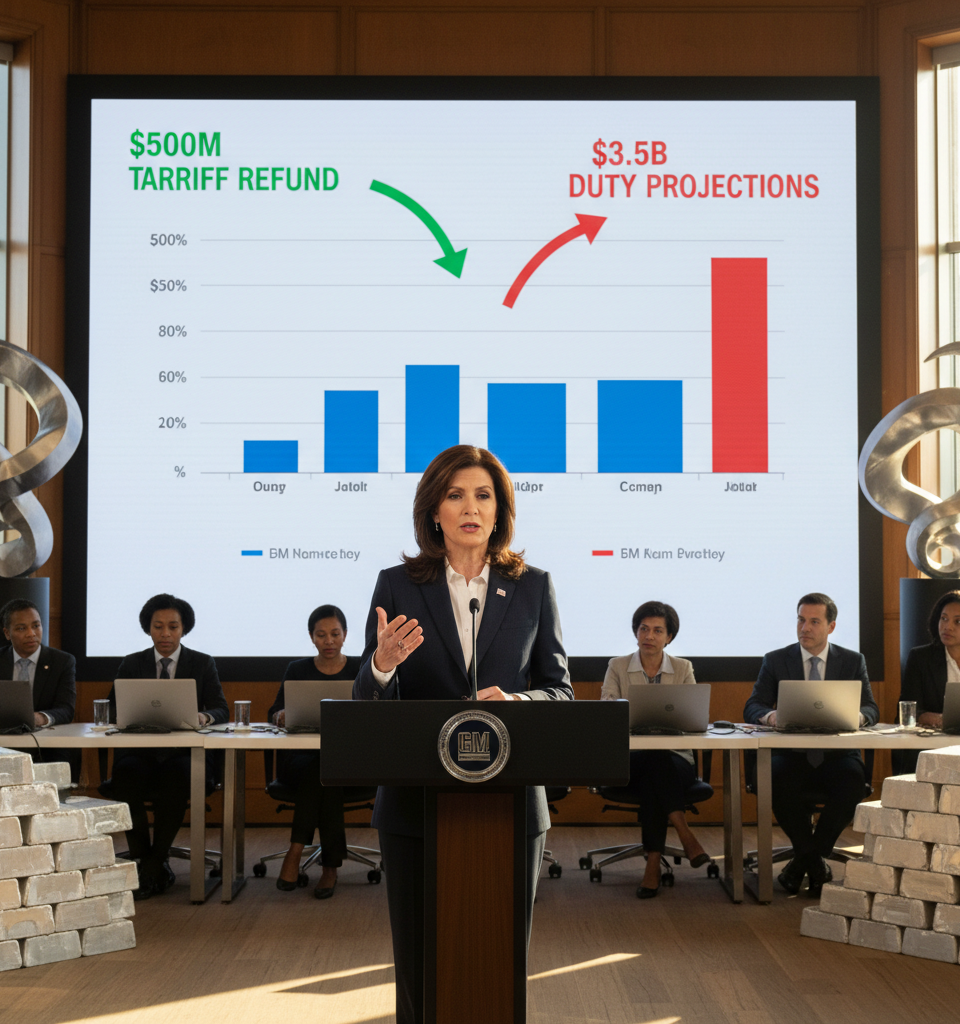
Detroit — General Motors (GM) announced today it anticipates a significant $500 million refund pertaining to previously paid tariffs on steel and aluminum imports. 5 billion in cumulative duty costs by 2026. These ongoing costs are predominantly attributed to Section 232 levies, initially implemented by the Trump administration, affecting crucial raw materials essential for vehicle manufacturing.
This development underscores the complex and enduring impact of trade policy on highly industrialized sectors such as automotive. The Section 232 tariffs, imposed for national security reasons, have consistently inflated the cost of critical inputs like steel and aluminum, thereby impacting manufacturers' bottom lines and, ultimately, consumer pricing. For GM, a company deeply integrated into global supply chains, these duties represent a significant operational headwind, necessitating strategic adjustments and cost mitigation efforts over several years.
The anticipated $500 million refund, while substantial, represents only a fraction of the total tariff expenses GM has incurred and expects to incur. The company did not immediately provide granular details regarding the specific period or mechanisms that led to the refund, though it is understood to be related to retrospective adjustments or successful appeals concerning past import duties. 5 billion in duty costs by 2026 highlights the pervasive nature of these tariffs, which stem from both current and anticipated trade policies.
These figures illustrate the scale of financial planning required to navigate an unpredictable global trade environment and absorb these additional expenses.
Broader Industry Impact
The ripple effects of these tariffs extend far beyond GM, impacting the entire automotive supply chain and, by extension, the broader manufacturing sector. Other major automakers and component suppliers face similar challenges, contending with elevated input costs that can erode profit margins, stifle innovation, and potentially lead to competitive disadvantages. The increased cost of raw materials often translates into higher production costs, which can then be passed on to consumers through increased vehicle prices, potentially dampening demand. Analysts are closely watching how these tariff-related pressures influence investment decisions, particularly concerning domestic sourcing and resilience strategies within the industry.
Expert Perspectives on Trade Policy
Industry analysts and economists have consistently pointed to the detrimental effects of prolonged tariffs on manufacturing competitiveness and global trade stability. "While a $500 million refund is certainly a positive for GM's cash flow in the short term, it doesn't fundamentally alter the long-term tariff landscape," stated an automotive industry expert from S&P Global, who requested anonymity as they were not authorized to speak on client-specific forecasts. "The projected $3.5 billion in costs by 2026 clearly indicates that these Section 232 tariffs remain a significant structural cost for U.S. automakers, pushing them to seek alternative sourcing or push for policy changes." Others highlight how these duties can inadvertently incentivize some companies to re-evaluate their supply chains, potentially leading to increased domestic investment in raw material production, though this transition is often slow and capital-intensive.
Future Mitigation Strategies and Outlook
Looking ahead, GM has indicated that it is actively pursuing various mitigation strategies to alleviate the financial strain of these tariffs. These efforts likely include optimizing supply chains, exploring alternative material sourcing, engaging in lobbying efforts for policy reform, and potentially increasing domestic content where feasible. The automotive industry remains hopeful for more predictable trade relations and a reassessment of existing tariff structures, particularly those impacting critical manufacturing inputs. The trajectory of future trade agreements and diplomatic relations will play a crucial role in determining whether these projected costs materialize at the high end of GM's estimates or if policy adjustments could offer future relief, allowing for greater investment in electrification and technological advancements rather than absorbing tariff-related overheads.