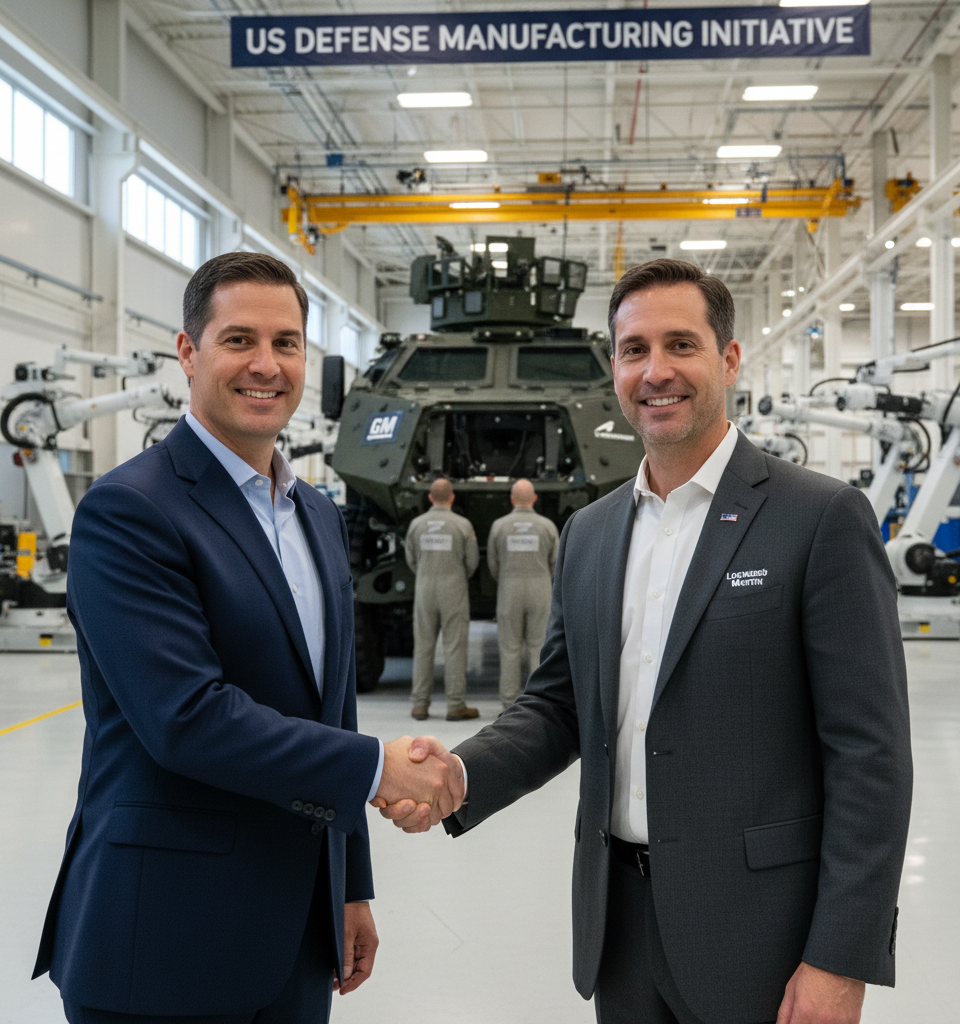
GM Defense, the dedicated defense arm of General Motors, has reportedly entered into a formal collaboration with Lockheed Martin, the aerospace, defense, security, and advanced technologies company. This significant partnership, which was assisted by the Pentagon, arrives as President Donald Trump invokes the voluntary agreement provision under the Defense Production Act, signaling a renewed focus on domestic defense manufacturing.
The alliance between an automotive manufacturing powerhouse and a leading defense contractor underscores a broader national effort to integrate diverse industrial capabilities into the defense supply chain. This move is particularly pertinent given the current administration's emphasis on strengthening the domestic industrial base and reducing reliance on foreign components for critical defense systems. The Defense Production Act's invocation highlights a governmental push for private sector cooperation in achieving national security objectives.
Strategic Imperatives and Government Facilitation
The Pentagon's involvement in facilitating this deal emphasizes the strategic importance of combining the manufacturing prowess of GM Defense with Lockheed Martin's expertise in advanced defense systems. While specific project details have not yet been disclosed, the nature of the partners suggests potential applications in areas requiring high-volume manufacturing, advanced vehicle platforms, integrated systems, or specialized components for military use. GM Defense's heritage leverages General Motors' commercial technologies and manufacturing processes for military applications, a synergy that Lockheed Martin could utilize for more efficient and scalable production of its defense matériel.
The invocation of the Defense Production Act by President Trump serves as a critical backdrop to this collaboration. This act grants the President broad authority to compel businesses to accept and prioritize contracts for materials or services deemed necessary for national defense. By utilizing the "voluntary agreement provision," the administration appears to be fostering partnerships proactively rather than through direct mandates, suggesting a concerted effort to incentivize industry participation in national defense initiatives.
Broader Industry Implications
This partnership is expected to have significant ripple effects across the defense manufacturing landscape. For GM Defense, it represents an opportunity to expand its footprint in the defense sector beyond its traditional vehicle platforms, potentially integrating into more complex aerospace and weaponry projects. For Lockheed Martin, leveraging GM's advanced manufacturing techniques, including electric vehicle technologies, automation, and supply chain management, could lead to more efficient production, lower costs, and faster deployment cycles for future defense programs.
Analysts surveying the defense industry would likely view this collaboration as a strategic move to optimize resources and capitalize on the unique strengths of both entities. The convergence of commercial automotive innovation with military-grade requirements could yield advanced solutions not previously imagined within traditional defense contracting frameworks. This approach may also encourage other commercial industries to explore collaborations with defense contractors, fostering a more robust and diversified national defense industrial base.
The Path Forward
While details regarding specific projects or timelines stemming from this collaboration remain under wraps, the foundational agreement sets the stage for future joint ventures. The ongoing invocation of the Defense Production Act suggests that the U.S. government will continue to actively encourage such partnerships, particularly those that promise to enhance domestic production capabilities and technological superiority. Future developments are likely to involve identifying specific programs where GM Defense's manufacturing capabilities can be most effectively integrated with Lockheed Martin's defense system designs, potentially leading to new product lines or significant advancements in existing ones.
The partnership between GM Defense and Lockheed Martin, facilitated by the Pentagon, marks a notable evolution in defense industry collaborations, blending automotive innovation with advanced defense technology. It underscores a national strategic imperative to bolster domestic manufacturing and leverage cross-industry expertise for a stronger defense posture.