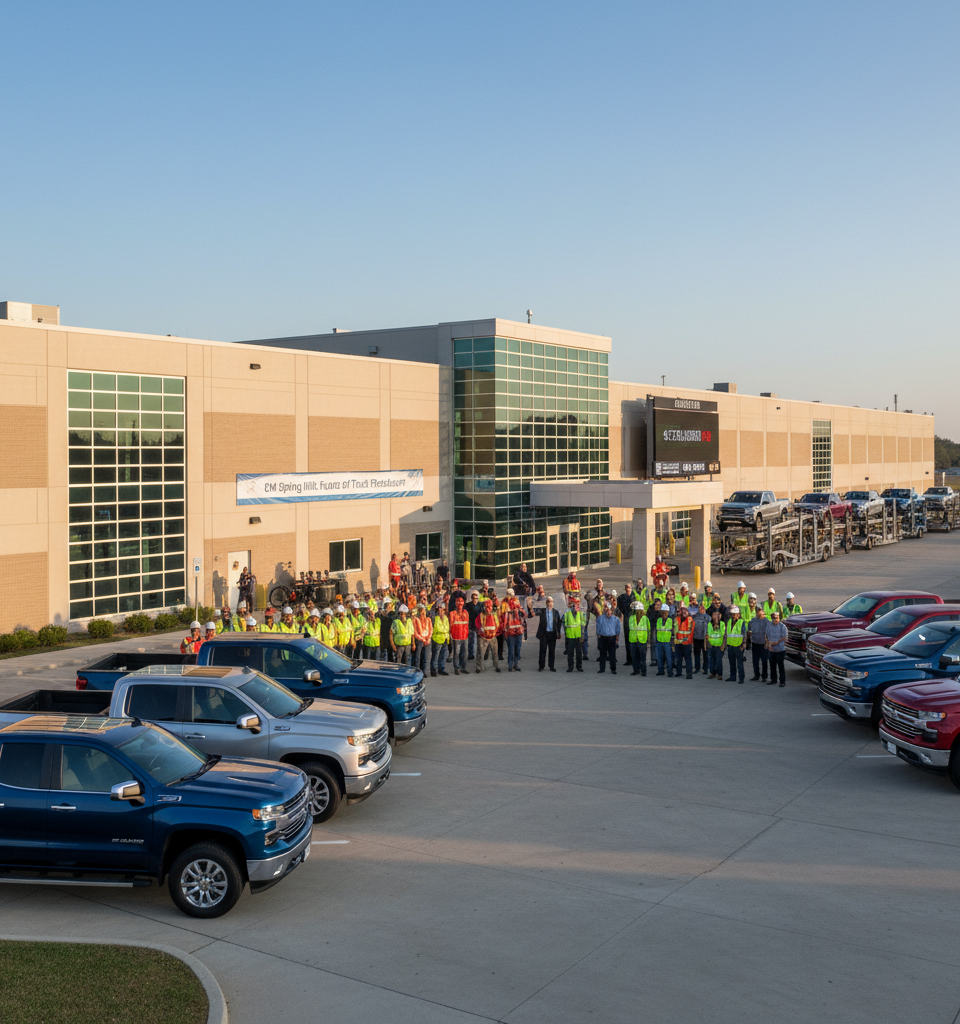
General Motors Co. is injecting an additional $275 million into its Spring Hill, Tennessee, manufacturing operations, a move designed to diversify and expand the plant's production capabilities for trucks. This substantial investment is a key component of the automaker’s broader strategy, which entails an approximately $9 billion expansion across its U.S. manufacturing facilities, signaling a robust commitment to enhancing domestic production capacity.
Context and Strategic Vision
The Spring Hill facility, already a cornerstone of GM's manufacturing network, is poised to take on an even more critical role in the company's vehicle portfolio. This financial commitment underscores GM's strategic imperative to meet growing consumer demand for trucks and utility vehicles, a segment that has consistently driven profitability for the automotive giant. The expansion is part of a deliberate effort to modernize production lines, integrate advanced manufacturing technologies, and create a more flexible manufacturing ecosystem capable of adapting to evolving market needs.
Key Investment Details
The $275 million allocation specifically targets the Spring Hill plant's infrastructure and tooling to facilitate the production of additional truck models. While specific models were not detailed, the investment suggests an expansion beyond current offerings or an increase in volume for existing popular truck lines. This capital infusion is not an isolated event but rather a segment of the larger $9 billion initiative, which aims to bolster GM's manufacturing footprint across the United States. This broader investment encompasses upgrades to various facilities, enhancing efficiency, and preparing for future vehicle architectures, including electric vehicles, though the immediate focus of the Spring Hill announcement is on truck production.
Industry and Market Impact
This significant investment by General Motors is expected to have ripple effects across the automotive industry and the regional economy. For the industry, it signals GM's strong confidence in the continuing demand for conventional internal combustion engine (ICE) trucks, even as the company simultaneously invests heavily in electric vehicle technology. This dual strategy allows GM to capitalize on current market trends while positioning itself for future powertrains. Regionally, the expansion at Spring Hill could lead to job creation, both directly within the plant and indirectly through the supply chain and supporting industries, thereby boosting the local economy in Tennessee.
Future Implications
Looking ahead, the expanded capabilities at the Spring Hill plant will provide General Motors with greater flexibility in its production planning and allocation. The ability to produce more truck models from a single location can lead to efficiencies in logistics, supply chain management, and overall operational costs. Furthermore, it positions GM to respond more swiftly to shifts in consumer preferences and market demand within the highly competitive truck segment. This investment is an integral step in GM's long-term manufacturing strategy, aiming to ensure its competitiveness and leadership in key vehicle categories for years to come.