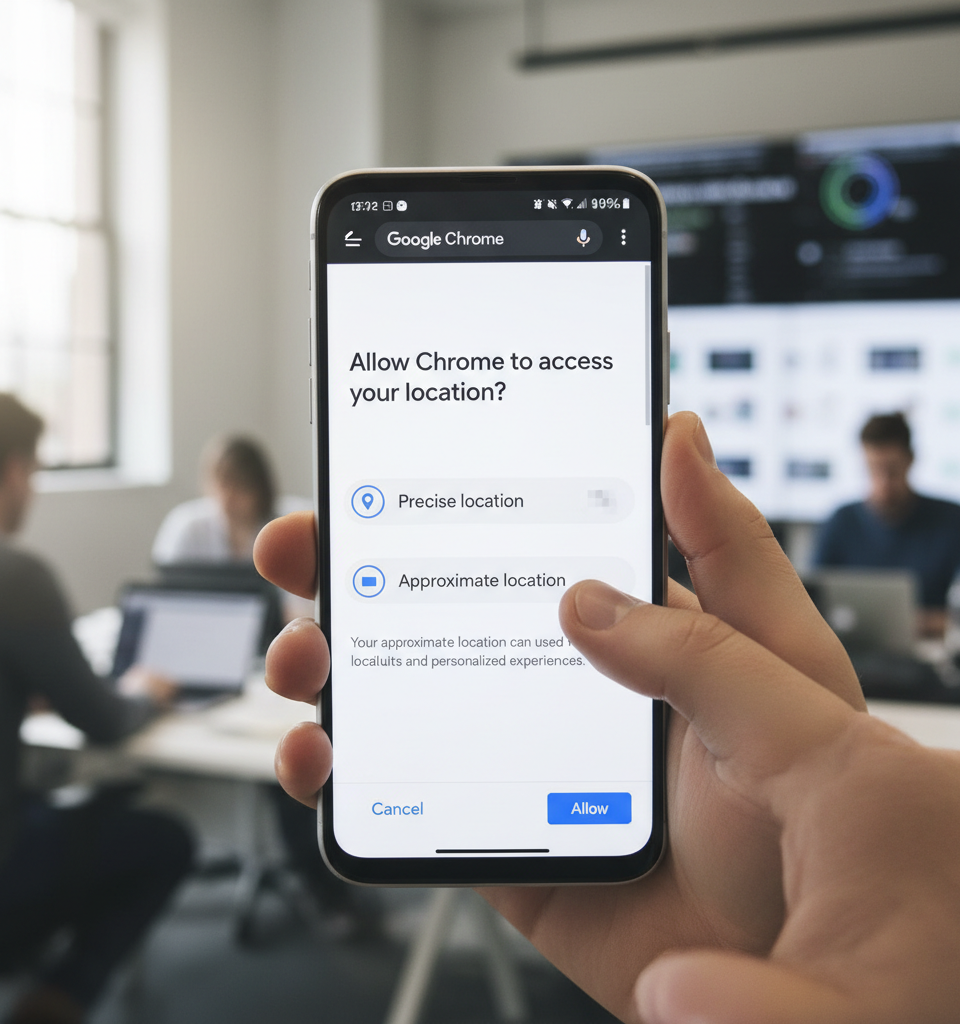
Google has commenced the rollout of a new privacy feature within its Chrome browser for Android, enabling users to share an approximate location rather than precise geographical coordinates. This update, which began phasing in recently, addresses long-standing user demands for enhanced control over location data, a critical component of digital privacy. The functionality is also slated for integration into Chrome's desktop variant in the near future, standardizing the privacy control across platforms.
Contextualizing Digital Privacy
For years, the default setting for location permissions in web browsers has been an all-or-nothing proposition: either grant access to precise GPS data or deny it entirely, often breaking site functionality. This binary choice forced users to compromise their privacy for convenience, or vice-versa. Google's move reflects a broader industry trend towards granular privacy controls, acknowledging growing consumer awareness and regulatory pressures such as GDPR and CCPA. It also aligns with similar features already present in mobile operating systems like iOS, which has offered approximate location sharing since iOS 14.
Feature Mechanics and User Benefits
When a website requests location access on Chrome for Android, users will now be presented with three distinct options: "Allow" (precise location), "Allow approximate location", or "Don't allow". Opting for approximate location will provide websites with a general area, typically a city or a broader neighborhood, rather than a street address or exact coordinates. This allows services reliant on regional data, such as local news, weather forecasts, or general store locators, to function without compromising a user's exact whereabouts. For instance, a weather app can still show the local forecast without knowing a user's exact home address. Google's engineering team stated in a recent blog post that this feature is designed to strike a balance between utility and privacy.
Industry and Market Implications
This enhancement could significantly impact the ad tech and data analytics industries, which heavily rely on precise location data for targeted advertising and consumer behavior analysis. While approximate data still holds value, the shift could necessitate adjustments in targeting strategies and data collection methodologies. Retailers and service providers who leverage location-based services will need to adapt their platforms to effectively utilize less precise information. Early estimates from industry analysts suggest a potential shift of up to 15-20% of ad spend away from hyper-localized targeting within 18 months, as advertisers recalibrate to the new privacy landscape.
Expert Perspective on User Empowerment
Privacy advocates have lauded Google's initiative as a positive step. "This is a crucial win for user autonomy," commented Dr. Anya Sharma, a digital privacy researcher at the University of California, Berkeley. "By offering a middle ground, Google is empowering users to make more informed and less compromising decisions about their data. It sets a new baseline for what users should expect from browser privacy settings." She further noted that while not a complete panacea, it significantly reduces the risk of location-based tracking and surveillance by third-party scripts.
The Road Ahead: Desktop Integration and Browser Competition
The forthcoming integration of approximate location sharing into Chrome's desktop version will standardize this privacy control across a vast user base. This move places Google in direct competition with privacy-focused browsers like Brave and Firefox, which have been historically quicker to implement robust privacy features. Future developments could include even more granular controls, such as temporary location access or custom radius settings. Google's commitment to this feature signals an acknowledgement of the escalating importance of privacy in the broader tech ecosystem, pushing other browser developers to follow suit or risk losing user trust and market share in an increasingly privacy-conscious world.