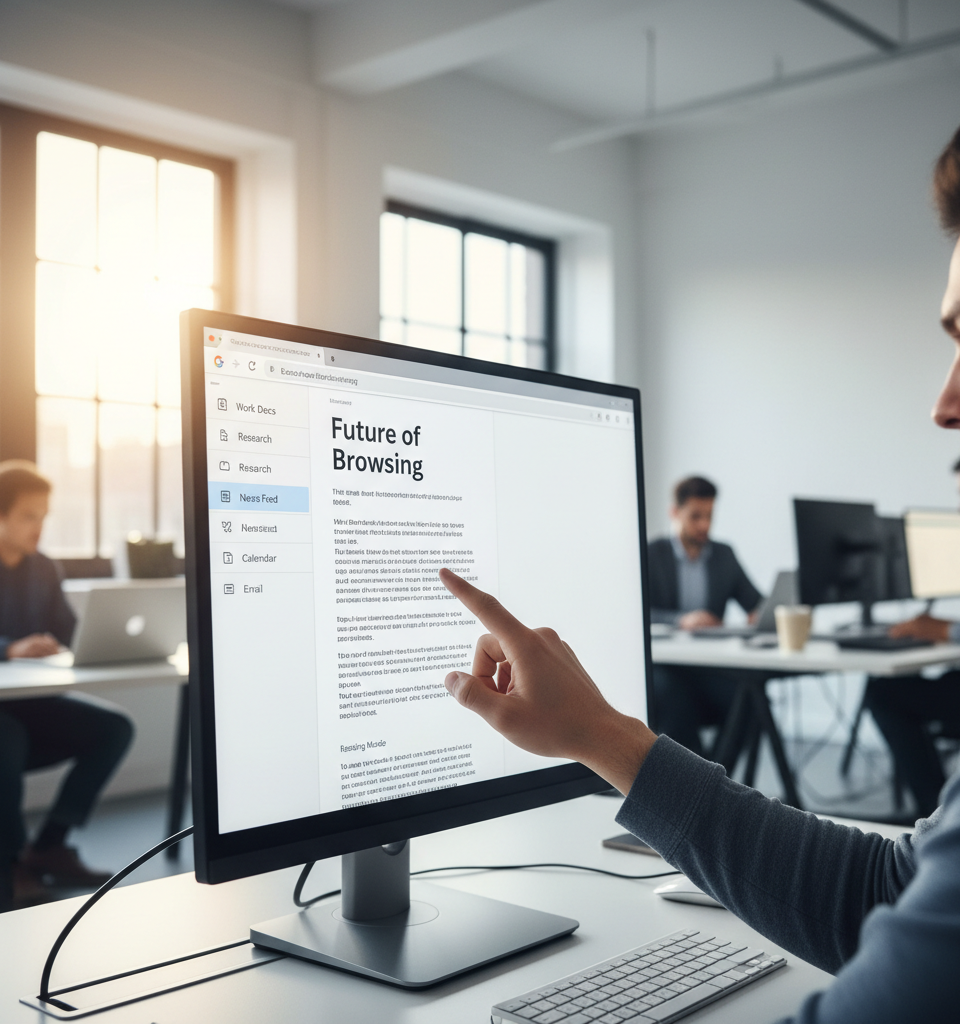
MOUNTAIN VIEW, CA – April 23, 2024 – Google Chrome, the world's most dominant web browser, has officially rolled out a significant update introducing native vertical tabs and an enhanced Reading Mode. This strategic move, confirmed by Google's Chrome development team, directly addresses long-standing user demands for improved tab management and a less distracting reading experience. The update, progressively deploying across stable channels, signifies Google's renewed focus on user productivity and interface uncluttering in an increasingly complex digital landscape.
The integration of vertical tabs represents a pivotal shift in Chrome's user interface, offering a modern solution to the perennial problem of horizontal tab overflow, particularly for users managing dozens of open pages. For years, users have resorted to third-party extensions to achieve this functionality, highlighting a critical gap in Chrome's native offerings. Simultaneously, the refined Reading Mode, reminiscent of features found in competitors like Apple Safari and Mozilla Firefox, aims to distill web content into a clean, distraction-free format, isolating text and core images while stripping away ads and extraneous design elements. This dual enhancement arrives at a time when digital information overload is a pervasive concern, directly impacting user focus and efficiency.
Key details of the rollout indicate that the vertical tabs feature can be activated or deactivated with a single click, appearing as a navigable sidebar on the left side of the browser window. This design allows for more readable tab titles and easier access to a larger number of open tabs without the shrinking, unreadable effect of traditional horizontal tabs. The new Reading Mode, accessible via a dedicated icon in the address bar, promises customizable font sizes, themes (light, dark, sepia), and line spacing, making long-form content consumption significantly more comfortable. Google states that these features are a direct result of user feedback and extensive A/B testing, aimed at enhancing the daily browsing experience for Chrome's estimated 3.3 billion users globally, representing over 65% of the browser market share.
The introduction of these features is poised to have a substantial impact on the broader browser market. For years, competitors like Microsoft Edge have highlighted their own vertical tab implementations as a competitive advantage. Google's late but robust entry into this space could neutralize a key differentiator for rivals and potentially reclaim users who migrated for better tab management. This update also sets a new bar for default browser functionalities, likely prompting other developers to re-evaluate their own feature roadmaps. The emphasis on a cleaner reading experience further reflects a growing industry trend towards digital wellness and user empowerment over content consumption.
Industry analysts are largely commending Google's move. Dr. Evelyn Reed, a lead tech analyst at "Digital Frontier Insights," commented, "Google has listened. While vertical tabs have been available via extensions for a decade, integrating them natively with such polish is a game-changer for mainstream users. This isn't just about aesthetics; it's about reducing cognitive load and improving productivity, especially for professionals who juggle multiple research tabs daily. The enhanced Reading Mode complements this perfectly, offering a holistic solution to web content fatigue." She also noted that this update could marginally impact the ecosystem of third-party tab management extensions, potentially shifting user reliance back to native features.
Looking ahead, Google is expected to continue refining these features based on telemetry and user feedback. Future iterations could include more advanced tab grouping options within the vertical sidebar, deeper integration with Chrome's profile management, and perhaps even AI-driven tab suggestions. There's also speculation that the Reading Mode could evolve to include text-to-speech capabilities or even summarization tools, further leveraging Google's AI prowess. This foundational update marks not an endpoint, but a new beginning in Google's ongoing effort to maintain Chrome's dominant position by delivering a more intuitive, efficient, and user-centric browsing experience for an increasingly information-saturated world."