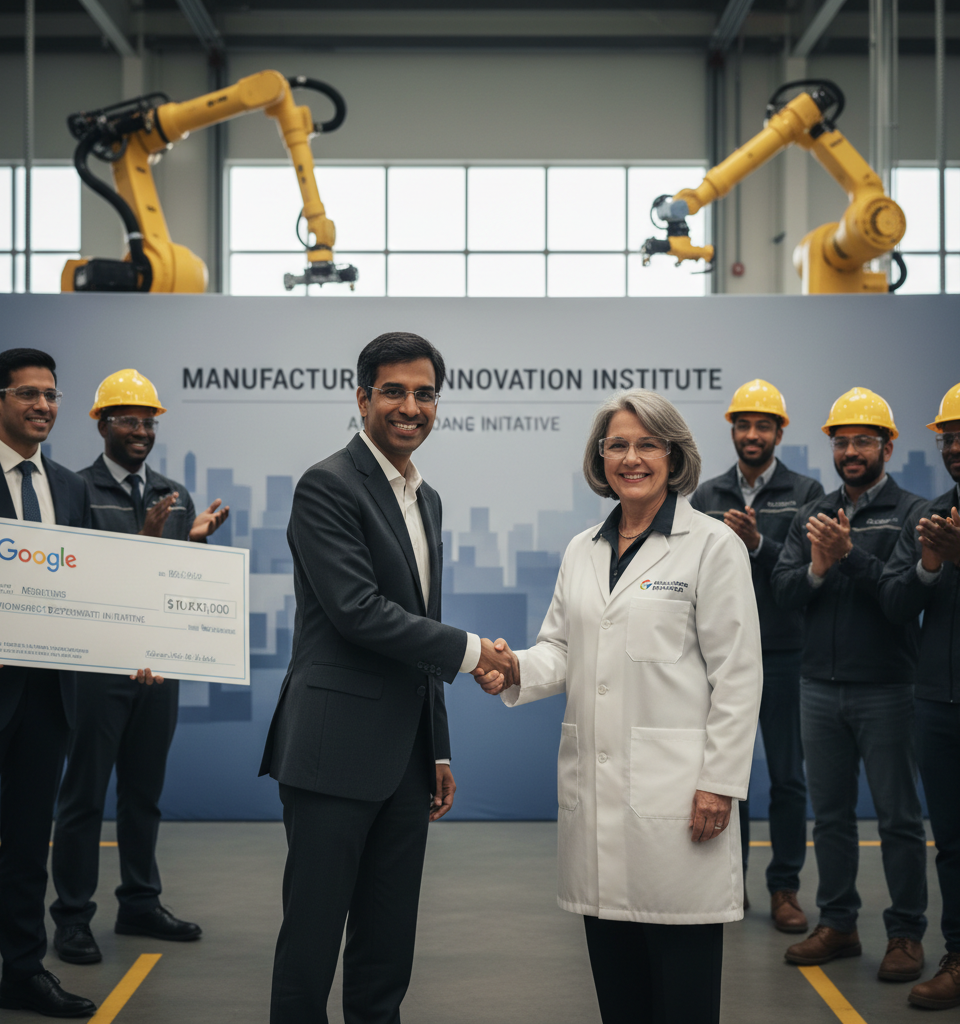
Google has announced a substantial commitment of $10 million to the Manufacturing Institute, the workforce development and education partner of the National Association of Manufacturers. The funding, disclosed by Manufacturing Institute President Carolyn Lee, is earmarked for the development of two new artificial intelligence (AI) courses and the significant expansion of existing apprenticeship programs across the manufacturing sector. This initiative directly responds to the growing demand for AI proficiency within U.S. industrial operations, aiming to upskill and reskill the workforce to meet the challenges and opportunities presented by automation and intelligent systems.
Addressing the Skills Gap in Advanced Manufacturing
The infusion of capital comes at a critical juncture for American manufacturing. The sector is undergoing a profound transformation driven by technologies such as AI, robotics, and the Internet of Things (IoT). However, a persistent skills gap threatens to impede this progress. A recent study by Deloitte and The Manufacturing Institute projects that 2.1 million manufacturing jobs could go unfilled by 2030 if current trends continue, largely due to a lack of skilled workers. Google's investment is a strategic effort to mitigate this deficit, providing foundational and advanced training necessary for the factory of the future. The initiative underscores a shared understanding between industry and technology giants that a robust and adaptable workforce is paramount for maintaining global competitiveness.
Program Details and Strategic Objectives
Carolyn Lee detailed that a significant portion of the $10 million will be allocated to the creation of two distinct AI courses. While specific curriculum details are still under wraps, it is anticipated these courses will cover topics ranging from fundamental AI concepts and machine learning principles to the practical application of AI in manufacturing processes, such as predictive maintenance, quality control, and supply chain optimization. Concurrently, the funding will dramatically bolster the Manufacturing Institute's apprenticeship programs, integrating AI-specific modules and expanding their reach to a broader demographic. These apprenticeships are crucial for providing hands-on experience and direct pathways to employment in high-demand roles. The partnership aims to disseminate these programs nationally, ensuring accessibility for manufacturers of all sizes, from small and medium-sized enterprises (SMEs) to large corporations.
Impact on the Manufacturing Landscape
This investment is poised to have a transformative impact on the U.S. manufacturing landscape. By enhancing workforce capabilities in AI, it will enable companies to adopt advanced technologies more effectively, leading to increased productivity, reduced costs, and improved product quality. For workers, it represents an opportunity to acquire valuable skills that boost employability and career progression in a rapidly evolving industry. Furthermore, it could help solidify America's position as a leader in advanced manufacturing, fostering innovation and resilience in domestic supply chains. The initiative also supports the broader national agenda of strengthening the U.S. industrial base against global competition.
Expert Commentary on Workforce Evolution
Industry analysts and workforce development experts largely commend Google's proactive step. "This isn't just about training; it's about future-proofing the American manufacturing workforce," notes Dr. Evelyn Reed, a senior economist specializing in labor markets. "The integration of AI is no longer a luxury but a necessity for manufacturing competitiveness. Google's investment provides critical resources to bridge the gap between technological advancement and human capability." Others point out the significance of private-sector leadership in addressing systemic workforce challenges. "Government initiatives alone cannot keep pace with the speed of technological change," stated Mark Jensen, CEO of a manufacturing consulting firm. "Partnerships like this between tech giants and industry associations are vital for agile and effective workforce solutions."
Future Outlook and Broader Implications
Looking ahead, the success of these programs could serve as a blueprint for similar collaborations across other sectors facing technological disruption. The Manufacturing Institute plans to monitor the efficacy of the AI courses and apprenticeship expansions, gathering data on participant engagement, skill acquisition, and job placement rates. This long-term evaluation will be crucial for refining the programs and demonstrating their value. Beyond the immediate impact, this partnership signals a growing recognition that technological innovation must be accompanied by proportionate investment in human capital. It underscores a strategic shift towards proactively preparing the workforce for future disruptions, rather than reactively addressing skill deficits. The initiative also highlights Google's expanding role beyond core tech products, leveraging its resources to foster broader economic and industrial development.
Call for Industry Participation
Both Google and the Manufacturing Institute are expected to appeal to manufacturing companies across the United States to actively participate in these new programs. This would involve engaging their existing employees in the AI training courses and offering apprenticeship opportunities. Such widespread industry involvement will be essential for the scalability and overall success of the initiative, ensuring that the acquired skills are directly aligned with industry needs and lead to tangible improvements in manufacturing operations. The emphasis will be on developing a sustainable model for continuous workforce development, making AI proficiency a standard expectation rather than an niche expertise within the manufacturing sector.