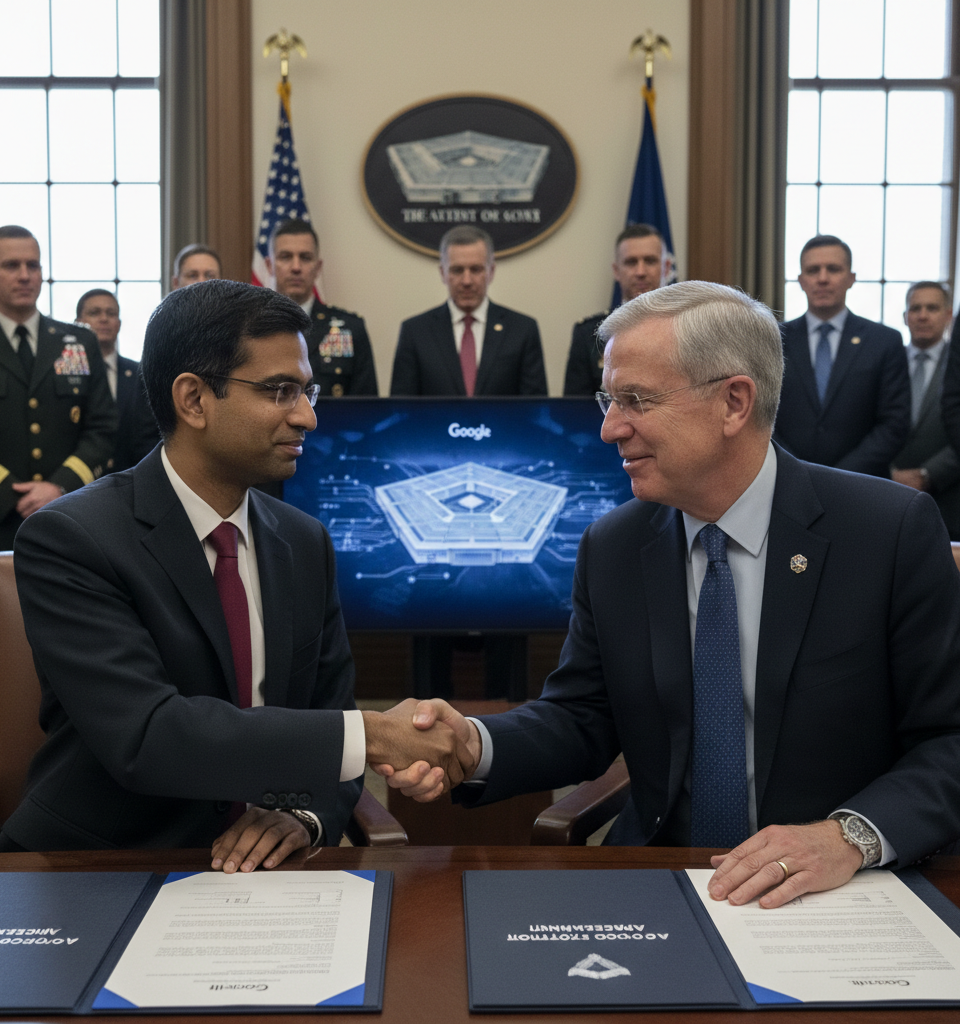
Google has reportedly entered into a new contractual agreement with the United States Department of Defense, considerably broadening the Pentagon's ability to leverage its advanced artificial intelligence technologies. This development emerges just weeks after Anthropic, a prominent AI research firm backed by significant investment, notably declined to permit the DoD from utilizing its AI systems for controversial applications such as domestic mass surveillance and autonomous weapons development. The decision underscores a growing divergence in how major tech players are navigating the ethical complexities and immense commercial potential of government defense contracts in the burgeoning AI sector.
Context and Background
This latest agreement between Google and the Pentagon is not merely a transactional deal; it represents a critical juncture in the ongoing discussion surrounding AI ethics, national security, and big tech's role. The tech industry has been grappling with internal and external pressures concerning the moral implications of its innovations, particularly when applied to military endeavors. Google itself faced significant internal dissent and employee protests in 2018 over "Project Maven," a program that utilized AI to analyze drone footage for the DoD. While Google ultimately chose not to renew that particular contract, its continued engagement with the Pentagon, now with expanded AI access, signals a strategic pivot and a willingness to operate in a highly scrutinized domain. Anthropic's earlier refusal, widely reported, highlighted the ethical lines some AI developers are unwilling to cross, setting a precedent that Google has now seemingly chosen to bypass or reinterpret through its new contract.
Key Details Specific financial terms of the new
Google-Pentagon contract have not been publicly disclosed, but sources familiar with the negotiations indicate a multi-year commitment involving access to Google's specialized AI models and expertise. Unlike Anthropic, which explicitly cited concerns about "proliferating tools for surveillance and warfare," Google's agreement appears to allow for broader applications, though the exact limitations, if any, remain opaque. Industry observers suggest the contract likely encompasses areas such as logistics optimization, data analysis, and advanced threat detection, areas where AI can offer significant strategic advantages. The Department of Defense has consistently sought to integrate cutting-edge AI to maintain its technological supremacy, investing billions annually into research and procurement programs. This deal solidifies Google's position as a key AI provider to a defense apparatus eager to harness these capabilities.
Industry and Market Impact
Google's decision is poised to send ripples across the AI development sector. For one, it could intensify the competition among AI firms vying for lucrative government contracts, potentially leading other companies to re-evaluate their own ethical guidelines regarding military applications. Moreover, it highlights a potential schism within the AI community: those prioritizing democratic values and human rights, and those prioritizing technological advancement and market dominance. This move could also empower other tech giants to pursue similar contracts, further blurring the lines between commercial AI applications and military technologies. The market for defense AI is projected to exceed $30 billion by 2027, making it an irresistible opportunity for companies like Google seeking diversified revenue streams and domain expertise.
Expert Perspective Dr. Anya Sharma, a leading
AI ethicist at the Institute for Future Technologies, commented, "Google's expanded Pentagon deal marks a significant moment. While economic incentives are strong, the ethical implications of providing generalized AI capabilities to military bodies for potentially unchecked surveillance or autonomous lethal systems are profound. Anthropic's stance was a powerful statement; Google's is a pragmatic business decision that risks normalizing these applications." Similarly, defense analyst Mark Jenkins noted, "The DoD needs the best AI, and Google has it. This isn't just about weapon systems; it's about decision advantage, logistical efficiency, and threat assessment. The challenge for Google will be navigating the public perception and ensuring its technology isn't misused, particularly in areas like domestic surveillance which raise serious civil liberties concerns."
What's Next The immediate aftermath of this contract is likely to involve enhanced scrutiny from civil liberties organizations, tech watchdog groups, and potentially
Google's own employees. Activist groups are expected to demand greater transparency regarding the precise scope and limitations of Google's AI access to the Pentagon. Furthermore, this development may spur legislative efforts to regulate the use of AI in defense, particularly concerning autonomous weapons and surveillance. For Google, the strategic implications are clear: deeper integration into national security infrastructure, but also a potential for renewed public relations challenges and internal strife. The broader AI industry will be watching closely to see how Google manages these complexities, as it could set a precedent for future military-tech partnerships and the evolving ethical landscape of artificial intelligence.