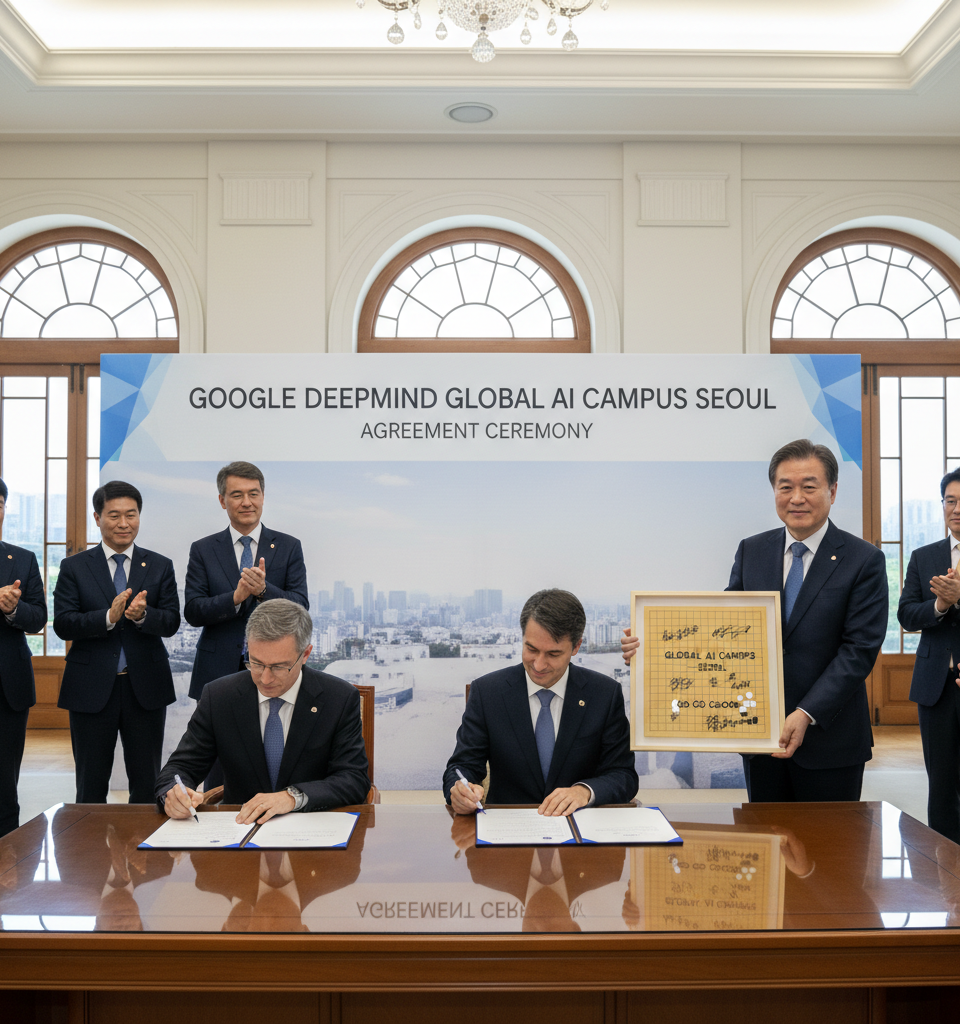
, has chosen Seoul, South Korea, as the location for its first-ever dedicated AI campus outside of its existing facilities. The significant announcement was made following a meeting on Monday between DeepMind CEO Demis Hassabis and South Korean President Lee Jae Myung at Cheong Wa Dae, the former presidential residence. The establishment of this new campus, set to be operational within the current year, signals a deepening collaboration between Google and South Korea, positioning the nation as a pivotal hub for global AI innovation.
The strategic selection of Seoul highlights South Korea's burgeoning reputation as a technological powerhouse, particularly in areas like advanced manufacturing, telecommunications, and digital infrastructure. The country consistently ranks among the top nations for internet penetration and R&D investment as a percentage of GDP, creating a fertile ground for AI development. This move also resonates with South Korea's national strategic initiatives to foster a "future-ready" economy heavily reliant on cutting-edge technologies, including AI, robotics, and biotechnology.
Historically, South Korea has been a frontrunner in adopting and integrating advanced technologies, making it an attractive partner for leading global tech firms. During the high-profile meeting, a Memorandum of Understanding (MOU) was formally signed between Google DeepMind and South Korea's Ministry of Science and ICT, outlining the cooperative framework for the new campus. A key detail emerging from the discussions was President Lee Jae Myung's request, which Hassabis readily accepted, to dispatch at least 10 experienced Google engineers from the company's US headquarters to Seoul to help kickstart operations and foster knowledge transfer.
In a symbolic gesture of goodwill and shared appreciation for strategic thinking, Hassabis presented President Lee with a Go board personally signed by him. The game of Go holds particular significance for DeepMind, whose AlphaGo AI famously defeated world champion Lee Sedol in 2016, a watershed moment in AI history. The establishment of a dedicated DeepMind campus in Seoul is expected to have a profound impact on the broader AI industry and market.
It will likely intensify the global competition for AI talent and resources, potentially spurring other major tech companies to consider similar investments in strategically important regions. The influx of DeepMind's expertise and resources could accelerate the development of groundbreaking AI applications, particularly in areas such as natural language processing, computer vision, and autonomous systems, where South Korean companies already have a strong presence. This could also lead to new partnerships and joint ventures between DeepMind and local South Korean tech firms and academic institutions.
Industry experts and analysts view this development as a testament to South Korea's growing influence in the global tech ecosystem. Dr. Kim Min-joon, a professor of AI ethics at Korea Advanced Institute of Science and Technology (KAIST), commented, “This is more than just an office opening; it’s an endorsement of South Korea’s capacity for innovation.
” Another analyst noted that the move could also be a strategic play by Google to diversify its research footprint and tap into a different cultural and regulatory environment, potentially leading to novel AI applications and ethical frameworks. Looking ahead, the operationalization of the Seoul campus promises a new chapter in Google DeepMind's global expansion. Future developments are expected to include targeted recruitment drives within South Korea, fostering collaborations with leading universities like KAIST and Seoul National University, and potentially launching joint research projects focused on localized applications of AI.
The initial 10 engineers from US headquarters will play a crucial role in establishing the campus's research agenda and integrating it into DeepMind's global network. The success of this first international campus could pave the way for similar ventures in other strategic locations worldwide, further decentralizing and globalizing cutting-edge AI research.