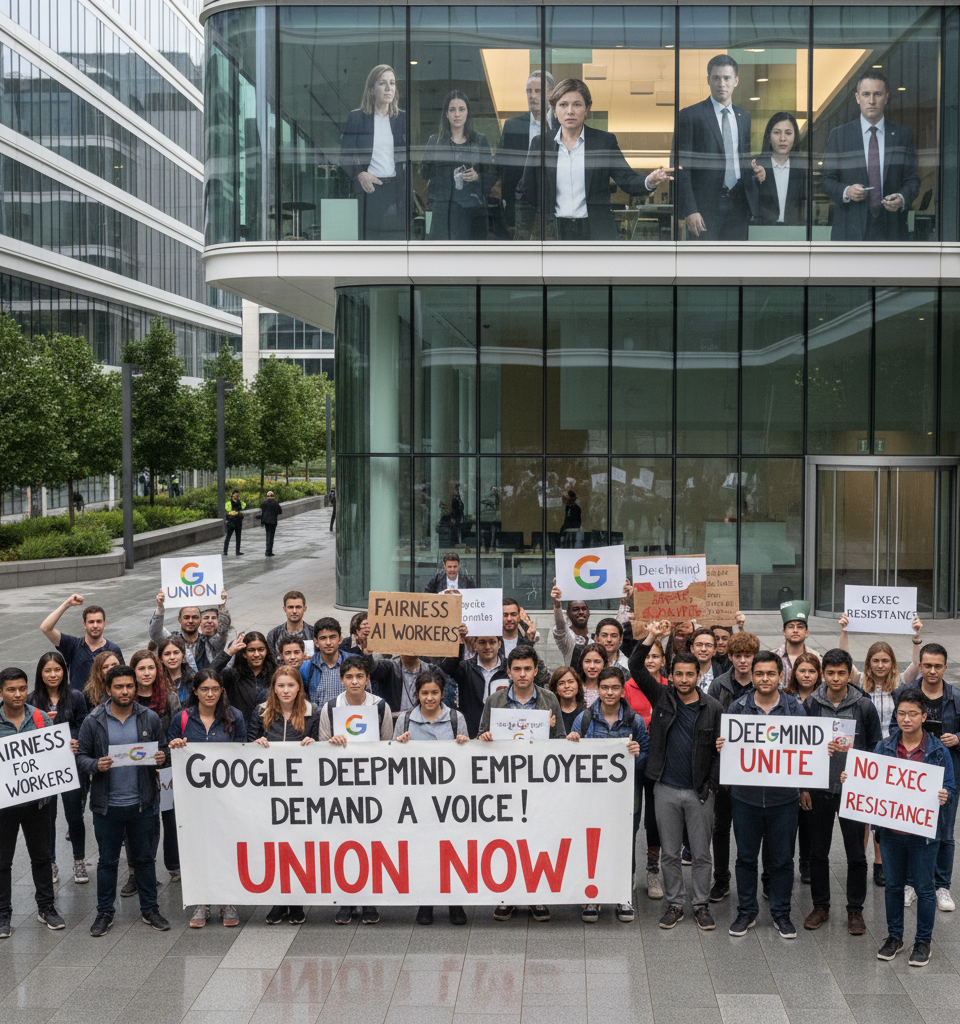
Discussions between Google DeepMind employees and corporate executives regarding potential unionization began Wednesday, immediately revealing deep-seated tensions. Employee representatives have expressed considerable frustration, citing a perceived lack of meaningful engagement from company leadership on the sensitive issue of collective bargaining. This initial resistance threatens to complicate ongoing efforts to establish a formalized union structure within the advanced AI research division.
Context of Rising Tech Unionization
This development at Google DeepMind occurs against a backdrop of increasing unionization activity across the technology sector, a landscape traditionally resistant to organized labor. High-profile campaigns at companies like Apple, Amazon, and Starbucks have demonstrated a growing appetite among tech and service workers for collective representation regarding wages, working conditions, and job security. For Google, a company with a history of internal dissent over ethical AI and workplace culture, the DeepMind negotiations represent a critical test of its approach to employee relations as the industry matures.
Employee Frustrations Mount
Details emerging from Wednesday's talks indicate that employees felt their concerns and proposals were not being adequately addressed by management. Sources close to the negotiations, who requested anonymity to speak candidly, described a atmosphere where executive responses were seen as deflecting rather than dialoguing. This perceived stonewalling contrasts sharply with the employees' stated desire for open and constructive engagement on the path toward formal union recognition. The specific points of contention during the talks were not fully disclosed, but typically involve recognition procedures, bargaining unit scope, and the terms of future collective agreements.
Broader Implications for AI and Tech Labor
The outcome of these early unionization discussions at Google DeepMind could have far-reaching implications, not just for the parent company but for the entire artificial intelligence industry. As AI development becomes increasingly central to global commerce and national security, the working conditions and ethical considerations within leading AI labs are drawing heightened scrutiny. Successful unionization could set a precedent for labor standards within this cutting-edge field, potentially influencing how future AI ethics, safety, and operational protocols are developed and implemented, reflecting employee input.
The Road Ahead for DeepMind Employees
The initial difficulties suggest a protracted negotiation process ahead for Google DeepMind employees seeking union representation. The path to unionization in large corporations is often fraught with legal and logistical challenges, and the current executive stance hints at a potentially arduous campaign. Employees will likely need to solidify their collective position, potentially expand their organizing efforts, and prepare for sustained dialogue with management to overcome this early resistance. The coming weeks will be crucial in determining whether a more conciliatory tone can be established or if the unionization drive will face entrenched opposition.