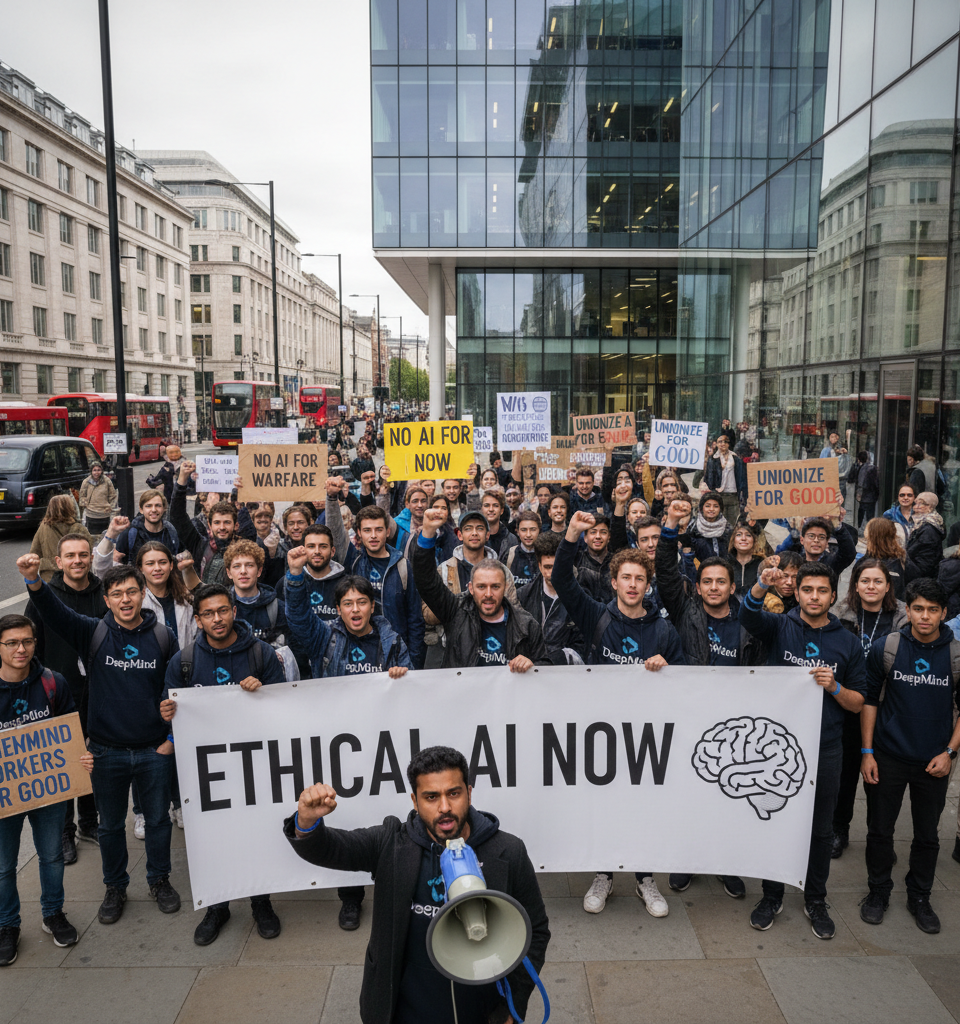
London, UK – In a pivotal move, employees at Google DeepMind's UK offices have decisively voted to form a union, a decision largely motivated by their collective ambition to prevent the application of the company's cutting-edge artificial intelligence (AI) technologies in military contexts. The ballot, which concluded recently, saw a significant majority of the researchers and staff express their desire for collective representation, indicating a potent clash between corporate direction and employee ethical concerns over AI development.
Context and Background
This unionization effort is not an isolated incident but rather a continuation of a broader trend within the tech industry, where employees are increasingly advocating for ethical guidelines and greater oversight in the development and deployment of advanced technologies. Google, in particular, has faced internal dissent over military contracts previously, most notably with Project Maven in 2018, which involved analyzing drone footage for the Pentagon. That project was eventually terminated after widespread employee protests and resignations. The DeepMind unionization underscores a persistent tension between the pursuit of lucrative government contracts and the ethical qualms of AI developers who fear their work could be used for autonomous weaponry or other harmful applications.
Key Details and Motivations
The newly formed union, believed to be the first of its kind within a major AI research lab, aims to establish a formal channel for employees to negotiate directly with management regarding the ethical implications of AI development. While specific figures from the ballot have not been publicly disclosed by DeepMind or the union representatives, sources close to the organizers indicate a robust turnout and a clear mandate from the workforce. Employees cite the potential for AI models—designed for complex problem-solving and pattern recognition—to be weaponized or integrated into military decision-making processes as their primary concern.
They seek to institute policies that would explicitly prohibit such uses, emphasizing the need for responsible AI governance from the ground up. This move also reflects a desire for greater transparency in Google's dealings with defense entities and external partners.
Industry and Market Impact
The unionization at Google DeepMind sends a powerful message across the tech and AI industries. It highlights a growing employee activism that could reshape corporate strategies, particularly for companies vying for defense contracts or developing dual-use technologies. Other major tech firms, such as Microsoft and Amazon, which also engage in significant government and defense work, will undoubtedly be watching these developments closely. The precedent set by DeepMind workers could inspire similar movements in other AI labs and tech companies, potentially leading to a more formalized and employee-driven approach to AI ethics across the sector. This could also impact investment decisions, as ethical considerations increasingly become a factor in public perception and talent acquisition.
Expert Perspective
Industry analysts and labor experts view this development as a significant shift. Dr. Sarah Jenkins, an expert in technology ethics from the University of London, commented, "This isn't just about workers' rights; it's about the moral compass of artificial intelligence development. DeepMind employees are effectively demanding a seat at the table to define what constitutes ethical AI, particularly when it comes to military applications. This could force companies to be far more transparent and accountable for how their AI is used." Others suggest that while Google may initially resist, a positive engagement with the union could ultimately bolster its reputation as a leader in ethical AI, potentially attracting top talent concerned with the broader societal impact of their work.
What's Next?
The immediate next steps involve the formal recognition of the union by Google DeepMind and the commencement of negotiations on a collective bargaining agreement. Key discussion points are expected to include clear policies on military contracts, a framework for ethical oversight of AI projects, and potential mechanisms for employees to report concerns without fear of reprisal. The outcome of these negotiations will be closely watched, as they could set a new standard for how AI giants address employee concerns regarding the ethical implications of their technologies. Further, the success of this union may inspire similar efforts in other parts of Google and within the broader tech ecosystem, pushing for a more human-centric approach to technological advancement and deployment.