Solving the Data Residency Dilemma for Frontier AI
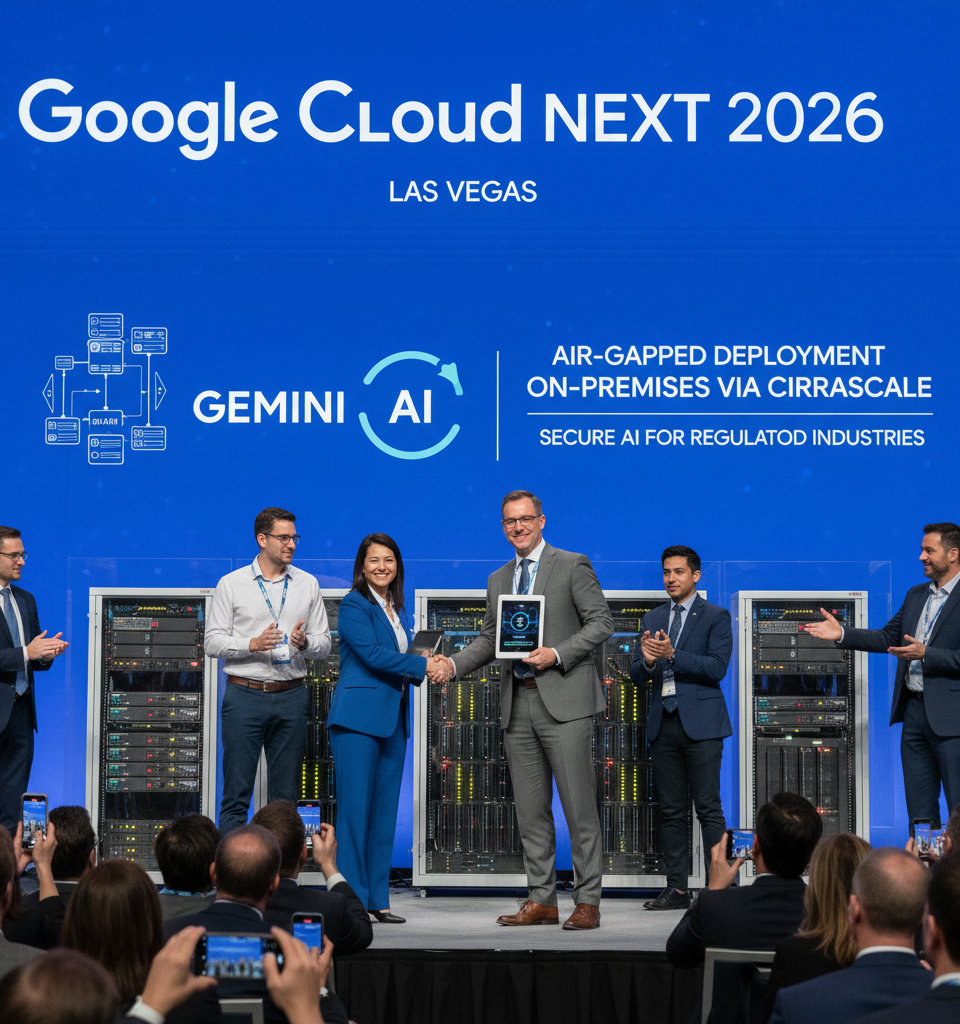
The ability to run a powerful AI model like Gemini in an air-gapped environment represents a crucial leap forward for sectors such as defense, financial services, healthcare, and government. Historically, many organizations in these fields have been hesitant to adopt public cloud-based generative AI solutions due to concerns over data egress, intellectual property protection, and regulatory compliance. The new Cirrascale solution, leveraging Google Distributed Cloud, provides a robust framework for securely accessing frontier-class AI capabilities directly within an organization's own data center, completely isolated from external networks. This 'pull the plug and it vanishes' architecture ensures absolute control over sensitive data and AI operations.
Technical Specifics and Operational Impact
The core of this offering is Cirrascale's specialized hardware infrastructure, optimized to host Google Distributed Cloud, which in turn orchestrates and manages the Gemini model. This integrated appliance ensures that all data processing, model inference, and AI operations occur entirely within the customer's secure perimeter. Sources close to the project indicate that the initial deployment will support a range of Gemini capabilities, from advanced natural language processing to complex reasoning tasks, all without requiring any external internet connectivity post-initial setup. This self-contained unit minimizes exposure to cyber threats and eliminates external data transfer risks, thereby streamlining compliance audits and fortifying an organization's security posture. Initial pricing models suggest a subscription-based service with hardware and software components, tailored to enterprise scale deployments.
Reshaping the Enterprise AI Landscape
This development is poised to significantly impact the broader enterprise AI landscape. By bringing Gemini’s power directly to the data center, Cirrascale and Google Cloud are effectively democratizing access to state-of-the-art AI for a segment of the market previously underserved by public cloud-centric offerings. This could accelerate AI adoption in industries where regulatory hurdles have been the primary bottleneck, potentially unlocking billions of dollars in new AI-driven efficiencies and innovations. Competitors offering public cloud AI services may need to adapt by developing their own on-premises or hybrid cloud solutions to compete effectively for these high-security, high-value enterprise clients.
Expert Perspectives on Security and Innovation
Industry analysts are hailing this as a pivotal moment. Dr. Anya Sharma, lead AI security analyst at TechInsights, commented, "This air-gapped Gemini deployment isn't just about technological capability; it's about trust. For enterprises in highly regulated environments, the ability to physically control their AI infrastructure and data is paramount. This move positions Google and Cirrascale at the forefront of secure, compliant AI, addressing a critical market need that was previously deemed almost insurmountable for frontier models." Another expert, Mr. David Chen, CEO of SecureAI Solutions, added, "We project that within the next two years, at least 15% of all new enterprise generative AI deployments in financial and government sectors will demand similar on-premises, air-gapped solutions. This announcement is a clear indication of market demand dictating technological innovation."
Future Implications and Expanding Horizons
The immediate future will likely see Cirrascale and Google Cloud focusing on deployment velocity and expanding the range of Gemini functionalities available on-premises. There's potential for this model to extend beyond single-server deployments to larger, clustered air-gapped environments, offering even greater scalability and redundancy. Furthermore, this precedent could encourage other leading AI model developers to pursue similar disconnected appliance strategies, fostering a new era of secure, sovereign AI. The long-term implications point towards a more diversified AI deployment model, where public cloud, hybrid cloud, and fully air-gapped on-premises solutions coexist, each serving specific industry needs and regulatory frameworks, fundamentally changing how enterprises engage with and secure advanced AI technologies.