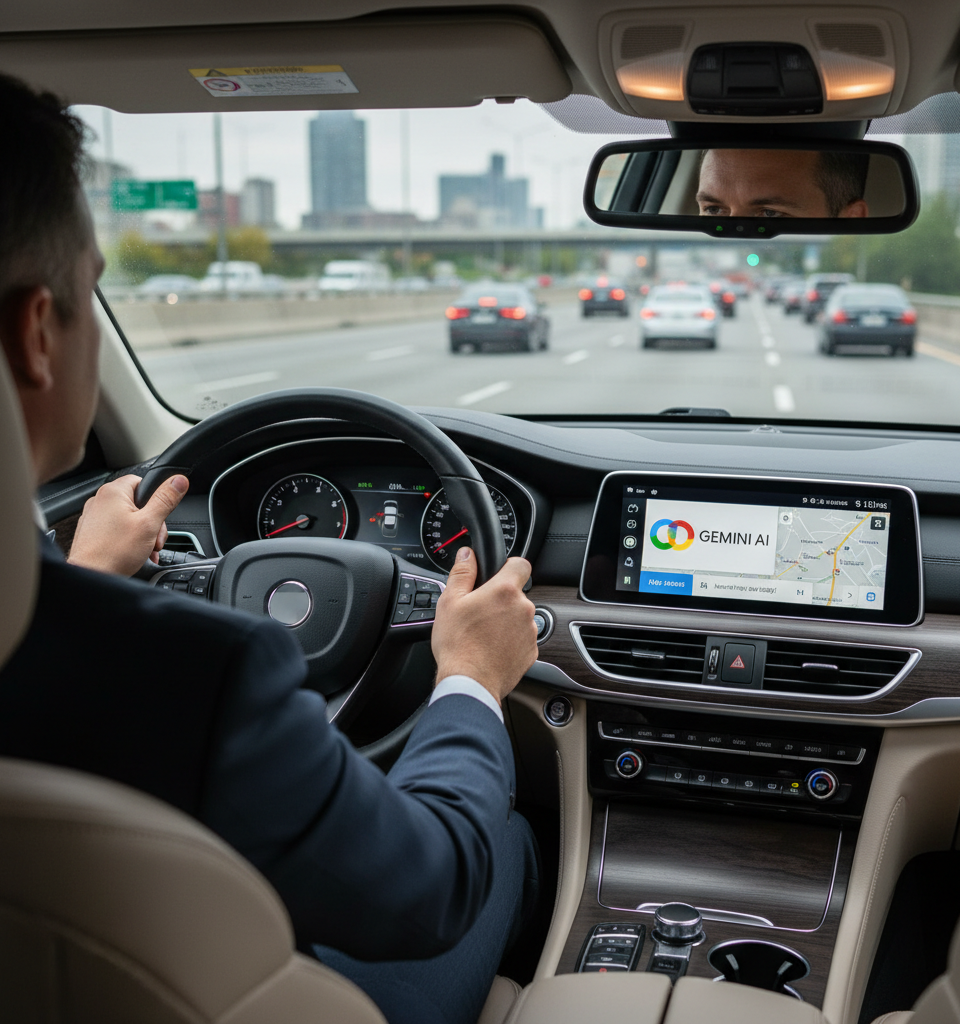
Google has announced a major expansion of its artificial intelligence capabilities, integrating its advanced Gemini AI assistant into millions of vehicles globally. This pivotal development, revealed at a recent industry event, signifies Google's robust intent to infuse sophisticated, conversational AI directly into the automotive ecosystem, promising a more interactive and personalized driving environment for consumers worldwide. The rollout will initially target vehicles equipped with Google Built-in, a service that integrates Android Auto capabilities directly into the car's infotainment system, enhancing navigation, communication, and entertainment.
Context and Background
This initiative comes amidst a rapidly evolving landscape where automotive manufacturers are increasingly seeking to differentiate their offerings through cutting-edge technology. For years, in-car voice assistants have been a staple, yet often fell short of seamless, human-like interaction. Google's move leverages its decades of expertise in search and AI to bridge this gap, offering a more nuanced understanding of driver commands and preferences. The integration of Gemini is not merely an upgrade; it represents a strategic pivot towards making the vehicle an extension of a user's digital life, mirroring the capabilities found in smartphones and smart home devices. This reflects a broader industry trend towards software-defined vehicles, where the user experience is heavily influenced by the underlying digital architecture.
Key Details and Functionality
Under this new integration, Gemini will be capable of handling a much wider array of commands compared to previous iterations of Google Assistant. Drivers will be able to perform complex tasks such as planning multi-stop journeys while simultaneously checking the weather at each destination, or even drafting emails using natural language. Google emphasizes that Gemini's multimodal capabilities will allow it to process and generate various types of information, from text to code to images, making interactions more fluid and contextually aware. The company has not yet disclosed specific vehicle models or manufacturers that will adopt Gemini first, but indicated that this will include existing vehicles already running Google Built-in, as well as upcoming models. This retrofitting capability underscores the scalability of Google's approach.
Industry and Market Impact
The introduction of Gemini into vehicles is expected to send ripples across the automotive and tech industries. For automakers, partnering with Google offers a pathway to rapidly deploy advanced AI without the prohibitively expensive research and development costs. It could also become a significant competitive differentiator, particularly in markets where technology and user experience are key purchase drivers. For tech companies, it solidifies Google's position as a dominant player in the in-car infotainment space, potentially challenging rivals like Apple CarPlay's widespread adoption and other proprietary systems. Analysts predict a potential rise in consumer demand for vehicles equipped with such sophisticated AI, potentially shifting market share towards manufacturers embracing integrated smart technology.
Expert Perspective
Industry analysts view Google's Gemini integration as a game-changer. "This isn't just about voice commands anymore; it's about creating a truly intelligent co-pilot," stated Sarah Chen, a leading automotive technology analyst at AutoVision Research. "Google's deep well of data and AI expertise gives them a significant advantage in making these interactions truly seamless and predictive." She further noted that while privacy concerns will undoubtedly arise, Google's established framework for data handling in other product lines might mitigate some of those anxieties. The potential for increased personalization and safety enhancements, such as proactive alerts or intelligent navigation, is also highlighted as a major benefit.
What's Next?
The initial rollout of Gemini in vehicles is just the beginning. Google plans to continuously update and expand Gemini's capabilities, leveraging over-the-air updates to introduce new features and improve existing ones. Future developments could include deeper integration with vehicle diagnostics, predictive maintenance scheduling, and even advanced personalized infotainment content based on driver and passenger preferences. Discussions are also underway with various automotive partners to explore additional customizations and integrations specific to different vehicle brands and models. This long-term vision positions Gemini not merely as an assistant, but as the central intelligence orchestrating the entire in-car digital experience, setting the stage for fully autonomous, AI-driven vehicles in the coming decade.