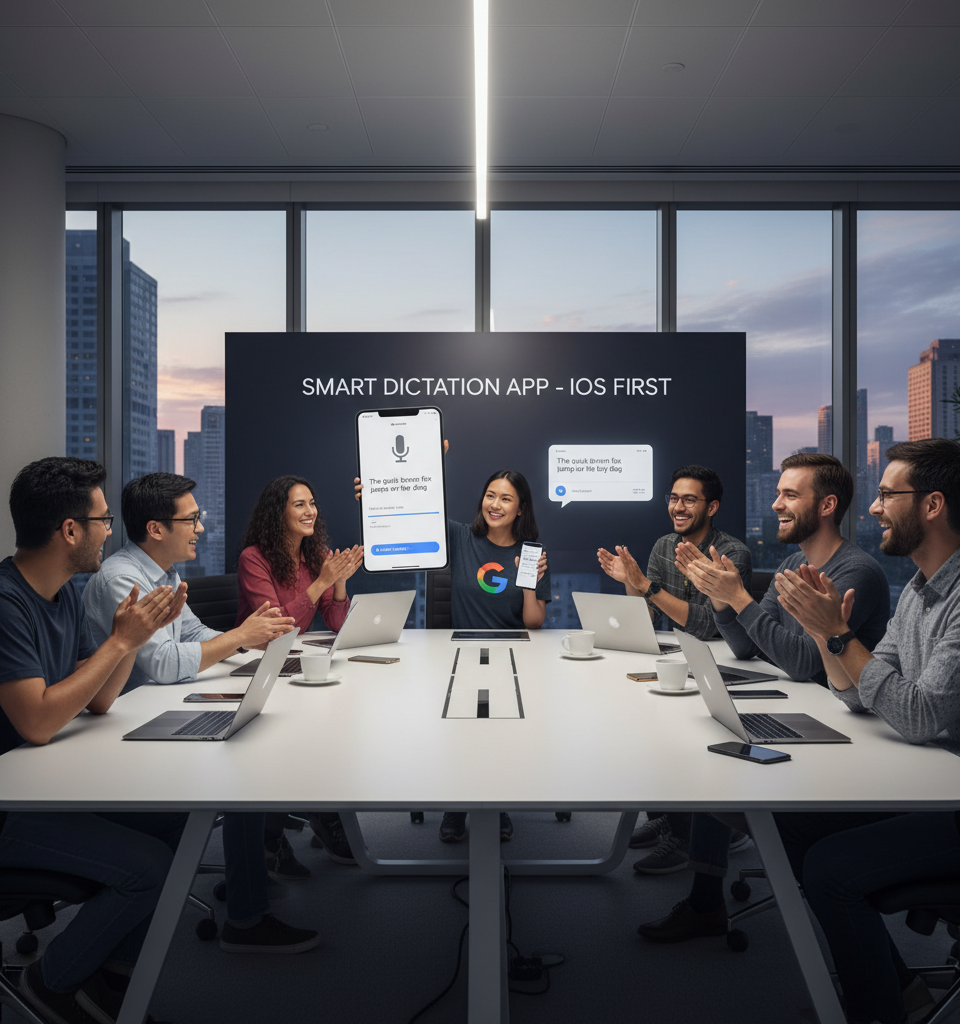
MOUNTAIN VIEW, CA – [Date] – Google today announced the release of a groundbreaking dictation application, poised to revolutionize voice-to-text functionality by leveraging advanced artificial intelligence to automatically correct spoken input. The new tool, dubbed a potential "smartest voice typing tool yet" by insiders, is initially rolling out exclusively for Apple's iOS ecosystem, leaving Android users awaiting its eventual arrival. This strategic launch highlights Google's ambition to refine user interaction with mobile devices, transforming the accuracy and efficiency of voice-based communication.
The Evolution of Voice Input: A Historical Context
This latest offering from Google arrives amid a burgeoning market for voice-activated technologies. While voice dictation has been a staple in operating systems and third-party apps for over a decade, its utility has often been hampered by misinterpretations, especially concerning homophones, context-dependent phrasing, and complex vocabulary. Google's prior efforts, including advancements in Google Assistant and Gboard's voice typing, paved the way for this more sophisticated solution. The focus on predictive text and deep learning algorithms aims to overcome these long-standing challenges, pushing interaction beyond mere transcription to true intent recognition. This development underscores the tech giant's continuous investment in natural language understanding, essential for the future of ambient computing.
Key Features and Technical Specifications
The core innovation of Google's new dictation app lies in its real-time, context-aware correction engine. Unlike traditional voice-to-text systems that transcribe verbatim and offer limited post-correction, this application analyzes spoken phrases against a vast linguistic model to anticipate and automatically rectify errors. For instance, if a user dictates "write two peas in a pod," the system is designed to intelligently interpret it as "write two P's in a pod" or even "write two peace in a pod" depending on the surrounding context and likely intent. Initial reports indicate an accuracy rate exceeding 95% in controlled environments. The application is powered by a new on-device machine learning model, optimizing processing speed and privacy for iOS users. While specific pricing has not been disclosed for a standalone app, it's expected to be integrated into existing Google services or offered as a premium feature.
Industry Impact and Competitive Landscape
Google's entry into the advanced dictation market holds significant implications for both incumbents and competitors. Companies like Nuance Communications, with its Dragon NaturallySpeaking software, have historically dominated the professional dictation space. Furthermore, Apple's own Dictation feature and Microsoft's voice typing tools are already integrated into their respective ecosystems. This move by Google could intensify the competition, potentially driving further innovation in AI-powered text processing. The initial iOS-first strategy is particularly noteworthy, suggesting Google's intent to capture a segment of the high-value iOS user base while perfecting the technology before a broader Android rollout. This could reshape user expectations for hands-free productivity and accessibility, making high-fidelity voice input a standard rather than a niche feature.
Expert Analysis and Market Outlook
Technology analysts are largely optimistic about the potential impact of Google's new offering. Dr. Emily Chen, a leading AI researcher at TechInsights Group, commented, "This isn't just about dictation; it's about semantic understanding. Google is moving from merely transcribing words to interpreting meaning, a crucial step for truly intelligent user interfaces. The on-device processing mentioned suggests improved privacy and efficiency, which are major selling points in today's market." She added that the success of the app will depend not only on its initial accuracy but also on its ability to learn and adapt to individual user speech patterns over time, a challenge that robust machine learning models are well-equipped to handle. The 'iOS-first' strategy is seen as a tactical move, allowing Google to gather crucial user data and refine its algorithms with a discerning, often early-adopter, audience.
Future Implications and Android's Anticipated Release
The roadmap for this innovative dictation app includes an eventual rollout to Android devices, though Google has yet to provide a definitive timeline. Industry watchers anticipate that the Android version will likely incorporate refinements based on iOS user feedback and data. Beyond mobile, the technology holds promise for integration into other Google products, including smart home devices, wearables, and enterprise applications. The continued refinement of such intelligent voice input systems could significantly reduce digital friction, making technology more accessible and intuitive for a broader demographic, including individuals with disabilities. This launch signifies Google's unwavering commitment to pushing the boundaries of AI in practical, everyday applications, cementing its position at the forefront of conversational AI development.