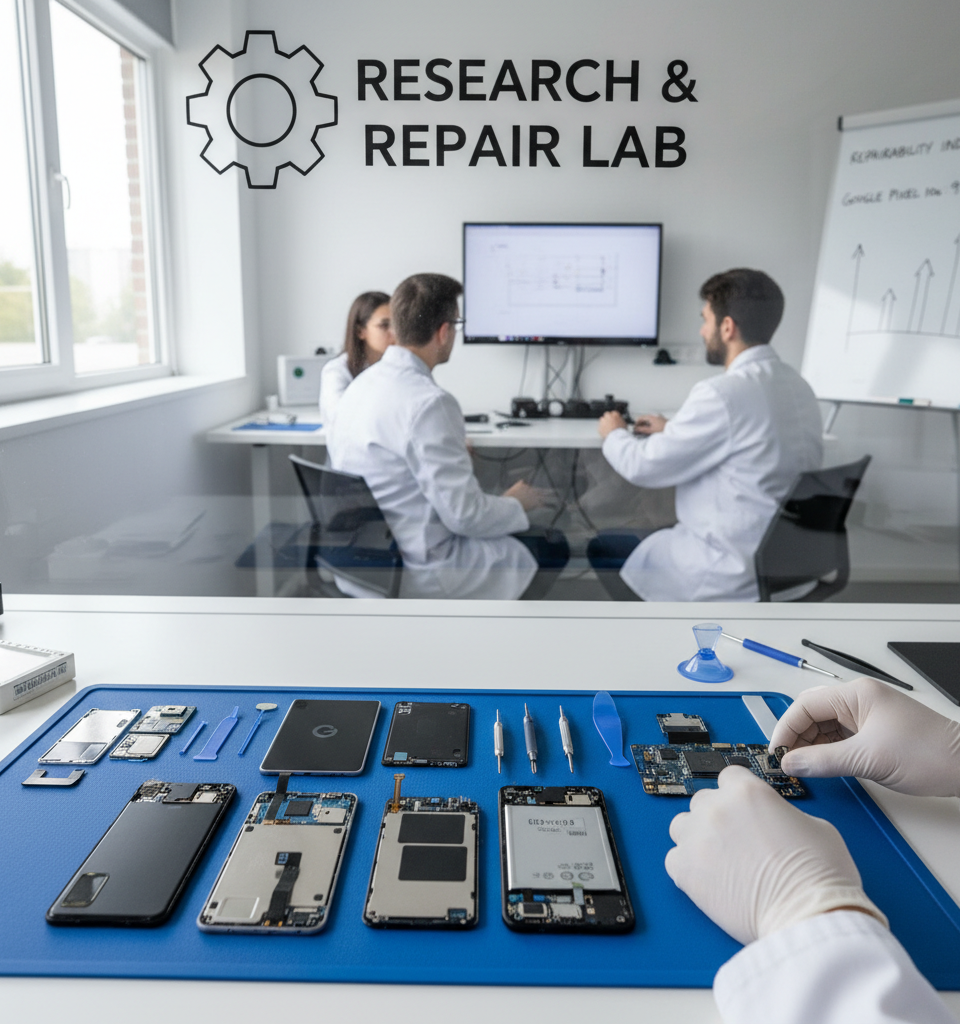
MOUNTAIN VIEW, CA – The newly released Google Pixel 10a has garnered significant attention following an independent teardown that awarded the device an exceptionally high repairability score. This crucial assessment, which evaluates the ease with which a device can be disassembled, repaired, and reassembled, highlights Google's commitment to product longevity and consumer empowerment in an industry frequently criticized for its 'throwaway' culture. The assessment, conducted shortly after the device's market debut, reveals a design philosophy that prioritizes modularity and accessibility for component replacement.
A Shifting Paradigm in Consumer Electronics
This development is particularly noteworthy as it runs counter to a long-standing trend of increasingly difficult-to-repair smartphones, often characterized by glued-down components, proprietary fasteners, and integrated designs. For years, consumers and right-to-repair advocates have lamented the diminishing ability to independently service their devices, leading to increased e-waste and higher replacement costs. Google's move with the Pixel 10a marks a potential turning point, offering a glimpse into a future where smartphone repair is more accessible and less costly for the end-user. This aligns with growing global legislative efforts, such as those seen in the European Union and parts of the United States, pushing for greater repairability and a reduction in electronic waste.
Dissection Reveals User-Friendly Design Choices
The comprehensive teardown revealed several key design decisions contributing to the Pixel 10a's high score. Analysts specifically lauded the use of standardized screws over excessive adhesives, the relatively straightforward removal and replacement of the battery – often a key point of failure in smartphones – and the modular design of crucial components like the display and charging port. While exact figures are typically proprietary, sources familiar with the teardown indicated that the device scored significantly higher than its previous generation models and many of its direct competitors, suggesting a deliberate engineering effort. For instance, the adhesive used for the display was noted as being less aggressive, allowing for easier screen replacement without extensive heat application.
Industry Implications and Competitive Pressure
Google's emphasis on repairability with the Pixel 10a could exert considerable pressure on other major smartphone manufacturers, including Apple and Samsung, to re-evaluate their own design strategies. In an increasingly environmentally conscious market, repairability is transitioning from a niche concern to a significant selling point. Companies that fail to adapt risk alienating a growing segment of consumers who value sustainability and cost-effective maintenance. Furthermore, enhanced repairability could lead to a thriving aftermarket for spare parts and independent repair services, potentially disrupting the revenue streams associated with manufacturer-exclusive repairs and device upgrades.
Expert Perspectives on Google's Strategy
Industry analysts are largely optimistic about Google's direction. "This is a smart strategic move by Google," commented Dr. Eleanor Vance, a technology ethicist at the University of California, Berkeley. "Beyond the environmental benefits, it builds significant goodwill with consumers and right-to-repair advocates. In a saturated market, differentiation through sustainability and user empowerment can be a powerful competitive advantage." Financial modeling suggests that while initial design costs might be marginally higher, the long-term benefits in brand loyalty and market share, coupled with reduced environmental impact, could yield substantial returns for Google. Conversely, some hardware engineers caution that increasing repairability can sometimes compromise water resistance or sleek aesthetics, trade-offs that Google appears to have carefully balanced with the Pixel 10a.
The Road Ahead: Future of Sustainable Smartphone Design
The high repairability score of the Google Pixel 10a sets an important precedent for future smartphone development. Moving forward, consumers can expect an increased focus on modularity, standardized components, and easier access to repair documentation and genuine parts. This trend will likely be amplified by legislative mandates globally. Google's proactive stance with the Pixel 10a positions it as a frontrunner in this evolving landscape, potentially influencing industry best practices and accelerating the transition towards a more sustainable and consumer-centric electronics market. The success of this model could dictate subsequent design principles for Google’s entire Pixel line and beyond, fostering a more sustainable future for consumer electronics.