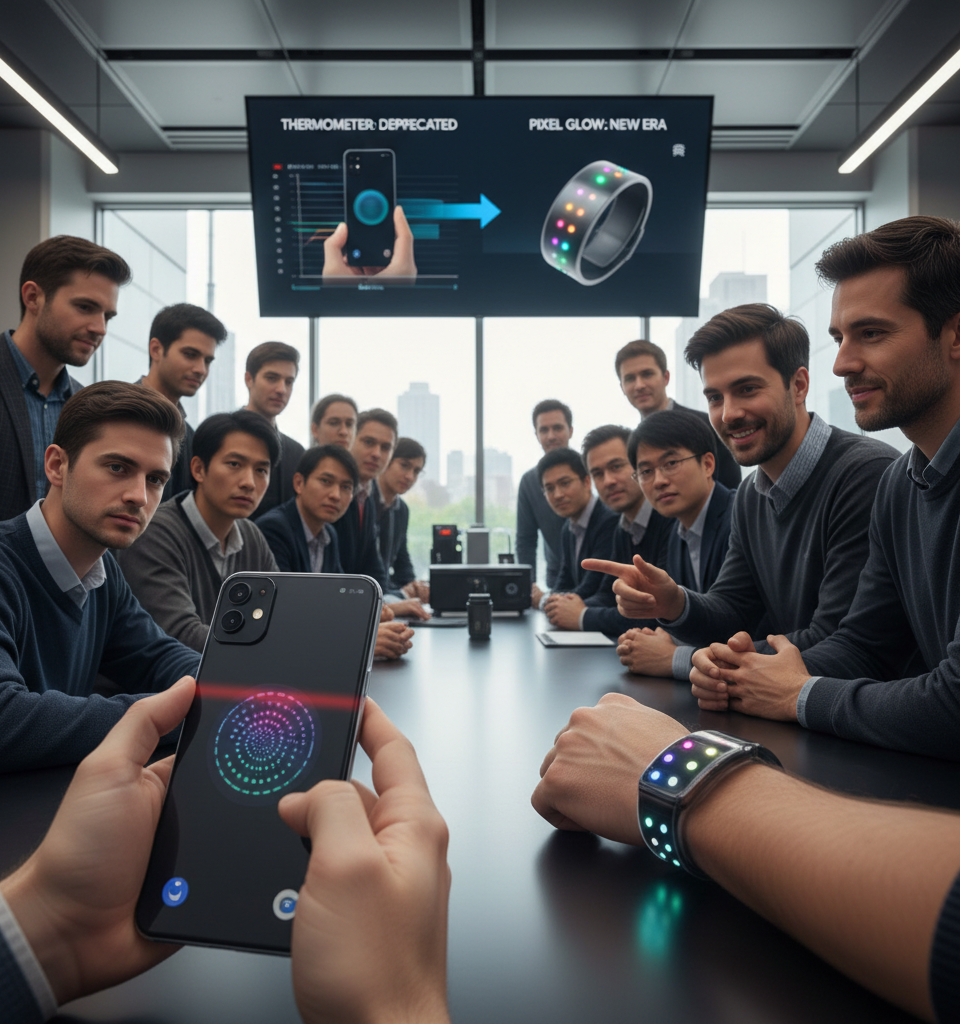
Recent credible leaks indicate that Google is planning to remove the built-in thermometer from its next generation of Pixel smartphones, a feature that has distinguished the devices since its introduction. This move marks a notable shift in Google's hardware design philosophy, as the company reportedly pivots towards integrating 'Pixel Glow' LED indicators instead. The decision calls into question Google’s strategy for differentiating its flagship devices in an increasingly competitive smartphone market.
The Short-Lived Thermometer Era
The thermometer sensor made its debut with the Pixel 8 Pro, marketed by Google as a tool for measuring object temperature. While innovative, its practical applications for the average consumer proved limited, often relegated to novelty status rather than essential functionality. Users could, for example, check the temperature of beverages or cooking surfaces, but widespread adoption or integration into core smartphone use cases never materialized. This lukewarm reception may have prompted Google to re-evaluate its inclusion.
Shifting Focus to Visual Cues
According to sources close to the development, the upcoming Pixel models are expected to feature 'Pixel Glow' LEDs. While specifics remain scarce, these LEDs are anticipated to offer new forms of notification, status indicators, or even aesthetic customization, potentially enhancing the user experience through visual feedback. This transition suggests Google is exploring more universally appealing and easily integrated features, moving away from niche, single-purpose sensors.
Market Impact and Competitive Landscape
The smartphone industry is a battleground of incremental innovations and feature sets. Apple, Samsung, and Chinese manufacturers consistently vie for market share by introducing new camera technologies, processing power, and display advancements. Google's Pixel line, while celebrated for its software prowess and camera, has struggled to achieve the same widespread adoption as its rivals. Removing a less-used feature and introducing a more cosmetic or notification-centric one like 'Pixel Glow' could be an attempt to streamline costs, simplify manufacturing, or appeal to a broader demographic interested in personalization and subtle interaction cues rather than specialized sensors.
Expert Analysis on Google's Strategy
Industry analysts are divided on the implications of this reported change. "Google has always been an experimenter with hardware, sometimes to its detriment," states Sarah Chen, a senior analyst at Tech Insights Group. "The thermometer was a prime example of a feature looking for a problem to solve. Replacing it with something like 'Pixel Glow' LEDs could be a more pragmatic approach, offering visible benefits without the complexity or cost of an underutilized sensor. It aligns with a broader trend of leveraging design for intuitive user feedback." Others suggest Google might be facing pressure to reduce bill-of-materials costs or to create space for other components in an increasingly crowded internal hardware layout.
What's Next for Pixel Innovation
Looking ahead, the replacement of the thermometer with 'Pixel Glow' LEDs could signal a broader strategic direction for Google's Pixel division. It suggests a focus on refining the core user experience through design and integrated software-hardware interactions, rather than pioneering standalone hardware innovations that lack mass appeal. Future Pixel devices may concentrate on advancements in AI integration, camera performance, and battery life, with any novel hardware features being more directly tied to these core strengths. The official unveiling of the next Pixel lineup will undoubtedly provide more clarity on Google’s long-term vision and commitment to hardware differentiation.
The User Perspective and Feature Prioritization
For some users, the thermometer, while niche, represented Google's willingness to experiment and distinguish its hardware. Its potential removal might disappoint a small segment of early adopters who valued its unique proposition. However, for the majority of mainstream consumers, a more aesthetically pleasing or functionally relevant feature like 'Pixel Glow' LEDs could be more appealing. This decision underscores the continuous challenge for smartphone manufacturers: balancing experimental innovation with mainstream appeal and cost-effectiveness in a rapidly evolving market. Google's choices here reflect a strategic prioritization of features that resonate more broadly with user experience expectations.