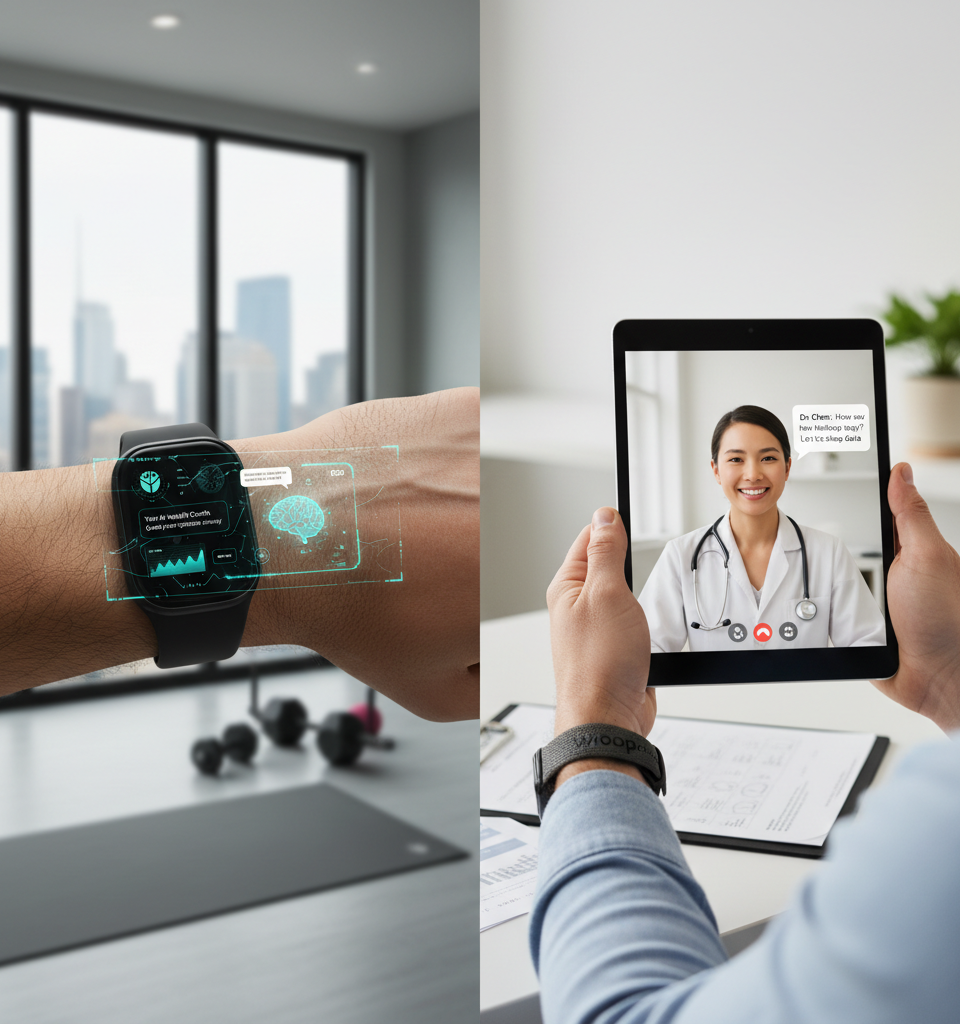
In a significant move poised to reshape the digital health and wellness landscape, Google recently unveiled an AI-powered health coaching service, paired with a new screenless fitness tracker. This initiative, priced at an accessible $9.99 per month for the AI coach and $99 for the accompanying device, leverages Google's Gemini AI to interpret user health data and offer personalized advice. The announcement sent ripples through the industry, prompting a swift and direct response from incumbent wearable tech company Whoop.
Shifting Dynamics in Digital Health
The timing of these developments underscores a burgeoning competition for market share in the lucrative health and fitness technology arena, valued at well over $60 billion globally in 2023. Google's foray into AI-driven health coaching represents a strategic escalation in its commitment to health tech, aiming to democratize access to personalized wellness guidance for a broader consumer base. By integrating its powerful Gemini AI, Google is betting on the scalability and efficiency of artificial intelligence to deliver actionable health insights, from sleep patterns to activity levels and stress management.
Google's AI Ambition vs. Whoop's Human-Centric Strategy
Google's new screenless fitness tracker, designed for discreet wearability, feeds data directly to the AI coach, which then provides tailored recommendations through a connected app. This low-cost, AI-first approach positions Google as a disruptive force, challenging traditional health coaching models. Key features include personalized goal setting, progress tracking, and proactive suggestions for improving overall well-being, all without the need for human intervention. The company emphasizes the convenience and real-time adaptability of its AI coach, capable of processing vast amounts of personal health data instantly.
Within 24 hours of Google's announcement, Whoop, a company known for its premium subscriber-based fitness trackers and detailed physiological analytics, revealed its own significant product enhancement. Whoop announced the immediate addition of on-demand video consultations with licensed clinicians directly within its app. This move is a clear reaffirmation of Whoop's commitment to a more human-centric, medically informed approach to health and performance. Users will now have the option to connect with medical professionals for discussions about their physiological data, recovery, and overall health, offering a distinct contrast to Google's AI-only model.
Market Impact and Strategic Divergence
Industry analysts view these parallel announcements as a pivotal moment, highlighting two divergent philosophical pathways for the future of digital health. Google's strategy leans into the promise of AI for scalable, affordable health management, potentially capturing a massive market segment concerned with cost and accessibility. On the other hand, Whoop's integration of human clinicians underscores a belief in the irreplaceable value of professional medical expertise and personalized, nuanced human interaction, particularly for users seeking deeper medical guidance or validation of their health data. This strategic divergence will likely define the battle for consumer trust and market dominance in the coming years.
Expert Perspectives on the Future of Digital Health
"Google's aggressive pricing and AI-first approach are undoubtedly disruptive, making personalized health coaching accessible to millions," commented Dr. Evelyn Reed, a digital health strategist. "However, the immediate counter from Whoop, introducing human clinicians, speaks to a fundamental need for expert validation and personalized medical advice that AI, in its current form, cannot fully replicate. It's a fascinating test of consumer preference between affordability and human assurance." Another analyst noted the potential for regulatory scrutiny, particularly concerning the medical claims and privacy implications of AI-driven health coaching versus services involving licensed medical professionals.
The Road Ahead: Integration, Regulation, and Trust
Looking ahead, the market will closely observe which approach gains more traction and consumer loyalty. Google's next steps might involve expanding its AI's capabilities to integrate with more comprehensive medical data or partnering with healthcare providers. Whoop, similarly, could deepen its clinical integrations, perhaps offering specialized medical coaching programs or expanding its network of licensed professionals. The evolving regulatory landscape for AI in healthcare and personal data privacy will also play a crucial role in shaping the deployment and acceptance of these technologies. Ultimately, the success of both Google and Whoop will hinge on their ability to build and maintain consumer trust, whether through the precision of artificial intelligence or the empathy and expertise of human professionals.
This burgeoning rivalry signifies a critical maturation of the digital health sector, pushing the boundaries of what is possible in personalized wellness and challenging companies to innovate on both technological fronts and in their approach to patient care.