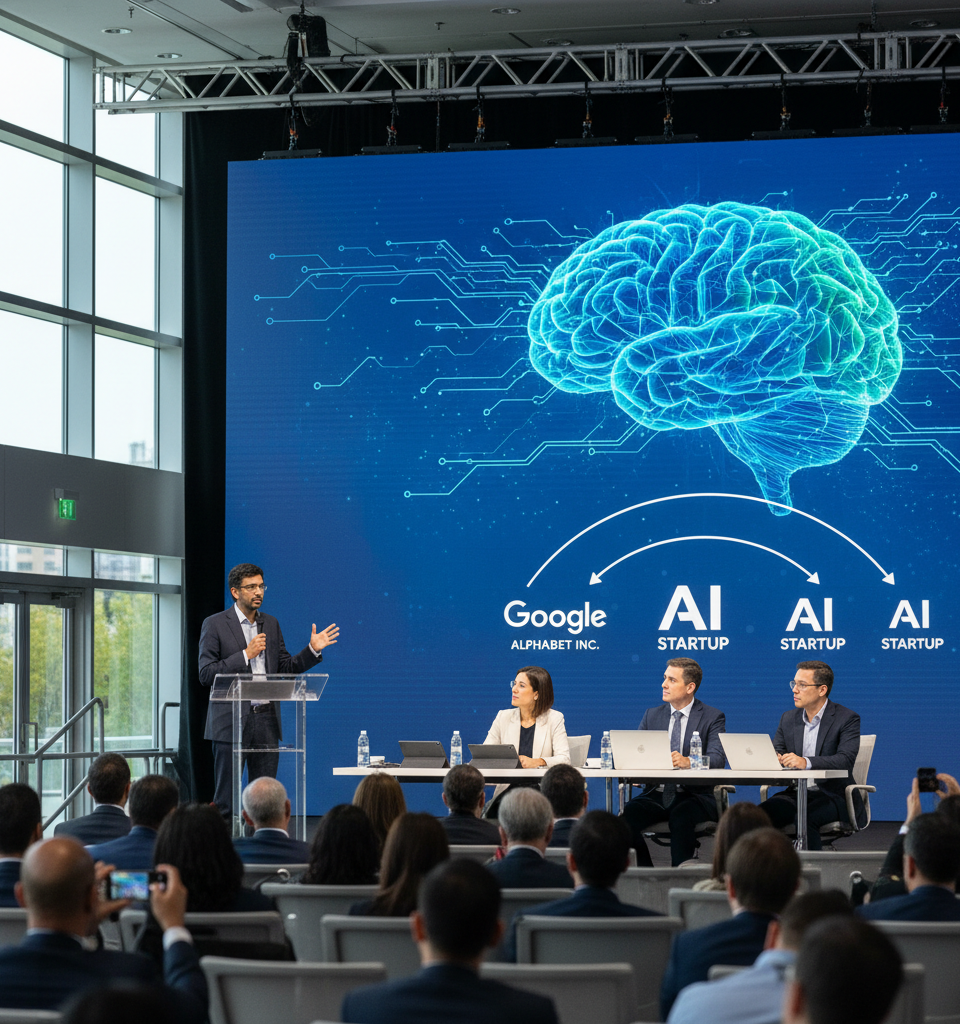
San Francisco, CA – Sundar Pichai, CEO of Google and its parent company Alphabet, has unequivocally identified artificial intelligence (AI) as a profound technological 'shift' that is generating unprecedented opportunities for strategic investments in innovative startups. Speaking recently, Pichai's comments highlight Alphabet's proactive approach to capitalizing on the rapidly evolving AI sector, signaling an intensified focus on fostering emerging technologies through targeted venture capital and direct investments. This strategic pivot aims to both bolster Google's competitive edge and shape the future trajectory of AI development globally.
Alphabet, through its various investment arms including Google Ventures and CapitalG, has historically maintained a significant footprint in the startup ecosystem. Its portfolio boasts stakes in some of the most highly valued private companies globally, including aerospace giant SpaceX, AI research powerhouse Anthropic, and financial technology innovator Stripe. This established track record demonstrates Alphabet's long-standing strategy of investing in disruptive technologies and companies that align with its broader vision for technological advancement and market leadership. The current emphasis on AI reflects a recognition that this particular technological wave presents a unique inflection point.
Pichai's statement aligns with broader industry trends where major tech players are fiercely competing for AI talent, research breakthroughs, and market share. Google's prior multi-billion dollar investment in Anthropic, a prominent AI safety and research company, serves as a prime example of this strategy in action. This investment, alongside its internal AI development efforts such as the Gemini model, illustrates a dual-pronged approach: internal innovation coupled with external strategic partnerships. While specific new investment targets were not disclosed, the message is clear – Google is actively scouting for companies that can accelerate its AI ambitions and reinforce its ecosystem.
The impact of this intensified focus on AI investments is expected to ripple across the venture capital landscape and the broader technology market. It could lead to increased valuations for promising AI startups, further fueling innovation and attracting more capital to the sector. For Alphabet, these investments are not merely financial plays but strategic moves designed to provide early access to cutting-edge technologies, potential acquisition targets, and critical intellectual property. This proactive strategy allows Google to hedge against potential disruptions and identify future growth engines beyond its core advertising business.
Industry analysts have largely interpreted Pichai's comments as a logical and necessary move for a company of Google's stature. "Google's investment strategy in AI startups is less about speculative finance and more about strategic ecosystem building," notes Sarah Chen, a senior analyst at Tech Insights Partners. "By nurturing these young companies, they're not only potentially identifying future acquisition targets but also influencing the direction of AI development in a way that can be synergistic with their own platforms and services." This approach also helps Google maintain relevance in a rapidly shifting technological landscape where smaller, agile startups often drive initial breakthroughs.
Looking ahead, observers anticipate an increase in Alphabet's venture activity within the AI domain. This could manifest in larger funding rounds, more frequent strategic partnerships, and potentially a more aggressive mergers and acquisitions strategy aimed at integrating key AI capabilities. The ongoing rollout of generative AI features across Google's product suite, from Workspace to Search, further underscores the company's commitment to embedding AI at its core. The success of these investments will be crucial in determining Google's long-term competitive standing against rivals like Microsoft, which has also heavily invested in AI through its partnership with OpenAI.
Ultimately, Pichai's pronouncement serves as both a strategic directive and a forecast for the coming years in tech. The 'AI shift' is not merely a buzzword for Google; it is the fundamental reorientation of its investment priorities and a core pillar of its future growth strategy. As the AI arms race intensifies, Google's ability to identify, invest in, and integrate breakthrough technologies from the startup world will be a critical determinant of its continued dominance and innovation capacity.