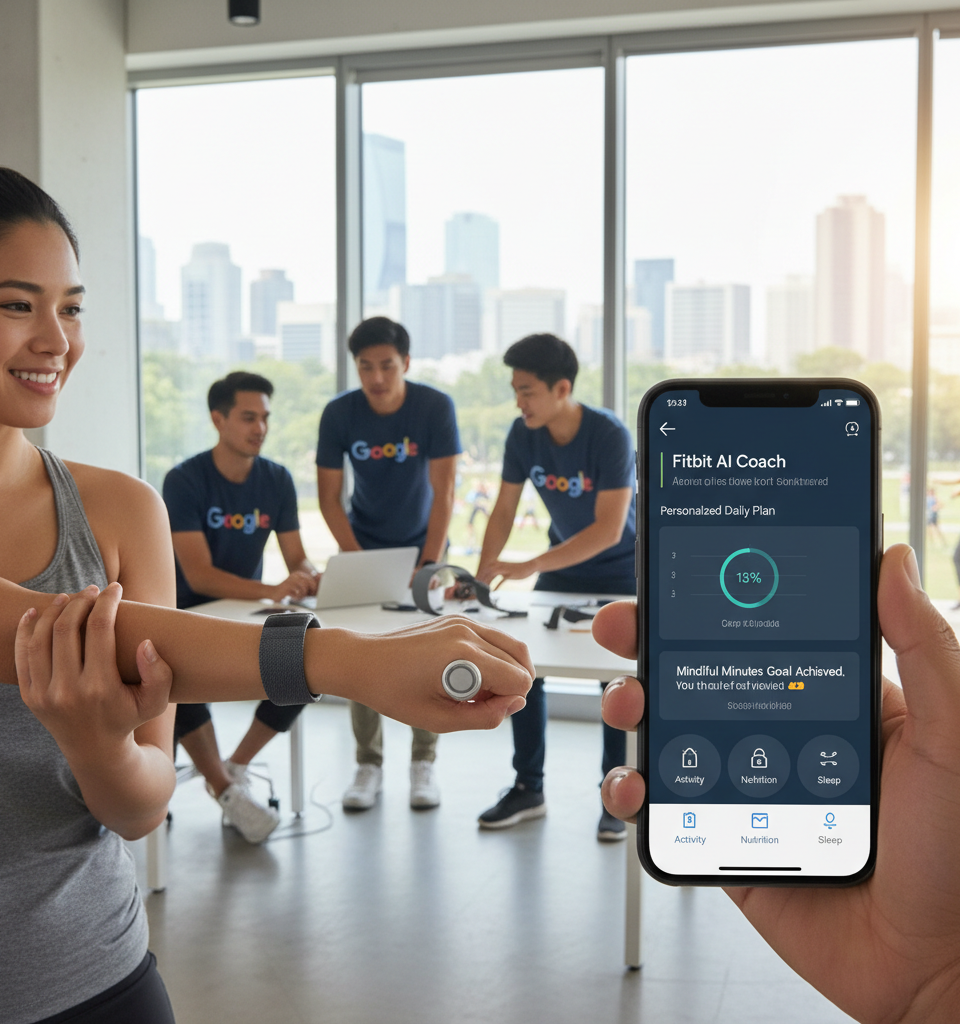
Google has officially launched the Fitbit Air, a novel $100 wearable device distinguished by its complete lack of a screen or physical buttons. Unveiled to the market, this minimalist fabric band, housing a five-gram sensor pack, tracks essential metrics such as heart rate and steps. The device itself serves primarily as a data conduit for a new, immersive AI health coaching experience, accessible for a monthly subscription fee of $10. This launch comes roughly three years after Google's $2.1 billion acquisition of Fitbit in 2021, and represents a considerable departure from Fitbit's traditional product line, emphasizing software and services over standalone hardware functionality.
Contextualizing Google's Wearable Strategy
This strategic pivot by Google underscores a broader industry trend toward subscription-based health and wellness services, moving beyond one-off hardware sales. The acquisition of Fitbit was initially expected to bolster Google's presence in the competitive wearables market, particularly against Apple Watch. However, integrating Fitbit and leveraging its brand appears to have been a more complex undertaking. The introduction of the Fitbit Air, devoid of independent features, clearly indicates Google's intention to monetize health data analysis and personalized AI-driven guidance, establishing a recurring revenue stream rather than solely relying on device sales. This new direction aims to position Google prominently in the burgeoning digital health coaching sector.
Core Features and Subscription Model
The Fitbit Air's sensor pack, discreetly integrated into a soft fabric band, continuously monitors critical health indicators relevant to daily activity and general well-being. Users will access their data and receive personalized insights via a companion smartphone application, which acts as the interface for the AI health coach. The $10 monthly subscription unlocks advanced features, including tailored workout plans, dietary recommendations, sleep optimization strategies, and proactive health alerts, all powered by Google’s sophisticated artificial intelligence algorithms. This model is designed to offer a personalized and continuous health management experience, differentiating it from basic fitness tracking.
Industry and Market Implications
The introduction of a screenless, subscription-dependent wearable device by Google could exert significant pressure on competitors in the fitness tracker and smartwatch segments. Companies like Apple, Samsung, and Garmin, which primarily focus on feature-rich devices with comprehensive displays, may need to re-evaluate their strategies. Google's move suggests a future where hardware becomes merely an enabler for more valuable, intelligent software services. This could accelerate the shift towards 'health as a service,' potentially expanding the market to consumers who prioritize simplicity and integrated coaching over complex device functionalities and frequent notifications.
Expert Perspectives on the Shift
Industry analysts are keenly observing Google’s aggressive push into subscription services with the Fitbit Air. "Google is smartly recognizing that the future of wearables isn't just about collecting data, but about delivering actionable insights and sustained engagement," stated one technology analyst this week. "By making the hardware nearly invisible and the intelligence paramount, they are attempting to lock users into their ecosystem with sticky, value-added services." Some express caution, noting the challenge of convincing consumers to pay a recurring fee for health coaching, especially in a market saturated with free health apps and basic trackers. However, the potential for powerful, personalized AI assistance could be a game-changer for long-term health management.
The Road Ahead for Google Health
Looking forward, the success of the Fitbit Air and its accompanying AI health coaching service will largely depend on user adoption and satisfaction with the personalized guidance. Google is likely to iterate on the AI's capabilities, potentially incorporating more advanced biodata analysis and integrating with other Google health initiatives or third-party healthcare providers. Future updates could also see expanded compatibility with a wider range of smart home devices or medical equipment. This launch signifies a foundational step in Google’s long-term vision for a ubiquitous, AI-driven health ecosystem, where subtle, continuous monitoring underpins a proactive and personalized approach to well-being.
Google's entry into this subscription-focused health model also raises questions about data privacy and the ethical implications of AI-driven health interventions, which the company will need to meticulously address to build consumer trust. The initial reception of the Fitbit Air will provide crucial insights into whether consumers are ready to embrace a largely invisible wearable device that serves primarily as a gateway to sophisticated, paid AI health coaching, rather than a standalone gadget. The coming months will be critical in determining the viability of this bold new direction for Google's wearable strategy.