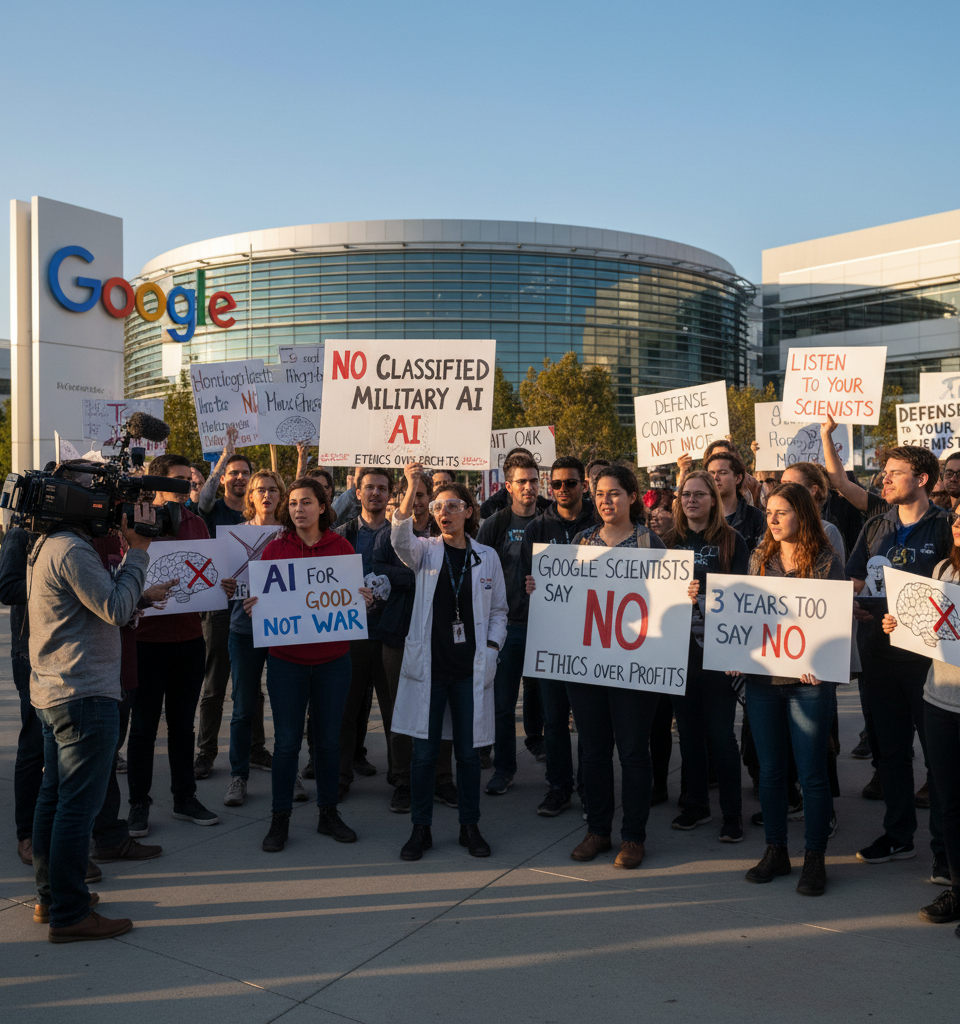
Google is facing a significant ethical challenge from its own workforce, as more than 580 employees, including over 20 directors, senior directors, and vice presidents, have formally petitioned CEO Sundar Pichai to refuse classified military artificial intelligence (AI) contracts for the Pentagon. The letter, which notably includes senior researchers from Google DeepMind, was dispatched to Pichai on Monday, underscoring a growing internal conflict regarding the intersection of Google's advanced AI capabilities and military applications. This widespread internal opposition follows reports that Google management spent three years actively positioning the company to accept such agreements, despite earlier staff concerns.
This isn't the first time Google has grappled with employee activism over defense contracts. The current protest echoes previous controversies, most notably Project Maven in 2018, which involved Google providing AI technology to the Pentagon for drone imagery analysis. That initiative led to widespread employee resignations and a public pledge by Google not to renew the contract, along with the establishment of AI ethical principles.
The resurgence of these concerns, especially around classified military work, indicates that the underlying tensions regarding 'don't be evil' and lucrative government contracts remain unresolved within the tech giant. The letter explicitly states, "We are Google employees who are concerned about the moral and ethical implications of Google participating in classified military AI work." Signatories reportedly include key figures in AI research and development, emphasizing the depth of technical expertise behind the protest.
While specific financial details of potential classified contracts are not publicly known, such agreements often represent multi-billion dollar opportunities for tech companies, making the ethical stance a potentially costly one for the company's bottom line. The employees are advocating for a clear company policy that definitively prohibits involvement in classified military AI, seeking to enshrine their ethical concerns into corporate doctrine rather than relying on ad-hoc decisions. From an industry perspective, Google’s internal struggle reflects a broader societal debate about the role of powerful tech companies in national defense.
Competitors like Microsoft and Amazon have actively pursued and secured substantial military contracts, often facing similar internal ethical debates, albeit less visibly or vocally in some instances. Amazon, for example, is famously a major cloud provider for intelligence agencies. The ongoing tension at Google could influence talent acquisition, particularly in the highly competitive AI field, where many top researchers are driven by ethical considerations and the desire to use technology for beneficial societal outcomes.
A company perceived as being too closely allied with military offensive capabilities might struggle to attract or retain top-tier talent. Analysts are closely watching how Google's leadership responds. "This is more than just an HR issue; it's a strategic juncture for Google," commented Dr. Eleanor Vance, a technology ethics expert at Stanford University. "
Pichai's decision will either reinforce the company's commitment to its ethical AI principles, or it will signal a prioritization of revenue over employee values, potentially damaging its public image and internal morale." The long-term implications could extend to how governments perceive and regulate the involvement of private tech in defense, possibly leading to calls for greater transparency or public oversight of such partnerships. Looking ahead, the immediate future hinges on Pichai's response to the letter.
Should Google proceed with classified military AI work, it is highly likely to face continued internal dissent, potentially leading to further high-profile resignations or even public protests. Conversely, a decision to reject such contracts would be a significant victory for employee activism within a major tech company and could set a precedent for ethical guidelines in the rapidly evolving AI sector. The broader AI community will also be observing closely, as Google's stance could influence ethical frameworks and best practices across the industry, particularly concerning the development and deployment of dual-use AI technologies.
Further developments could include the formulation of more robust and transparent ethical guidelines by Google, potentially involving external oversight or an ethics committee with decision-making power over high-stakes contracts. The company's dialogue with its employees and its ultimate decision will undoubtedly shape its corporate culture and public perception for years to come, impacting not only its business model but also its standing as a leader in responsible AI development.