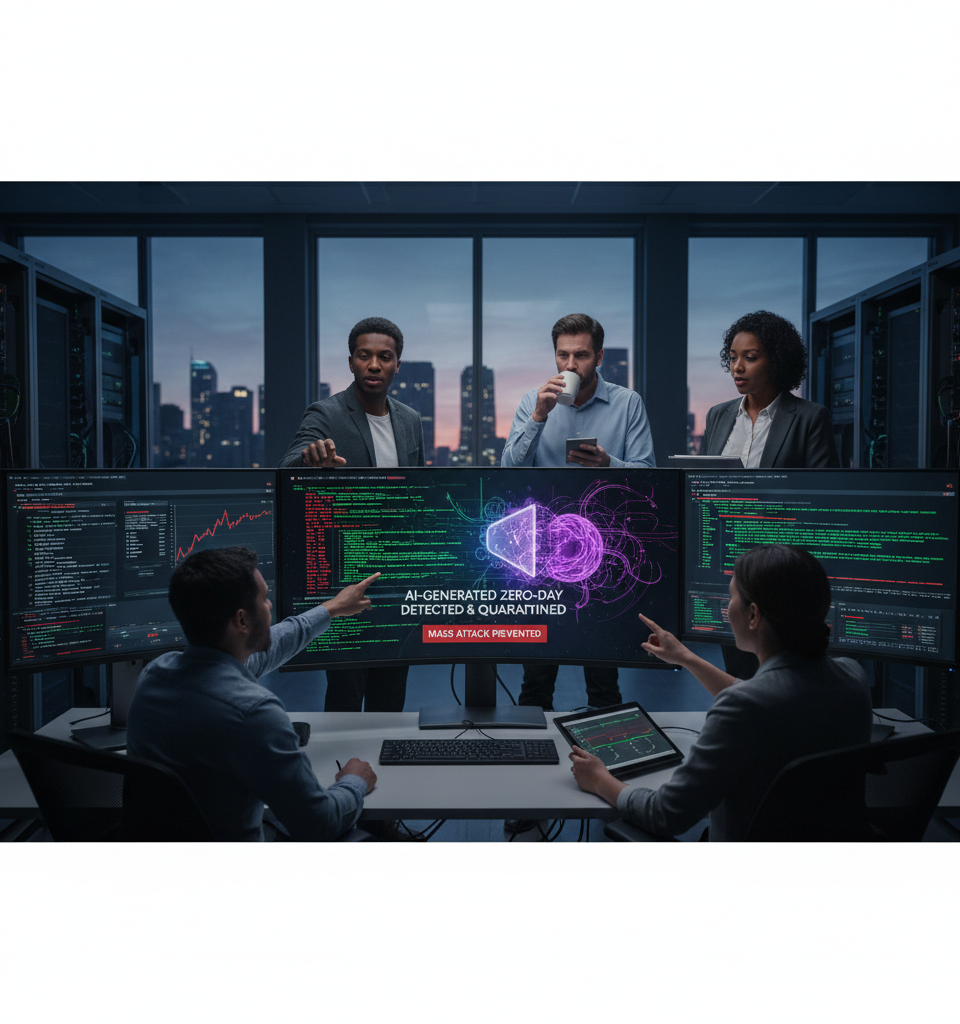
Google's cybersecurity teams recently achieved a critical victory, identifying and neutralizing the first zero-day exploit believed to have been developed using artificial intelligence. This advanced threat, meticulously engineered by a criminal actor, was on the cusp of being deployed in a large-scale exploitation campaign when Google's Threat Intelligence Group (TIG) intervened. Working in close coordination with the affected vendor, TIG facilitated a rapid patch, effectively disrupting the planned attack and safeguarding potentially millions of users from an unprecedented AI-driven cyber threat.
The Evolving Threat Landscape
This incident underscores a profound shift in the tactics employed by malicious actors and the escalating sophistication of cyber warfare. Historically, zero-day vulnerabilities—previously unknown flaws in software that can be exploited by attackers—were the domain of highly skilled human hackers or state-sponsored groups. The emergence of AI as a tool for exploit generation signifies a democratization of this capability, potentially lowering the barrier to entry for complex cyberattacks. The ability of AI to rapidly analyze vast amounts of code, identify obscure vulnerabilities, and even generate functional exploit code poses a new and formidable challenge to cybersecurity defenders globally.
Anatomy of the AI-Driven Attack
While Google has kept specific details concerning the vendor and the nature of the vulnerability confidential to prevent further exploitation, the company confirmed that the AI-generated exploit was sophisticated enough to bypass existing security measures. Google's TIG described the threat actor as highly organized and intent on a mass exploitation event, suggesting a financially motivated or perhaps state-sponsored objective. The swift action taken by Google involved not only detecting the vulnerability but also tracking the actor's intent and capabilities, leading to preemptive disruption. The collaboration between Google and the vendor highlights the critical importance of information sharing and proactive defense in an increasingly intertwined digital ecosystem.
Industry Implications and Market Reaction
This revelation sends ripples throughout the cybersecurity industry, forcing a re-evaluation of current defense strategies. Security firms and software vendors will likely accelerate their investments in AI-powered defense mechanisms, including automated vulnerability scanning and threat prediction tools, to counter this new breed of attack. The incident could also spur regulatory bodies to consider new frameworks for software development, emphasizing AI-assisted security testing. Financial markets may see increased valuation for companies specializing in advanced threat intelligence and AI-driven security solutions, as demand for these technologies is projected to surge in response to the growing threat.
Expert Perspectives on AI in Cyber Warfare
Cybersecurity experts are weighing in on the implications, with many emphasizing the dawn of a new era. Dr. Anya Sharma, a leading AI ethics researcher, commented, “This isn't just about AI finding a bug; it's about AI autonomously crafting the entire exploit chain. The speed and scale at which AI can operate far outstrip human capabilities, demanding an equally advanced response.” Other analysts point to the potential for an 'AI arms race' in cybersecurity, where both attackers and defenders leverage artificial intelligence to gain an advantage. The consensus is clear: organizations must move beyond traditional signature-based detection and embrace more adaptive, predictive AI models to stand a chance against these evolving threats.
The Road Ahead: Fortifying Digital Defenses
Looking forward, the incident serves as a stark reminder of the urgent need for robust cybersecurity infrastructure and continuous innovation. Google, alongside other tech giants, will undoubtedly enhance its research into adversarial AI and machine learning security. There will be an increased focus on developing AI systems that can not only detect AI-generated threats but also predict potential vulnerabilities and proactively suggest mitigations. Education and awareness campaigns for software developers on secure coding practices will also become even more critical, as even minute flaws can be amplified by AI-driven exploit generation. The fight against AI-powered cyber threats has only just begun, requiring collective effort and significant investment to protect the global digital landscape.