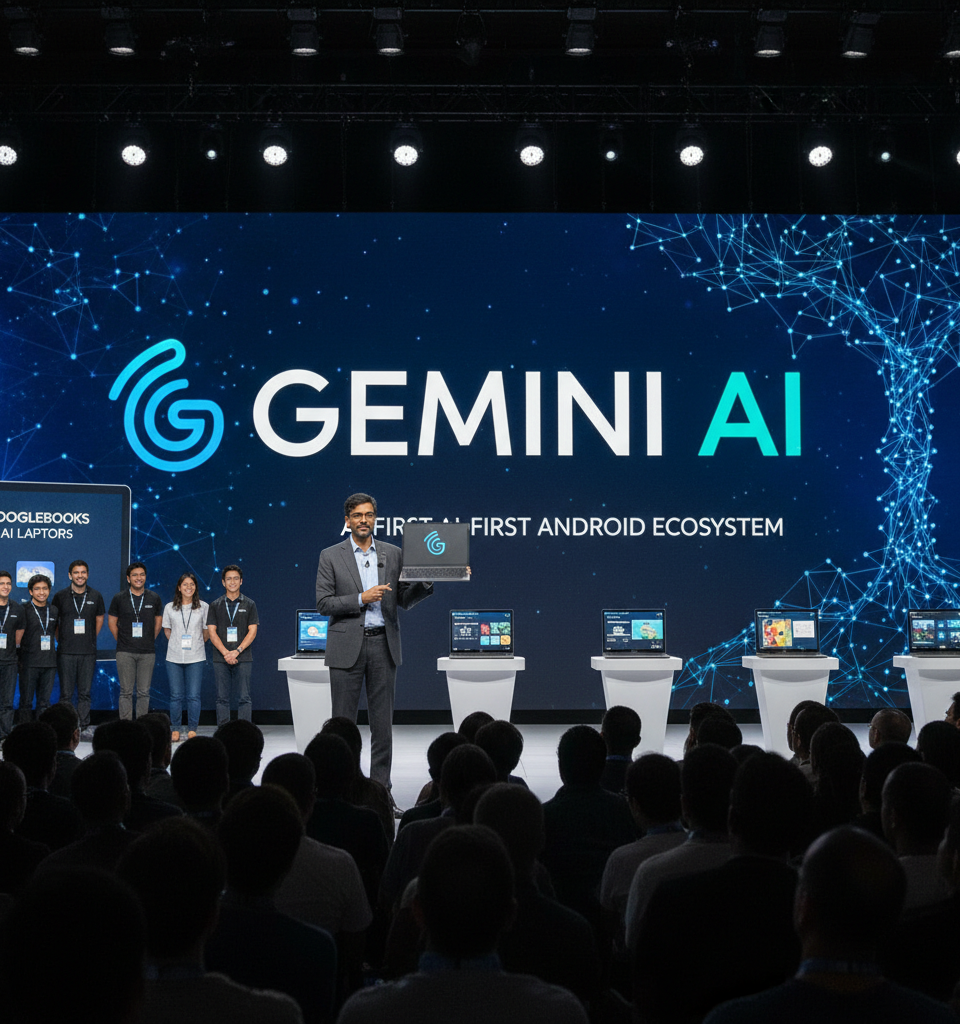
In a strategic pre-I/O briefing, Google has pulled back the curtain on a sweeping array of AI-driven innovations designed to redefine its Android ecosystem. Central to these revelations are new Googlebooks laptops, deeply embedded with AI, and a significant expansion of the Gemini AI model's functionality across Android devices, Chrome, and even in novel 'vibe-coded' widgets. This proactive disclosure sets a powerful tone for Google's commitment to ambient intelligence and user-centric AI experiences, ahead of its annual developer summit.
Shifting to an 'AI-First' Paradigm
This week's announcements underscore Google's pivot toward an AI-first product development philosophy, moving beyond incremental updates to foundational enhancements. The integration of Gemini, Google's advanced AI model, transcends traditional applications, embedding intelligence directly into hardware like the new Googlebooks and into core software experiences such as Android widgets. This strategic direction is poised to reshape how users interact with their devices, making interactions more intuitive, predictive, and personalized. The move reflects a broader industry trend where technology giants are racing to embed generative AI capabilities at every touchpoint of the user journey, positioning AI not just as a feature, but as the underlying operating principle of their platforms.
Key Innovations and Features Revealed
The unveiled Googlebooks laptops stand out with their 'AI-first' design, suggesting dedicated hardware accelerators for on-device AI processing and potentially a co-processor architecture optimized for Gemini. While specific SKUs and pricing remain under wraps, Google emphasized their focus on seamless integration with cloud AI services. Further enhancing the user experience, Gemini's 'agentic' features will expand, allowing for more complex, multi-step actions and proactive assistance across Android.
A notable addition is the introduction of 'vibe-coded' Android widgets, which are expected to dynamically adapt their appearance and functionality based on user context, mood, or environmental factors, marking a novel approach to interface personalization. Furthermore, Gemini will be integrated directly into the Chrome browser, promising smarter web interactions, and a refreshed Android Auto will bring a more intelligent and streamlined in-car experience.
Industry Impact and Competitive Landscape
Google's aggressive AI push is likely to intensify competition within the consumer electronics and software markets. The 'AI-first' Googlebooks could challenge incumbents like Microsoft's Copilot+ PCs, setting a new benchmark for AI integration in personal computing. The deepened integration of Gemini across Android and Chrome also puts pressure on Apple's long-standing ecosystem advantages, particularly as Apple itself is expected to unveil significant AI advancements at its upcoming WWDC. Analysts project that Google's strategy, especially with the introduction of agentic AI features, could capture a larger share of the nascent AI services market, estimated to reach over $300 billion by 2028 globally. The emphasis on ambient computing also aligns with a growing desire for technology that seamlessly blends into daily life rather than demanding constant attention.
Expert Analysis and Market Reception
Industry analysts have largely reacted positively to Google's pre-briefing. "Google is clearly signaling a full-court press on AI, moving beyond demos to deeply integrated product experiences," stated Sarah Chen, a principal analyst at TechInsight Partners. "The 'vibe-coded' widgets, while seemingly minor, exemplify Google's push for contextual intelligence – a critical differentiator in a crowded market." Concerns, however, revolve around user privacy with such extensive data processing and the potential for feature bloat if not carefully managed. Initial market indicators suggest a positive investor response, with Google's stock seeing a modest uptick following the announcements, reflecting confidence in its AI roadmap.
The Road Ahead: I/O and Beyond
These announcements serve as a strategic prelude to Google's much-anticipated I/O developer conference. It is expected that I/O will provide deeper technical dives into Gemini's expanded capabilities, developer tools for integrating agentic AI into third-party applications, and potentially more detailed specifications for the Googlebooks line. The company's commitment to an open Android ecosystem, now supercharged with pervasive AI, suggests an accelerated pace of innovation across the mobile and computing landscape. Over the next 12-18 months, consumers can anticipate a wave of new devices and software updates that leverage this sophisticated AI infrastructure, promising a more intuitive and intelligent digital experience across all Google platforms.