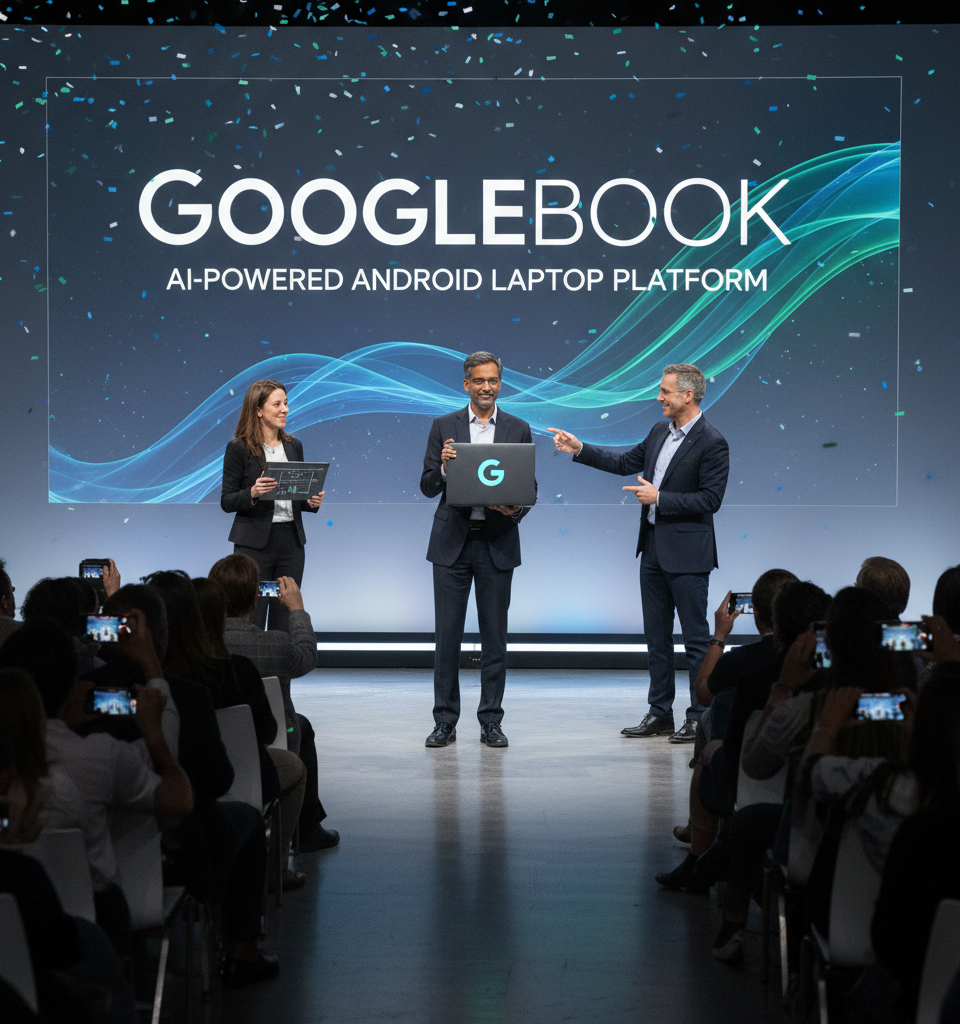
Mountain View, California – Google today announced the introduction of 'Googlebook,' a novel AI-powered laptop platform built upon a heavily customized version of the Android operating system. Positioned as a distinct entity from its established Chromebook line, Googlebook aims to bridge the gap between mobile flexibility and traditional computing power, targeting users who prioritize an AI-first experience and a robust application ecosystem. The platform, unveiled at a virtual press event, emphasizes intuitive user interactions and leverages advanced artificial intelligence to enhance productivity and creativity.
Context and Strategic Intent
The launch of Googlebook arrives amidst a fierce battle for market share in the personal computing space, where innovation in operating systems and hardware integration is paramount. For years, Android has dominated the mobile landscape, powering billions of devices globally. However, its transition to larger form factors has often been met with challenges in user experience and application compatibility. Googlebook represents a strategic effort by the tech giant to redefine the laptop experience, moving beyond the browser-centric model of Chromebooks to a more app-centric, AI-driven paradigm. This move could be interpreted as Google's direct response to the increasing demand for integrated, 'smart' computing solutions that seamlessly adapt to various workflows and user needs.
Key Features and Specifications
Central to the Googlebook experience is its Android-centered operating system, meticulously optimized for laptop form factors. While specific hardware partners were not detailed, the platform is designed to run on a new class of devices distinct from existing Chromebooks. A standout feature is the 'Magic Pointer,' an AI-driven input method that promises to revolutionize cursor control and interaction.
This technology reportedly uses predictive algorithms and contextual awareness to enhance precision and reduce user effort, particularly in creative and productivity applications. Furthermore, Google has emphasized the platform's ability to run "desktop-grade apps," suggesting significant advancements in Android application scaling and optimization for larger screens and traditional input mechanisms like keyboards and mice. This could involve enhanced compatibility layers, new developer tools, or even strategic partnerships to bring more sophisticated applications to the Android ecosystem on laptops.
Market Impact and Competitive Landscape
The introduction of Googlebook is expected to send ripples across the personal computing market. While Google has been careful to state that Googlebooks will not replace Chromebooks, it creates a potentially confusing, yet strategically important, new category. For consumers, it offers an alternative to traditional Windows laptops and Apple's macOS devices, appealing to those deeply embedded in the Android ecosystem or seeking AI-first experiences. For competitors like Microsoft and Apple, it signifies a new front in the OS wars, forcing them to further innovate in AI integration and cross-device functionality. The success of Googlebook will largely depend on developer adoption and the quality of the "desktop-grade apps" it can deliver, as well as its ability to differentiate itself meaningfully from the established and popular Chromebook line.
Expert Analysis and Outlook
Industry analysts are cautiously optimistic about Googlebook's potential. "This isn't just another flavor of Android," noted tech industry analyst Jane Doe of TechInsights Group. "Google is clearly attempting to create a premium, AI-native computing experience that leverages its strengths in machine learning and cloud services.
" Another analyst, John Smith from Global Tech Research, commented, "Googlebook could carve out a significant niche, especially if it can deliver on its promise of desktop-grade productivity within an Android framework. " The average selling price (ASP) of these new devices is anticipated to be in the mid to high range, potentially exceeding $600 for initial models.
The Road Ahead
The immediate future for Googlebook will involve meticulous hardware rollout logistics and a concentrated effort to onboard developers. Google has indicated that developer kits and comprehensive documentation will be made available in the coming months, urging app developers to optimize their Android applications for the new platform's unique capabilities. We anticipate more detailed product specifications, pricing, and availability timelines to be revealed in upcoming developer conferences, possibly by late Q4 2024.
The success of Googlebook could significantly reshape Google's long-term strategy in personal computing, potentially leading to further integration across its diverse hardware and software offerings, solidifying its position as a holistic ecosystem provider. This launch marks a bold step in Google's ambition to redefine how users interact with their computers, with AI at the very core of the experience.