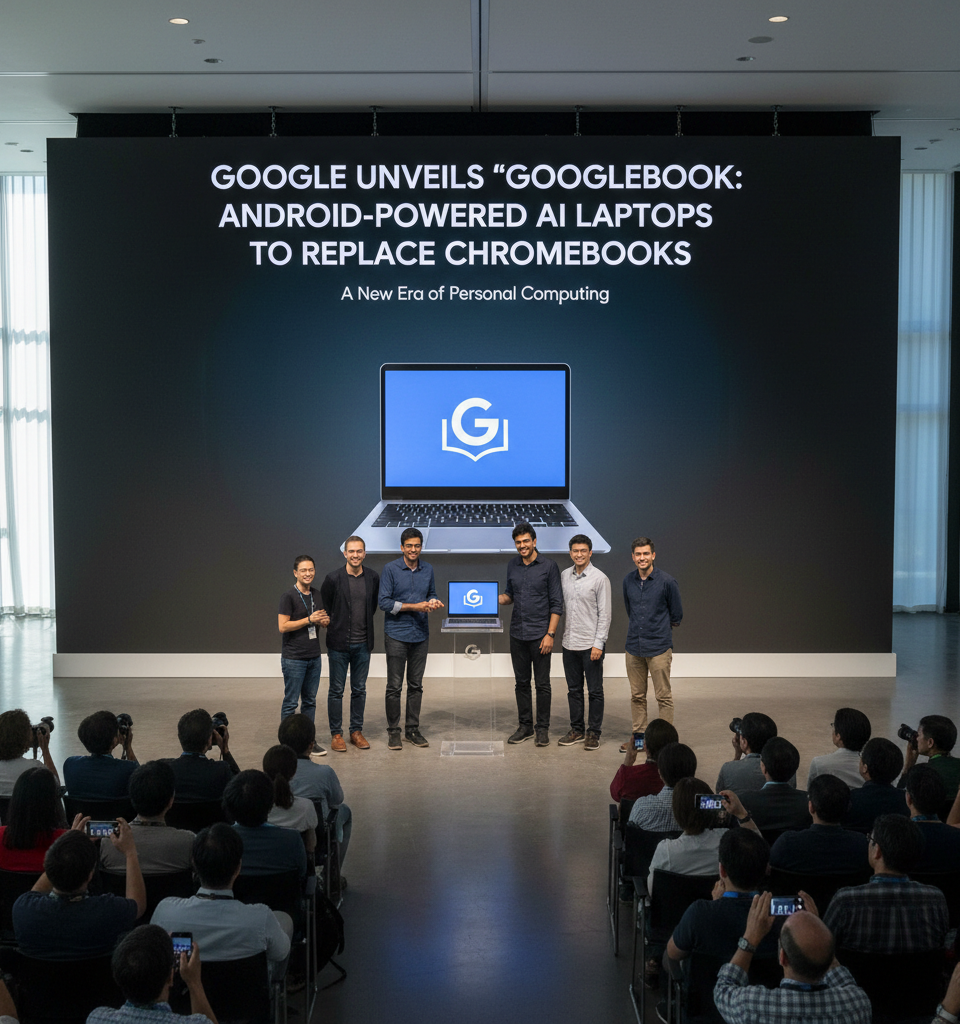
In a significant strategic pivot, Google this week unveiled "Googlebook," a new category of premium laptops designed to replace its long-standing Chromebook line. The announcement, made at the Android Show, signals a profound shift in Google's hardware and operating system philosophy, moving beyond the browser-as-OS model that defined Chromebooks for over a decade. These new devices will run on the Android operating system, with Google's advanced Gemini AI embedded at a foundational level, transforming the user's cursor into an intelligent AI agent. The first Googlebook models are slated for release this autumn, marking a pivotal moment in the consumer computing landscape.
The Evolution from Chromebook to Googlebook
The introduction of Googlebook represents the culmination of a 15-year journey for Google in the laptop market. The Chromebook, launched in 2011, pioneered the concept of a cloud-first, browser-based operating system, aiming for simplicity, security, and affordability. While Chromebooks found a significant niche in education and budget-conscious consumers, particularly during the pandemic-driven surge in remote learning, their limitations in offline functionality and specialized software support became increasingly apparent. Google's decision to transition to an Android-based system with deep AI integration acknowledges that a mere browser is no longer sufficient for modern computing demands, signaling a move towards a more powerful and versatile user experience.
Key Features and AI Integration
The defining characteristic of Googlebook devices is their seamless integration of Gemini AI. Unlike current AI features that often exist as separate applications or web services, Gemini on Googlebook is embedded directly into the operating system. This promises to elevate the user experience significantly, with the cursor itself acting as an AI agent, capable of anticipating needs, automating tasks, and offering context-aware assistance across applications. While specific technical specifications for the initial models were not fully disclosed, Google emphasized a focus on premium hardware, indicating a departure from the often budget-oriented design of many Chromebooks. Early reports suggest high-resolution displays, enhanced processing power, and robust battery life will be standard, positioning Googlebook to compete with high-end Windows and macOS laptops.
Industry and Market Impact
This move by Google is expected to send ripples across the technology industry. For Microsoft and Apple, it introduces a formidable new competitor in the premium laptop segment, armed with Google’s immense AI capabilities and vast Android ecosystem now optimized for a laptop form factor. The shift could potentially divert market share from Windows-based devices, particularly if Googlebook successfully leverages the estimated 3.5 billion active Android devices globally. Furthermore, it creates new opportunities for Android app developers to optimize their applications for a larger screen and a more productivity-focused environment. The education market, once a stronghold for Chromebooks, will also be watching closely to see if Googlebook can offer a more versatile solution while maintaining cost-effectiveness.
Expert Perspectives
Industry analysts are largely optimistic yet cautious about Googlebook's potential. "This is Google's biggest bet on hardware in years, combining their strengths in AI and mobile OS into a cohesive computing experience," states Sarah Chen, a principal analyst at Tech Insights Group. "The challenge will be convincing users accustomed to Windows and macOS to make the switch, especially in professional environments." Other experts highlight the importance of the developer ecosystem. "Success hinges on whether developers embrace Android for larger screens with the same vigor they did for smartphones," notes David Kim, a software development consultant. "The integrated Gemini AI, however, could be a genuine differentiator, offering a level of proactive assistance not yet seen in rival operating systems."
Future Implications and Rollout
The autumn launch of Googlebook will be a critical test for Google's new computing vision. Beyond the initial device rollout, Google is expected to unveil a comprehensive roadmap for Googlebook, including potential enterprise versions and further AI enhancements. The company has hinted at a long-term strategy that could see Android and Gemini become the central pillars of a unified computing experience across all form factors, from smartphones and tablets to laptops and even augmented reality devices. The success of Googlebook could redefine the future of personal computing, potentially shifting the industry's focus towards deeply integrated AI agents as the primary interface for digital interaction. The market will be watching closely to see if Google can execute this ambitious vision and cement its place as a leader in the next generation of computing.