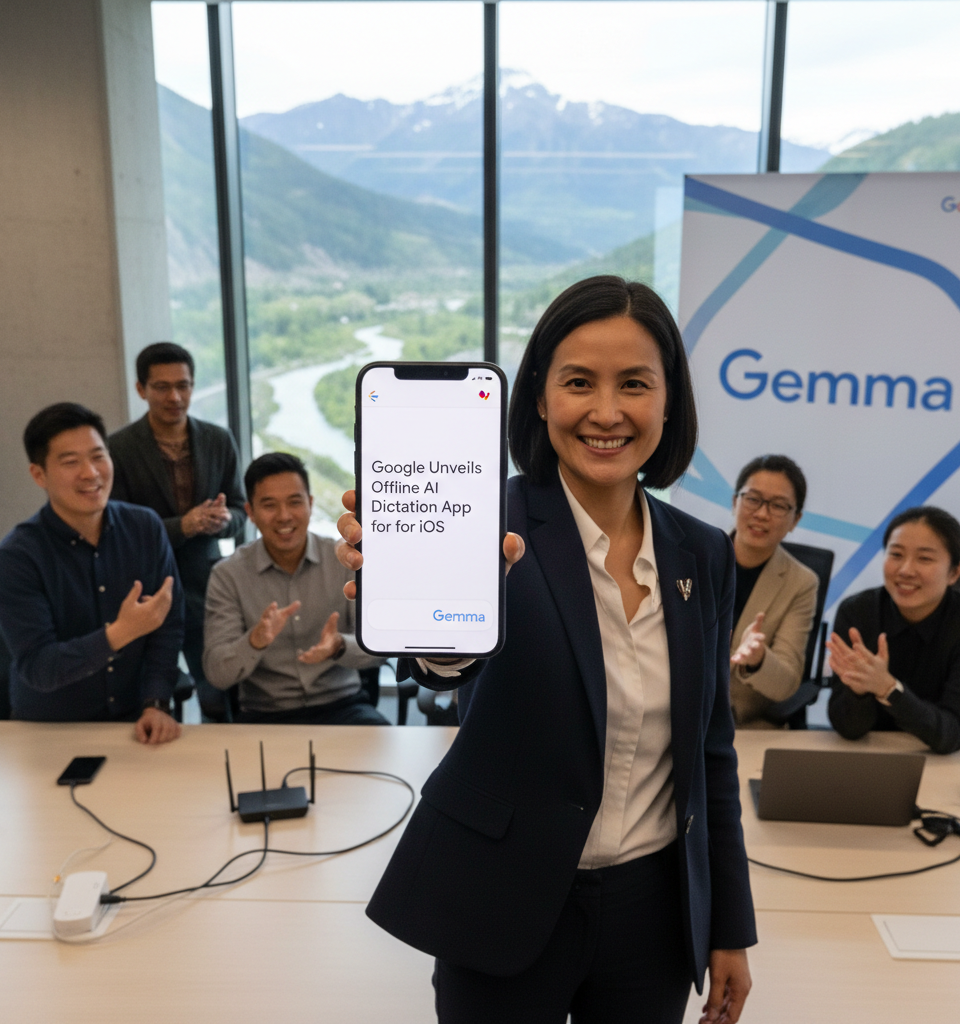
In a quiet but significant development, Google has introduced an offline-first artificial intelligence (AI) dictation application for Apple's iOS ecosystem. This new offering, powered by Google's sophisticated Gemma AI models, signals a strategic foray into the rapidly expanding market for high-performance voice-to-text solutions, directly challenging entrenched competitors such as Wispr Flow. The application, which became available recently without an official Google announcement, aims to provide robust and reliable transcription capabilities even without an internet connection, a key differentiator in a field typically reliant on cloud processing.
This launch comes at a pivotal time, as demand for seamless productivity tools continues to surge, particularly among professionals and content creators. The ability to accurately transcribe speech to text offline addresses a critical pain point for users in low-connectivity environments or those concerned about data privacy and latency. Google's rich history in AI research and development, particularly in large language models and speech recognition, forms the bedrock of this new application, building on years of innovation that have powered products from Google Assistant to Google Translate.
The core of the new application's functionality lies in its utilization of Google's Gemma AI models. These lightweight, open-source models, derived from the same research that produced the Gemini family of models, are optimized for on-device performance, enabling accurate transcription without constant cloud interaction. While specific performance metrics have not yet been officially released by Google, early user feedback suggests competitive accuracy rates and impressive speed. The application is designed to be intuitive, allowing users to initiate dictation quickly and manage their transcribed notes efficiently, providing features common to premium dictation services like real-time punctuation and speaker differentiation (though advanced features may still be under development).
The entry of a tech titan like Google into the offline dictation space is poised to significantly disrupt the market landscape. Current leaders such as Wispr Flow, Otter.ai, and various dedicated medical or legal transcription services could face increased pressure to innovate and differentiate. Google's brand recognition and vast user base, coupled with the potential for deep integration into its existing suite of productivity tools (like Google Docs and Google Drive), present a formidable competitive threat. Analysts anticipate that this move could accelerate the commoditization of basic dictation services while raising the bar for advanced features and offline capabilities across the industry.
Industry analysts are keenly observing Google's strategy. "Google's quiet entry into this specific niche highlights a broader trend: the push for more on-device AI capabilities," states Dr. Evelyn Chen, a principal analyst at Tech Insights Group. "By making their powerful Gemma models available for offline dictation on iOS, they're not just competing on features; they're fundamentally altering the economics and accessibility of high-quality transcription. This could force smaller players to pivot towards hyper-niche markets or superior integration with specific enterprise workflows." The estimated market for AI-powered transcription services is projected to reach approximately $3.5 billion by 2027, growing at a CAGR of 19%, making it a highly attractive sector for major players.
Looking ahead, Google's introduction of an offline AI dictation app on iOS is likely just the beginning. Future iterations could see deeper integration with Google Workspace, multi-language support, and even more sophisticated, personalized AI features. There's also the potential for Google to bring this technology to its Android ecosystem, further expanding its reach. This move underscores Google's commitment to leveraging its AI prowess to enhance productivity across diverse platforms, setting the stage for an intense competitive battle in the voice-to-text market over the coming years.