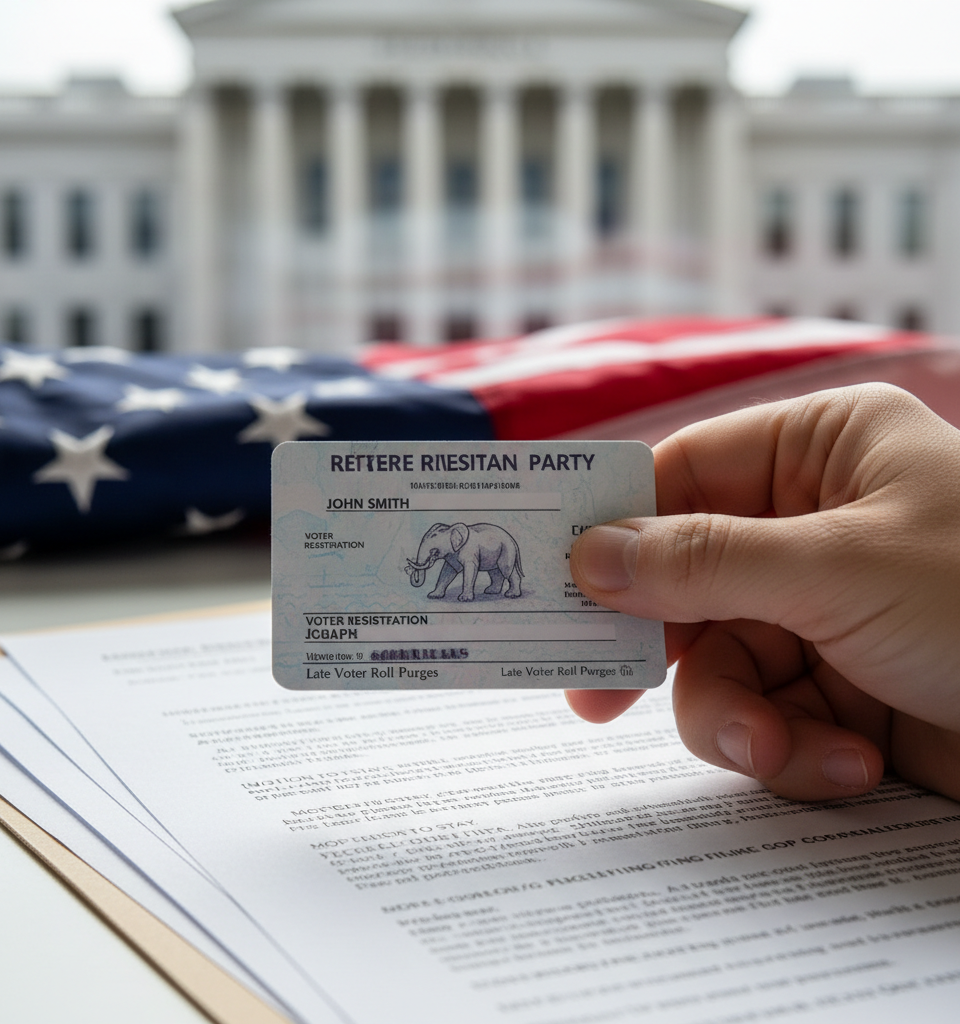
A concerted campaign by Republican factions is underway to challenge and reinterpret a federal statute that broadly bans systematic voter roll purges in the 90 days preceding Election Day. These legal and political maneuvers, currently unfolding in various jurisdictions, aim to overturn a critical safeguard designed to ensure eligible citizens are not disenfranchised shortly before casting their ballots.
The federal prohibition on late purges has been a cornerstone of voter protection for decades, primarily intended to prevent erroneous removals or administrative burdens that could unfairly prevent qualified individuals from voting. The recent Republican-led efforts seek to redefine the scope and application of this ban, potentially allowing states to undertake aggressive voter roll maintenance closer to election dates. Critics argue that such reinterpretation could disproportionately affect minority voters, low-income citizens, and students, who often face greater challenges in re-registering or proving their eligibility on short notice.
Historical Context of Voter Roll Protections
The legal framework dictating voter roll maintenance was established to balance the need for accurate voter lists with the imperative of protecting every citizen's right to vote. The 90-day blackout period before federal elections has long been considered essential for several reasons. It provides stability to voter rolls, minimizes the potential for partisan manipulation, and allows ample time for any errors in voter removal to be corrected without impeding an individual's ability to vote. Historically, attempts to modify or ignore these protections have often been met with significant legal and public resistance, underscoring the perceived importance of this buffer period.
Implications for Voter Access
The potential reinterpretation of this federal law carries profound implications for voter access across the United States. If successful, it could enable states to implement more aggressive and expedited voter roll cleaning procedures just weeks before major elections. Proponents of such changes often cite concerns about voter fraud and the integrity of elections, arguing that outdated voter rolls can be exploited. However, opponents contend that these arguments often mask an intent to suppress votes, particularly in districts where certain demographics lean towards opposing political parties. The systematic removal of voters close to an election without sufficient due process or notification could lead to widespread confusion at polling places and potentially disenfranchise thousands of eligible voters.
Legal Challenges and Judicial Scrutiny
These Republican-led initiatives are primarily manifesting as legal challenges brought before federal courts, seeking judicial declarations that would narrow the interpretation of the existing federal ban. Each case scrutinizes the precise language of the statute and its legislative intent, aiming to create precedents that would allow states more leeway in their purge schedules. The outcomes of these cases are highly anticipated, as they could set a new legal standard for voter roll maintenance nationwide. The judiciary's role will be crucial in balancing states' rights to manage their elections with the fundamental federal protection of voting rights.
Broader Political Landscape
This legal push is unfolding within a broader political landscape characterized by intense national debate over election integrity and voting rights. Both major parties have articulated differing philosophies on how elections should be administered, with voter access often clashing with concerns about security. The Republican push to reinterpret the late-purge ban can be seen as part of a larger strategy to reshape election laws in a manner that they believe will enhance the fairness and security of the electoral process.
What Lies Ahead
The ongoing legal battles are expected to continue through various judicial tiers, potentially reaching the Supreme Court depending on the nature of initial rulings and appeals. The decisions rendered in these cases will significantly impact election administration policies for years to come. Election officials, advocacy groups, and political parties are closely monitoring these developments, preparing for potential shifts in voter registration protocols that could dramatically alter the landscape of future elections. The ultimate resolution will depend on how courts weigh statutory text against constitutional imperatives and historical precedent in the context of American voting rights.