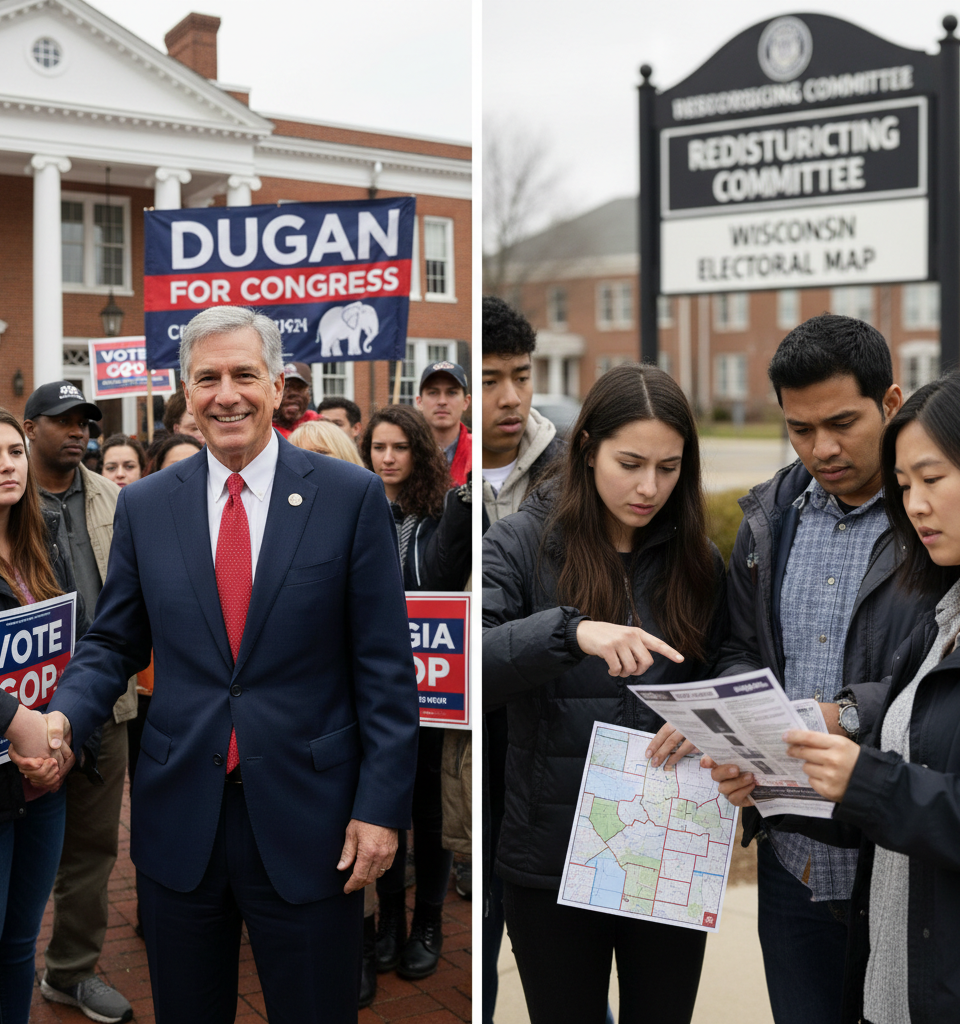
WASHINGTON D.C. – The Republican Party is confronting emerging electoral vulnerabilities, underscored by recent special election results in Georgia and Wisconsin. In Georgia, a Republican candidate successfully retained the 14th Congressional District seat vacated by Marjorie Taylor Greene, yet the Democratic challenger achieved a remarkable 25-point shift towards their party compared to the 2020 presidential election results in the same district. Concurrently, conservative candidates experienced defeats in Wisconsin, prompting renewed scrutiny of the GOP's appeal to critical voter blocs just ahead of the intensely anticipated 2024 election cycle.
Contextualizing the Electoral Landscape
These seemingly disparate outcomes are indicative of a potentially shifting electoral landscape, raising questions about the longevity of the Republican Party's stronghold in certain areas and its broader appeal nationally. The Georgia 14th District, long considered a deeply conservative bastion, saw significant grassroots mobilization and strategic campaigning by Democrats, despite the eventual Republican victory. This substantial swing is a canary in the coal mine for GOP strategists, suggesting that even in districts where the party holds a numerical advantage, the enthusiasm gap could be narrowing or even reversing. The Wisconsin losses, though perhaps less statistically dramatic, further reinforce a pattern of conservative candidates struggling to secure victories in key races, indicating potential challenges beyond just high-profile congressional contests.
Key Election Details and Data Points
In Georgia's 14th Congressional District special election, Republican candidate Mike Dugan secured the victory, as widely expected given the district's overwhelming Republican registration. However, the true story lies in the margin: the Democratic candidate, Shawn Harris, managed to garner a significantly higher percentage of the vote than the district's historical performance. For context, in the 2020 presidential election, Donald Trump carried the district by a margin that was 25 points wider than the recent special election outcome. This metric, often overlooked in the immediate aftermath of an expected victory, signifies a substantial erosion of the Republican lead. In Wisconsin, details from recent local and municipal elections, including school board races and judicial contests, saw several conservative-backed candidates failing to secure wins. While specific vote tallies vary by race, the cumulative effect suggests a notable decline in voter support for conservative platforms in key local battlegrounds.
Broader Market and Political Impact
These localized electoral shifts carry significant implications for the national political landscape and, by extension, economic sentiment. A more competitive political environment could lead to increased policy uncertainty as both parties vie for control, potentially impacting legislative priorities from fiscal policy to regulatory reform. For businesses, the prospect of a more divided Congress or a shifting balance of power could influence investment decisions and long-term planning. The perception of weakening Republican influence, particularly among swing voters and within suburban demographics, could force the party to reassess its messaging and campaign strategies, potentially impacting donor confidence and logistical support for future campaigns.
Expert Analysis and Strategic Implications
Political analysts are closely scrutinizing these results, with many interpreting them as clear warnings for the Republican Party. Dr. Eleanor Vance, a political science professor at the University of Georgia, commented, "The 25-point shift in Georgia's 14th is not merely an anomaly; it's a profound indicator that Democratic voters are energized, and a significant segment of the Republican base might be experiencing fatigue or disillusionment. While it didn't flip the seat, it shows that even safe Republican districts are not impenetrable to determined opposition." Similarly, strategists are suggesting that conservative candidates need to broaden their appeal beyond their core base, moving away from hyper-partisan rhetoric that may alienate moderate voters who proved pivotal in these races. The focus on local races in Wisconsin further highlights the importance of grassroots engagement and candidate quality.
Looking Ahead to 2024 and Beyond
The implications for the 2024 presidential and congressional elections are substantial. The Georgia and Wisconsin outcomes could galvanize Democratic turnout in swing states, where even marginal shifts can determine the outcome. For Republicans, these results necessitate a critical re-evaluation of campaign strategies, candidate selection, and messaging. The party will likely focus on reinforcing its base while attempting to win back disaffected independents and moderate voters. Upcoming primary elections will be crucial indicators of whether the party is adapting to these emerging challenges. Expect increased investment in localized data analytics and targeted voter outreach from both sides, as each faction seeks to capitalize on perceived weaknesses and consolidate their gains in the run-up to what promises to be a fiercely contested election cycle.