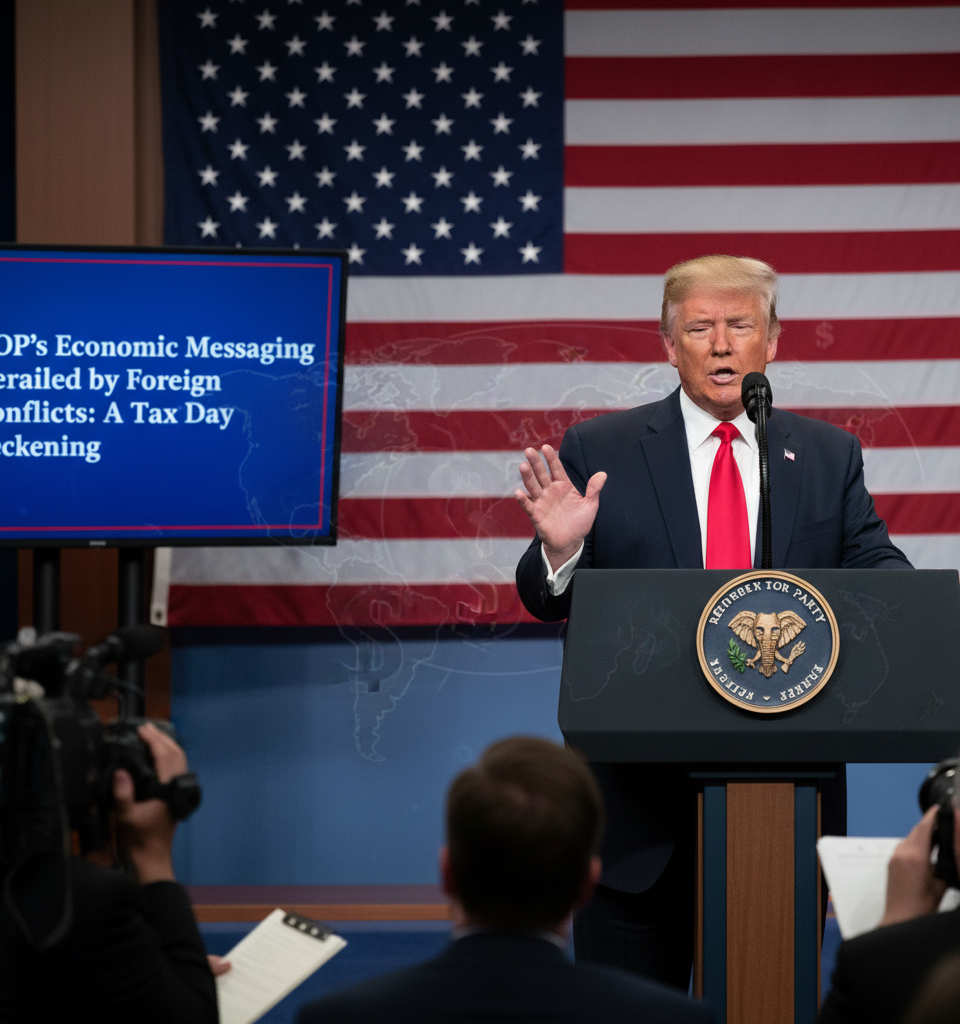
Washington, D.C. — On this Tax Day, April 15th, 20XX, the Republican Party, fronted by former President Donald Trump and other prominent figures, is grappling with a strategic communications crisis. Their concerted efforts to center the national conversation on economic issues, particularly tax policy and fiscal responsibility, have been significantly overshadowed by escalating international conflicts, diverting public attention and potentially jeopardizing their electoral prospects. This struggle for message dominance highlights a broader challenge for the GOP as it seeks to define its platform ahead of crucial electoral cycles.
The Unfolding Context: A Nation Diverted
The current political climate is characterized by a stark diversion of public focus. While Republicans aim to critique the Biden administration's economic policies, emphasize inflationary pressures, and advocate for tax cuts, a significant portion of the electorate remains deeply concerned with ongoing geopolitical instability. Lingering issues from an "unpopular war" – widely understood to refer to protracted conflicts or proxy engagements – paired with emerging international crises, have created a landscape where domestic economic concerns, though perennial, find themselves competing for airtime and public engagement. This dynamic presents an uphill battle for any political party attempting to narrow the national discourse to a specific set of domestic issues.
Economic Headwinds and Republican Strategy
The Republican economic platform typically champions lower taxes, deregulation, and reduced government spending as catalysts for prosperity. During Trump's presidency, the 2017 Tax Cuts and Jobs Act served as a cornerstone of this approach, with Republicans consistently arguing its benefits for job creation and economic growth. Recent data, however, paints a complex picture. While the U.S. economy has shown resilience with an unemployment rate holding near 3.9% as of March 20XX, consumer sentiment remains volatile, influenced by persistent inflation exceeding the Federal Reserve's 2% target, currently around 3.5% year-over-year. Republicans contend that these inflationary pressures are a direct consequence of current administration spending policies, costing the average American family an additional $700 per month for basic necessities. The party's strategy relies on hammering these points home, but the global backdrop is making it increasingly difficult to cut through the noise.
Political Impact and Donor Sentiment
The inability to consistently steer the narrative towards economic matters poses a material threat to Republican electoral ambitions. Historically, pocketbook issues are often decisive for voters. If the public remains fixated on foreign policy, it diminishes the impact of carefully crafted economic arguments. This shift in focus also affects donor priorities. While traditional Republican donors prioritize fiscal conservatism and business-friendly policies, emerging geopolitical risks could prompt a re-evaluation of campaign messaging, potentially diverting resources to candidates perceived as strong on national security. The GOP's challenge is to articulate how its economic vision directly supports national security and stability, thereby re-integrating domestic and foreign policy concerns.
Expert Analysis: The Narrative Battleground
Political analysts are observing this dynamic with keen interest. Dr. Evelyn Reed, a political communications expert at Georgetown University, commented, "The challenge for Trump and the GOP isn't necessarily that their economic message is flawed, but that it's being shouted into a hurricane of international news. Voters are reacting to immediate threats and anxieties, and pure fiscal arguments, however sound, can feel distant when a conflict dominates headlines." She added, "The party needs to find a way to link their economic solutions to the national security concerns that are currently captivating the public. For instance, arguing that a strong domestic economy is essential for a robust defense posture could be a more effective pivot."
What Lies Ahead: Reclaiming the Agenda
The path forward for Republicans involves a multi-pronged approach. First, the party must develop a more nuanced and compelling narrative that explicitly connects economic strength to national security, illustrating how their proposed policies bolster both domestic prosperity and America's standing in a tumultuous world. Second, they need to strategically leverage key legislative moments and economic data releases to forcefully re-insert their agenda into the public consciousness. Finally, with upcoming congressional debates on spending bills and the federal budget, Republicans have opportunities to force votes and highlight fiscal disparities, thereby compelling a renewed focus on economic stewardship. The coming months will test the party's ability to adapt its messaging and regain control of the national conversation, moving beyond a reactive stance to proactively shape the political discourse.