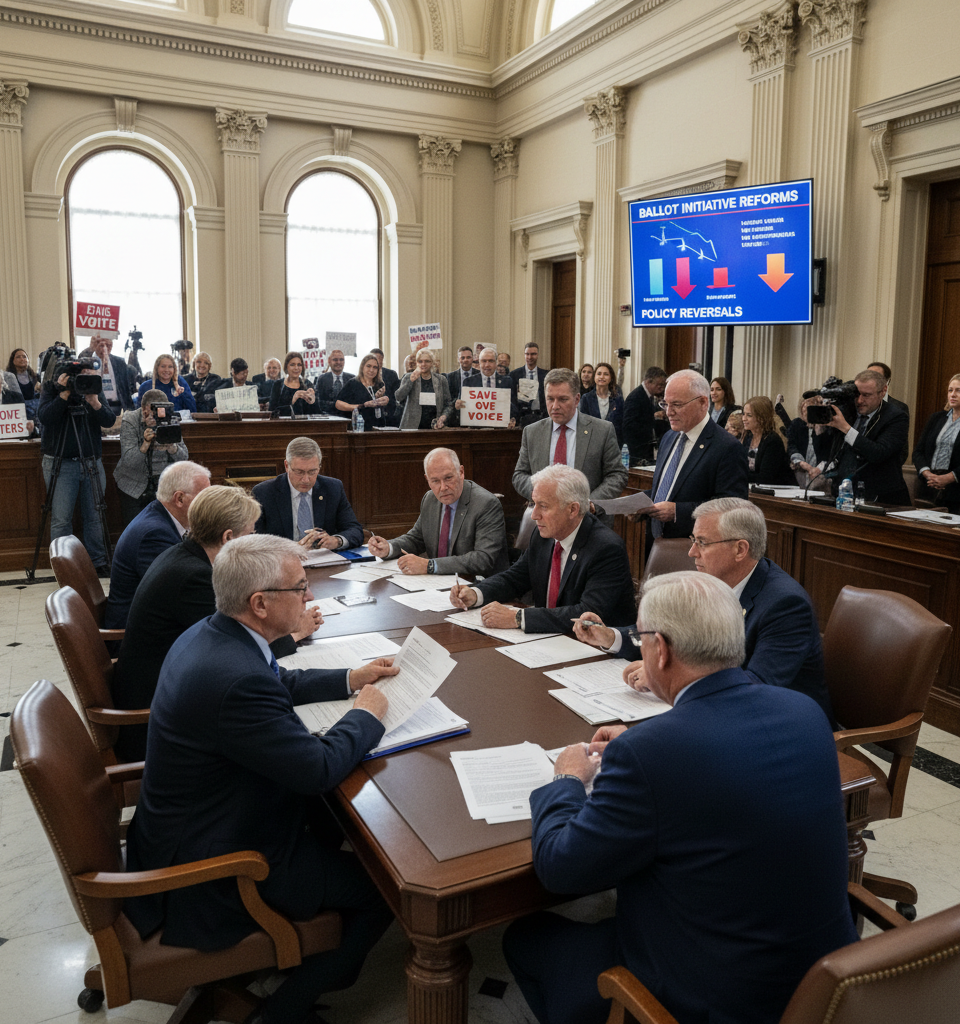
Rippling across the United States, a growing number of Republican-controlled state legislatures are undertaking concerted efforts to significantly curtail the power of citizen-initiated ballot measures. This legislative offensive comes in direct response to a series of voter-backed initiatives in traditionally conservative states that successfully codified policies often at odds with GOP platforms, including the protection of abortion rights, the expansion of Medicaid, and increases to the minimum wage. The moves, emerging prominently in states like Ohio, Missouri, and Arkansas, are reigniting a fundamental debate over the balance of direct democracy and representative governance.
A Historical Precedent Under Threat
Citizen initiatives, a cornerstone of direct democracy established in the Progressive Era, allow voters to directly propose and enact laws or constitutional amendments, bypassing legislative bodies. This mechanism has historically served as a critical check on legislative power and a pathway for policy changes that might otherwise face gridlock. However, the recent string of progressive victories via the ballot box – particularly the resounding success of abortion rights measures post-Roe v. Wade – has galvanized conservative lawmakers to re-evaluate and, in many cases, outright challenge the accessibility of this democratic tool. The current legislative push represents a significant departure from historical norms, potentially undermining a century-old tradition of direct voter engagement.
Legislative Tactics and Notable Examples
Legislators are employing a range of strategies to complicate the initiative process, including raising signature requirements, increasing the geographic distribution mandates for signatures, and, most notably, proposing higher thresholds for voter approval. In Ohio, for instance, a proposed August special election aimed to raise the approval threshold for constitutional amendments from a simple majority to 60%; though ultimately defeated, it underscored the legislative intent to make changes exceptionally difficult. Similar efforts have been observed in Missouri, where a proposal sought to increase the vote threshold for constitutional amendments to two-thirds, and in Arkansas, which has seen changes to signature validation rules and deadlines. These legislative maneuvers often face strong opposition from grassroots organizations and good-government advocates who argue they are thinly veiled attempts to disenfranchise voters and suppress popular will.
Broader Implications for Policy and Governance
The implications of these legislative actions extend far beyond the immediate policy areas of abortion or minimum wage. Should these efforts succeed, they could fundamentally alter the landscape of policy-making in states with strong initiative processes. It would likely consolidate more power within state legislatures, potentially making it harder for citizens to challenge perceived legislative inaction or overreach. This shift could lead to increased political polarization, as pathways for compromise or direct voter intervention become narrower. Furthermore, it could disproportionately affect marginalized communities seeking to use initiatives to advance civil rights or social justice causes, effectively silencing a crucial avenue for their voices.
Expert Commentary on Democratic Erosion
Political scientists and legal experts are observing these developments with growing concern. Dr. Sarah Johnson, a professor of political science specializing in direct democracy, notes, "What we're witnessing is a strategic effort by legislative majorities to reassert control in areas where public opinion has diverged from their party's platform. While legislatures have a right to regulate these processes, the scale and nature of these proposed changes suggest an intent to effectively dismantle or severely cripple the initiative process, rather than merely refine it." She adds that such moves risk eroding public trust in democratic institutions and could foster greater civic disengagement if voters perceive their direct input is being systematically undermined.
The Road Ahead: Legal Challenges and Future Campaigns
The battle over citizen initiatives is far from over. Many of the proposed legislative changes are expected to face rigorous legal challenges, with good-government groups and civil liberties organizations preparing to defend voter rights in court. Activist groups are also mobilizing to oppose these legislative efforts directly at the ballot box, where possible, or through intensified lobbying and public awareness campaigns. The 2024 election cycle and beyond will likely see continued clashes over these fundamental democratic tools, shaping the future of policy-making and voter engagement in a significant portion of the United States. The outcomes of these ongoing struggles will reveal much about the enduring strength of direct democracy in the face of legislative resistance.