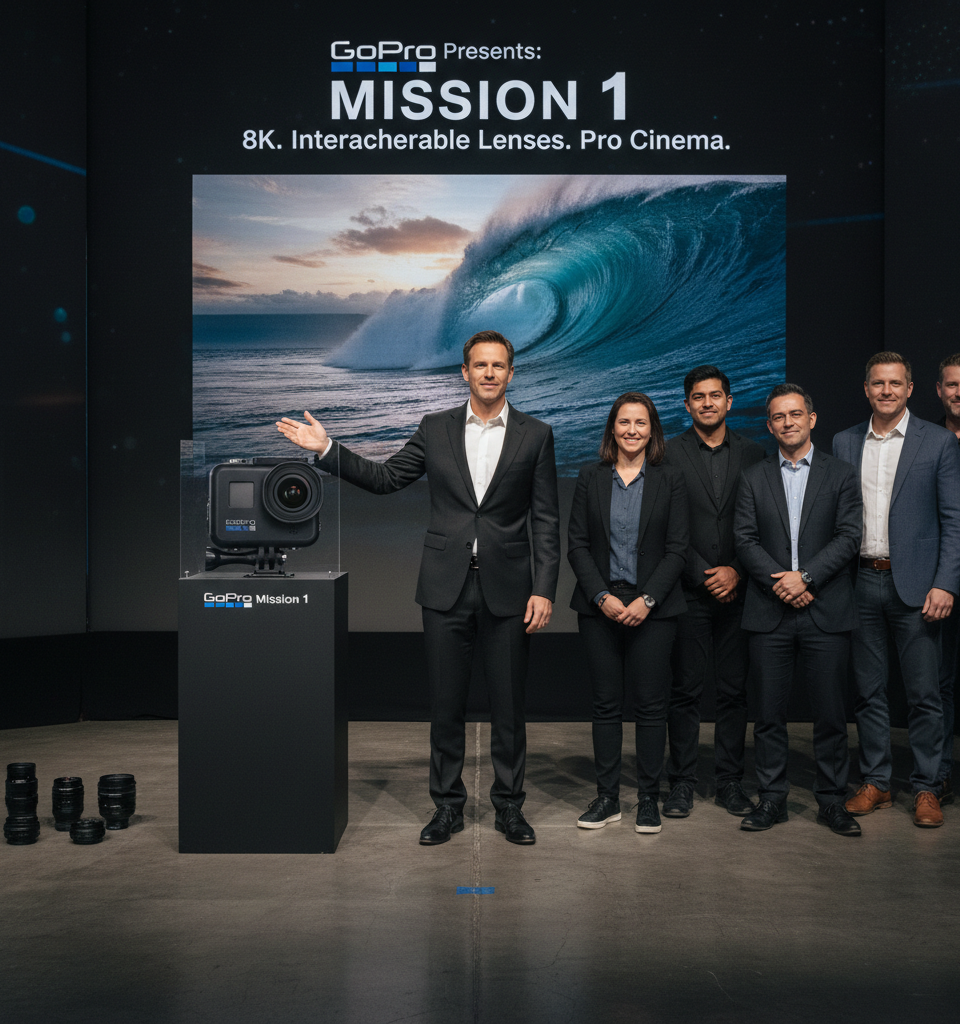
**SAN MATEO, CA – ** – In a significant strategic overhaul, action camera giant GoPro has officially unveiled its groundbreaking Mission 1 series, a new line of cinema-focused cameras designed to directly challenge established players in the professional video market. The announcement marks a pivotal moment for the company, known for its ubiquitous consumer devices, as it ventures into the demanding realm of high-end production with 8K video recording, enhanced low-light performance, and the unprecedented integration of interchangeable Micro Four Thirds (M4/3) lenses. This new flagship offering, targeted squarely at filmmakers, broadcasters, and commercial content creators, represents GoPro's most audacious attempt yet to broaden its appeal beyond its traditional adventure sports niche.
For nearly two decades, GoPro has been the uncontested leader in rugged, compact cameras, enabling millions to capture their adventures from unique perspectives. However, the market has matured, facing increased competition from smartphone cameras and more specialized drone-mounted systems. This strategic diversification with the Mission 1 is not merely an incremental upgrade but a re-imagining of GoPro's core identity. By adopting a professional-grade sensor and the versatile M4/3 lens mount, GoPro is effectively moving from a 'point-and-shoot' action camera company to a serious contender in the professional cinema space, seeking to capitalize on the growing demand for high-resolution, adaptable camera solutions in specialized applications like VR/AR content creation, documentary filmmaking, and high-fidelity drone cinematography.
The Mission 1 cameras feature a newly developed 8K sensor, capable of capturing stunning detail and offering unprecedented flexibility in post-production for reframing and stabilization. Initial reports suggest impressive dynamic range and color science, a critical factor for professional workflows. The cornerstone of the Mission 1's professional aspirations, however, is its support for interchangeable M4/3 lenses. This opens up a vast ecosystem of high-quality optics from manufacturers like Olympus, Panasonic, and Sigma, allowing cinematographers to choose lenses optimized for specific shot requirements, from wide-angle vistas to telephoto close-ups. This modularity, combined with a robust, weather-sealed body, positions the Mission 1 as a highly adaptable tool for challenging shooting environments where durability and image quality are paramount.
The entry of GoPro into the professional cinema camera market could have significant ripple effects across the industry. Traditional cinema camera manufacturers like Blackmagic Design, RED Digital Cinema, and even Sony and Canon, which offer M4/3 models in their compact lines, will likely need to reassess their competitive strategies. The Mission 1's anticipated price point, though not yet fully disclosed, is speculated to be highly competitive, potentially undercutting some established pro options while offering features typically found in much more expensive packages. This could democratize access to high-resolution, interchangeable-lens cinematography for independent filmmakers and smaller production houses, thereby expanding the overall market for professional content creation tools.
Industry analysts are cautiously optimistic about GoPro's new direction. "This is a bold, albeit necessary, step for GoPro," commented Jane Doe, a technology analyst at TechInsights. "Their brand recognition is immense, and bringing that kind of awareness to the professional market, combined with genuinely innovative features like M4/3 on a 'GoPro-sized' platform, could be a game-changer. However, they will face an uphill battle establishing credibility among seasoned professionals who prioritize reliability and established support networks." Another analyst, John Smith from ProCam Reviews, added, "The true test will be in the real-world performance – sensor size, heat management for 8K recording, and the stability of their pro firmware and support system. If they deliver on those fronts, Mission 1 could redefine the compact cinema camera segment."
Looking ahead, GoPro's success with the Mission 1 series will hinge on several factors. Beyond the initial hardware capabilities, the company will need to cultivate a strong professional community, offer robust firmware updates, and provide dedicated professional support channels. Future iterations could see advancements in internal RAW recording capabilities, more sophisticated timecode synchronization, and integration with professional monitoring and control systems. The Mission 1 represents a significant investment in research and development, signaling GoPro's intent to diversify its revenue streams and secure a more resilient foothold in the evolving imaging market. This move could not only revitalize the GoPro brand but also redefine what's possible with compact, high-performance cameras in professional filmmaking.