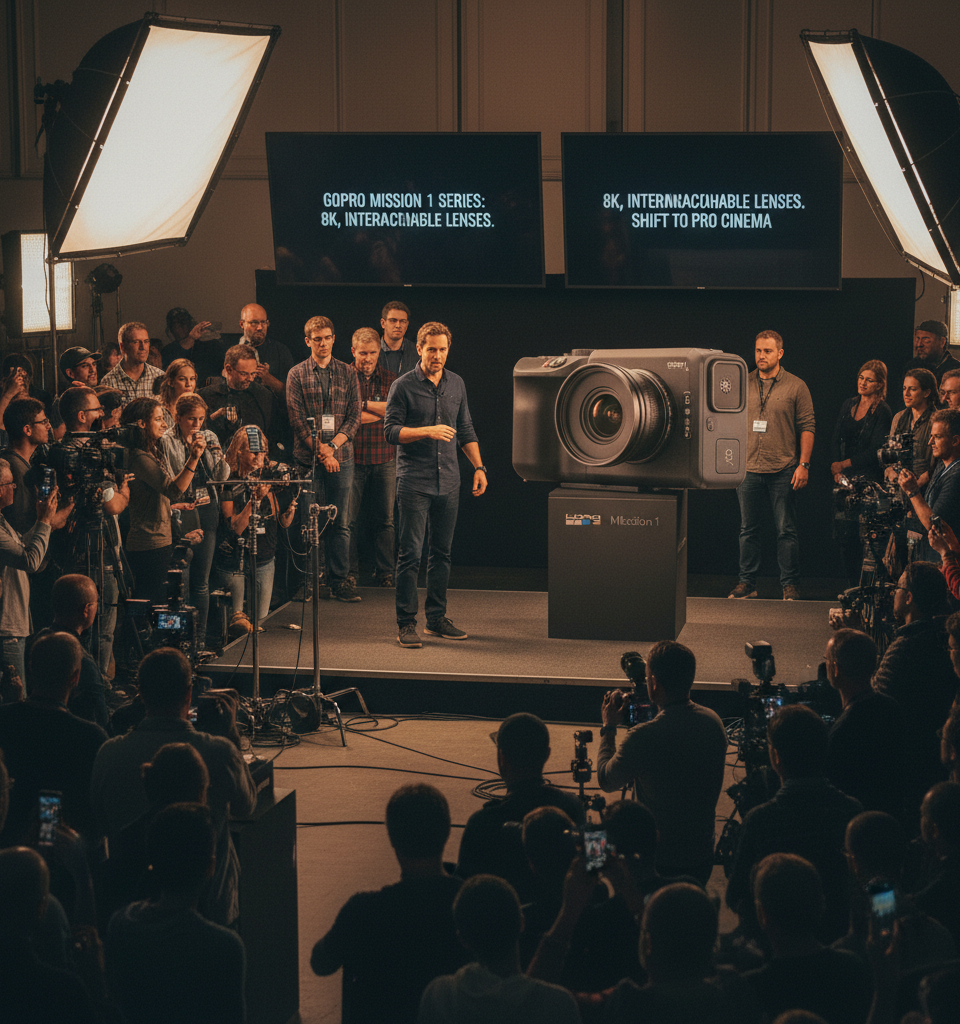
**SAN MATEO, CA – ** – In a move set to reverberate across the professional videography and action camera industries, GoPro, Inc. (NASDAQ: GPRO) today unveiled its highly anticipated Mission 1 series. This new line of action cameras marks a decisive strategic pivot for the company, traditionally known for consumer-grade rugged devices, towards the high-end professional cinematography market. The Mission 1 cameras boast impressive 8K video recording capabilities, significantly enhanced low-light performance, and, most notably, the revolutionary integration of interchangeable Micro Four Thirds (MFT) lenses, offering unprecedented creative flexibility to filmmakers and content creators.
This launch comes at a pivotal time for GoPro, which has faced increasing competition in the consumer action camera space. For years, the company's HERO series has dominated the highly durable, point-and-shoot segment. However, declining average selling prices and saturation have prompted a search for new revenue streams and market relevance. The Mission 1 series represents a calculated gamble to tap into the burgeoning demand for compact, high-quality cinema cameras, a segment currently dominated by larger, more unwieldy systems. By leveraging its expertise in rugged design and compact form factors, GoPro aims to carve out a unique niche between traditional cinema cameras and existing action cameras.
Key specifications of the Mission 1 series are designed to impress professional users. Beyond the flagship 8K at 30fps recording, the cameras offer advanced computational photography features for superior dynamic range and color science. Low-light performance, a historical Achilles' heel for small-sensor cameras, has seen a substantial boost, reportedly achieving clean images up to ISO 3200, a remarkable feat for a device of this size. The standout feature, however, is the native Micro Four Thirds mount, allowing cinematographers to utilize a vast ecosystem of high-quality MFT prime and zoom lenses, offering precise control over depth of field and optical character. This effectively transforms the Mission 1 from an action camera into a versatile B-cam or even a primary camera for specialized, space-constrained shoots.
The introduction of a professional-grade interchangeable lens system could significantly disrupt the compact cinema camera market. Currently, options for small, high-resolution cameras with robust lens ecosystems are limited, often requiring significantly higher investments. The Mission 1 could become a game-changer for documentary filmmakers, drone operators seeking lighter payloads for cinema-quality footage, and even large-scale productions needing discreet, high-fidelity capture devices. Its rugged construction, a GoPro hallmark, also makes it ideal for extreme sports videography at a professional level, combining durability with cinematic image quality.
Industry analysts are largely optimistic about GoPro's strategic shift. Jessica Reed, a senior analyst at Tech Insights, commented, "GoPro's Mission 1 is a daring yet intelligent move. The consumer action camera market is tough. By moving upmarket into the prosumer and professional cinema space, they are leveraging their core strengths—ruggedness and compact design—and merging it with features serious filmmakers demand. The MFT mount is the critical differentiator; it signals that this isn't just a slightly better action camera, but a serious contender in the compact cinema space." She added that pricing and developer support for the open MFT platform would be crucial for long-term adoption.
While specific pricing details for the Mission 1 series were not immediately released, industry speculation places the entry-level model in the $2,500 to $4,000 range, positioning it competitively against compact cinema cameras like the Blackmagic Pocket Cinema Camera line, while offering a unique blend of ruggedness and portability. GoPro has also hinted at future accessories, including advanced external audio solutions, professional video transmission modules, and dedicated mounts for gimbals and drones, further solidifying its commitment to the professional market. The company plans to roll out developer kits for third-party accessory manufacturers, fostering an ecosystem around the Mission 1 series.
Looking ahead, the success of the Mission 1 will depend on its ability to deliver on its ambitious promises of image quality and reliability in real-world professional environments. GoPro is not just launching a new product; it is attempting to rebrand itself as a serious player in professional content creation. The company's investment in engineering for 8K resolution, advanced sensors, and particularly the robust MFT lens mount suggests a long-term commitment to this higher-margin market. If successful, the Mission 1 could not only revitalize GoPro's financial outlook but also significantly expand the possibilities for professional content capture in diverse, challenging settings worldwide.