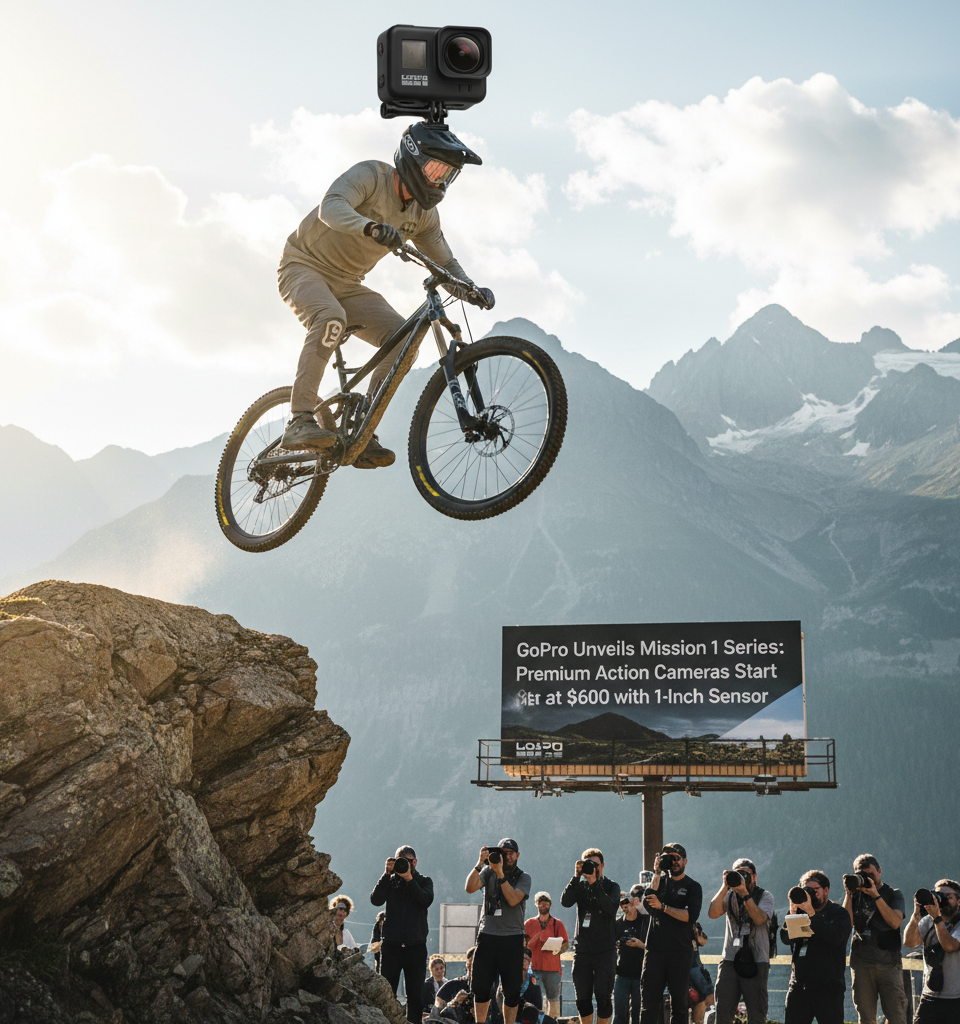
GoPro Unveils Mission 1 Series: Premium Action Cameras Start at $600 with 1-Inch Sensor
Mat Smith•April 20, 2026•4 min read
Key Takeaways
Read this first — then go as deep as you need.
GoPro's Mission 1 Series Launches at $600, Promises Pro-Grade Imaging GoPro, the ubiquitous action camera manufacturer, has officially announced the pricing structure for its new Mission 1 series, with the base model, the Mission 1, set to retail at $600. This highly anticipated product line, which also includes the Mission 1 Pro and Mission 1 Pro ILS, marks a strategic maneuver by the company to penetrate the high-end professional and prosumer market segments. The core innovation across the series is the integration of a new 50-megapixel 1-inch sensor, a significant upgrade that GoPro claims will deliver a substantial enhancement in image quality and low-light capabilities compared to its preceding Hero 13 line. This launch comes at a pivotal time for GoPro, as it seeks to diversify its offerings beyond its traditionally consumer-focused Hero series. The action camera market, while still robust, has seen increased competition from smartphones with advanced photographic capabilities and a proliferation of lower-cost alternatives. By introducing a premium-tier product like the Mission 1, GoPro aims to reassert its technological leadership and capture a share of the professional content creation market, where superior image fidelity and advanced video features are paramount. The strategic pricing at $600 for the foundational model positions it above its traditional consumer cameras but below specialized professional cinema cameras, carving out a unique niche. Key specifications underscore GoPro's ambition with the Mission 1 series. The entry-level Mission 1, despite its largely familiar aesthetic resembling the Hero series and retaining its signature waterproofing, is a powerhouse under the hood. It boasts the ability to record 8K video at a smooth 30 frames per second (fps) and offers a high-speed 4K recording option at 120fps, catering to slow-motion enthusiasts and professional videographers. While the company has not yet released full details for the higher-tier Mission 1 Pro and Mission 1 Pro ILS, it's expected they will offer even more advanced features, potentially including higher frame rates, enhanced color science, and specialized lensing options (ILS likely referring to an interchangeable lens system). The 1-inch sensor is a critical differentiator, as larger sensors inherently gather more light, leading to better dynamic range and reduced noise, particularly in challenging lighting conditions. The introduction of the Mission 1 series is poised to have a ripple effect across the action camera and broader prosumer imaging landscape. Competitors like DJI, with its Osmo Action series, and Sony, with its RX0 line, will undoubtedly face heightened pressure to innovate or adjust their pricing strategies. For content creators, the Mission 1 offers a compelling alternative, potentially reducing the need for bulkier camera setups in certain production scenarios, especially for action sports, documentary filmmaking, and vlogging where durability and portability are key. The 8K capability, though still an emerging standard for many consumers, positions the Mission 1 for future-proofing and high-resolution post-production workflows. Industry analysts are largely optimistic about GoPro's strategic shift. "GoPro has recognized that raw megapixel count isn't the only metric for success; sensor size is equally, if not more, important for image quality," states Sarah Jenkins, a senior analyst at Tech Insights. "The move to a 1-inch sensor is a game-changer for an action camera. While the $600 price point is a premium for GoPro, it's a justifiable investment for professionals and serious enthusiasts seeking uncompromising performance in a compact, rugged form factor." She adds, "The tiered pricing strategy suggests GoPro is not abandoning its core market but rather expanding its reach upwards, which is a prudent business decision in a mature market." Looking ahead, the success of the Mission 1 series will largely depend on its execution, both in terms of user experience and the continued development of its ecosystem. GoPro will need to ensure robust software support, seamless integration with editing workflows, and a reliable accessory lineup to fully capitalize on its hardware advancements. Upcoming firmware updates could unlock further photographic capabilities, while future iterations may explore even larger sensors or more specialized optical designs. The company's performance in the holiday quarter and the initial traction among professional users will be critical indicators of whether the Mission 1 truly establishes a new benchmark for premium action cameras and solidifies GoPro's position at the forefront of the industry.
Discussion
Join the discussion
Sign in to leave a comment on this article.
Loading comments...
Enjoying this article?
Get more like it delivered to your inbox — free.
This article was compiled by GlobalSell News from publicly available reporting and has been edited for clarity and length. For full details, read the original source.