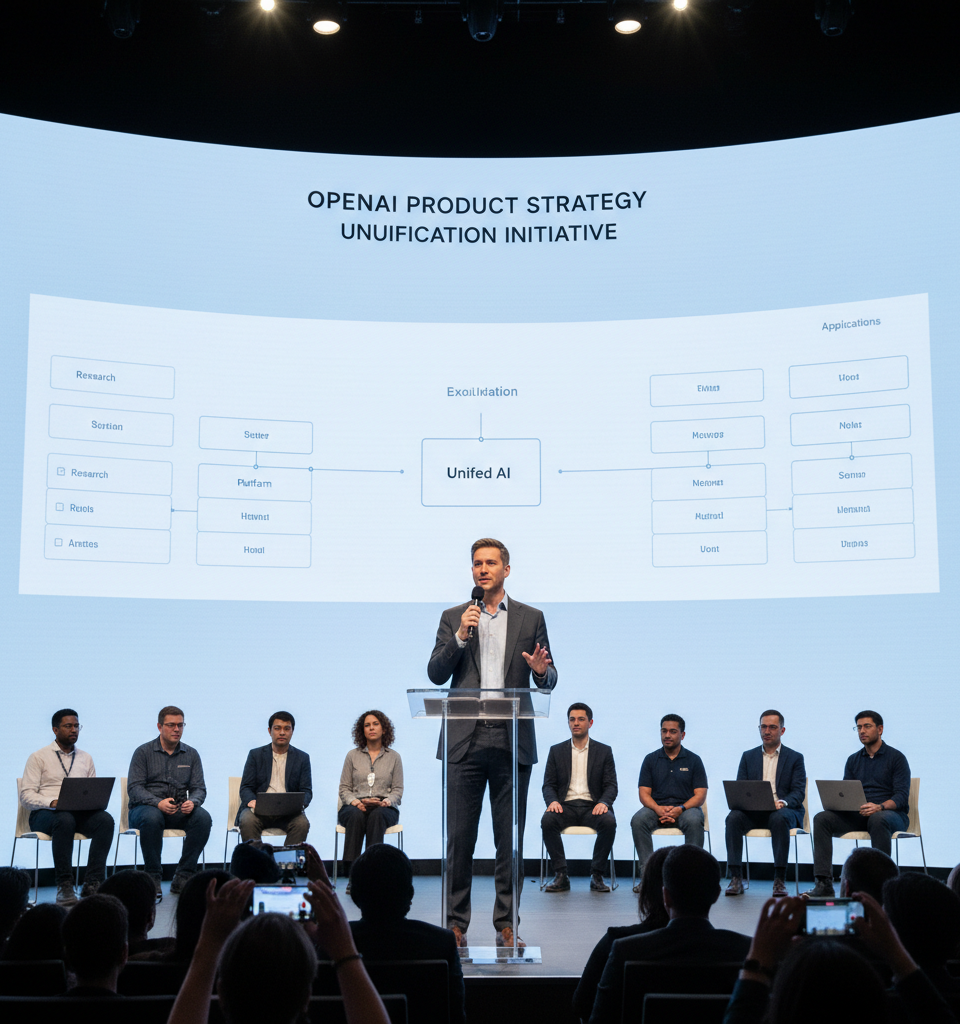
Greg Brockman, a co-founder of OpenAI, has been appointed to lead the company's product strategy, a move that consolidates his influence and reflects a renewed focus on product unification. The internal reorganization, confirmed this week, is designed to merge the widely used generative AI chatbot ChatGPT with the advanced code-generating model Codex, transforming them into a more integrated core offering. This strategic shift underscores OpenAI's commitment to simplifying its product ecosystem and accelerating the deployment of next-generation AI capabilities to a broader user base.
Context and Strategic Significance
This leadership change and strategic realignment come at a crucial juncture for OpenAI, following a period of rapid expansion and intense competition in the AI sector. The company, which garnered global attention with the launch of ChatGPT in late 2022, has been grappling with the challenge of managing a diverse portfolio of models while striving for a unified user experience. Brockman's elevation to a direct product leadership role is seen as a move to inject clearer direction and foster tighter collaboration between research and development teams. It also follows previous executive reshuffles and reflects an ongoing endeavor to optimize operational efficiency and market responsiveness in a fast-evolving industry.
Key Details and Executive Adjustments
Under the new structure, Brockman will oversee all aspects of product development, from conceptualization to deployment, with a mandate to tightly integrate the diverse functionalities of OpenAI's models. While exact details of the organizational chart adjustments were not fully disclosed, sources within the company indicate that several product teams previously operating with a degree of autonomy will now report directly or indirectly to Brockman's consolidated product unit. This is expected to foster a more synergistic approach to development, potentially leading to faster iteration cycles and more feature-rich releases. The aim is to create a seamless interaction point for users, whether they are generating text, code, or engaging with other AI-powered tools.
Industry and Market Implications
This strategic pivot by OpenAI has significant implications for the broader AI industry. By focusing on a unified product experience, OpenAI aims to enhance its competitive edge against tech giants like Google, Microsoft (a key investor in OpenAI), and Meta, all of whom are heavily investing in AI development. A more integrated offering could provide a stronger platform for developers building on OpenAI's APIs and end-users seeking versatile AI solutions. It could also influence market trends, pushing competitors to similarly consolidate their AI product lines and focus on cohesive user journeys. The emphasis on convergence suggests a maturing market where ease of use and comprehensive functionality are becoming paramount.
Expert Perspectives on the Restructuring
Industry analysts view Brockman's expanded role as a logical step for OpenAI to maintain its leadership position. "Consolidating product under a visionary like Greg Brockman makes perfect sense," commented Dr. Anya Sharma, a principal analyst at AI Insights Group. "As AI models become more complex and capable, the user experience becomes paramount. Unifying ChatGPT and Codex isn't just about technical integration; it's about presenting a cohesive, powerful platform that encourages broader adoption and deeper engagement." Another expert, venture capitalist Mark Jansen, noted, "This move reflects a strategic shift from a multi-product approach to a platform-centric one, which is often crucial for scaling early-stage innovation into a dominant market force. It's a pragmatic response to the challenges of rapid growth and diverse product offerings."
Future Outlook and Development Trajectory
The immediate future for OpenAI will likely see a renewed emphasis on harmonizing its AI models, with significant resources dedicated to improving the interoperability and capabilities of the combined platform. This unification is also expected to accelerate the development of new features that leverage the strengths of both conversational AI and code generation, potentially leading to more sophisticated AI assistants and developer tools. Furthermore, this strategic direction positions OpenAI to potentially introduce more subscription-based services that bundle these enhanced capabilities, aiming to diversify revenue streams beyond its core API offerings. The company is anticipated to make further announcements regarding new product iterations and expanded functionalities in the coming months, signaling a dynamic period of innovation under Brockman's leadership.