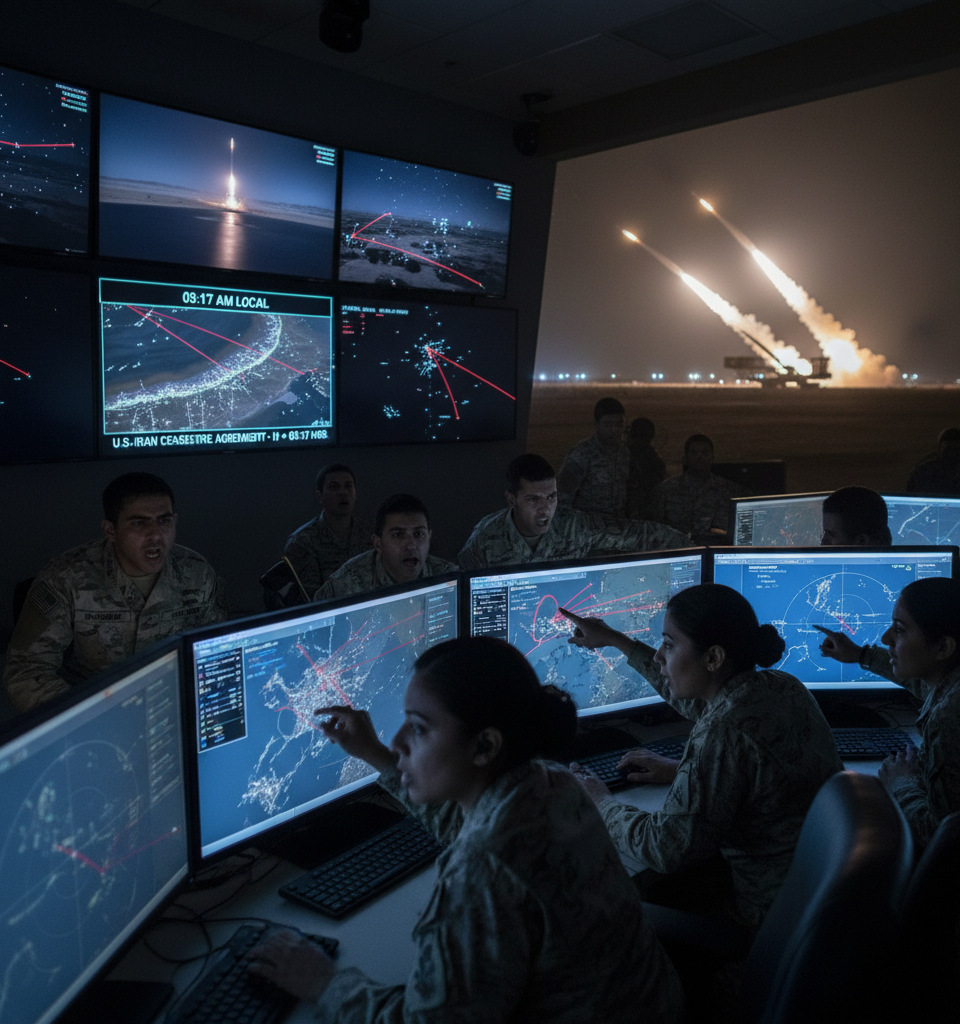
Within hours of a mutually announced two-week ceasefire between the United States and Iran, several Gulf nations reported actively intercepting incoming ballistic missiles and drones originating from Iranian territory on Wednesday, May 19, 2026. This immediate and widespread continuation of hostilities casts a significant shadow over the nascent truce, raising urgent concerns about its viability and the broader stability of the Middle East.
The ceasefire, hailed by both Washington and Tehran as a critical step towards de-escalation, was intended to halt a period of heightened regional aggression. The rapid resumption of missile and drone launches suggests either a profound disconnect between Iran's central command and its operational units, or a deliberate challenge to the terms of the agreement. The precise types and targets of these projectiles were not immediately detailed by reporting nations, but their proliferation underscores the persistent threat landscape in the region.
Unraveling a Fragile Agreement
This development is particularly alarming given the extensive diplomatic efforts that reportedly underpinned the ceasefire agreement. Analysts had viewed the truce as a potential inflection point, offering a brief window for dialogue and de-escalation after months of simmering tensions. The immediate violation, however, threatens to undo any diplomatic progress and could significantly erode trust between the involved parties, making future negotiations even more challenging. The U.S. and Iranian governments have yet to issue official statements regarding these new incidents, leaving observers to speculate on the potential for retaliatory actions or a complete collapse of the agreement.
The implications of these continued attacks extend far beyond the immediate security concerns. Regionally, the persistent threat of ballistic missiles and drones could deter foreign investment and disrupt vital shipping lanes, exacerbating economic instability. Global oil markets, always sensitive to Middle Eastern developments, could react with volatility to any perception of renewed conflict, potentially driving up energy prices worldwide. The maritime security of the Strait of Hormuz, a critical choke point for global crude shipments, remains particularly vulnerable to such provocations.
Regional Instability and International Response
Saudi Arabia, the UAE, and other Gulf Cooperation Council (GCC) members have long been on high alert for such aerial threats. Their sophisticated air defense systems, often bolstered by American technology, are designed to counter these very incursions. The consistent activation of these defense systems, even under a declared ceasefire, highlights the deeply ingrained nature of regional rivalries and the difficulties in enforcing any agreement with Iran, especially concerning its proxy networks and missile capabilities. The international community, particularly the United Nations Security Council, is expected to closely monitor the situation, though the immediate avenues for intervention remain unclear without explicit violations detailed by either the U.S. or Iran.
The current situation presents a critical test for international diplomacy. Should these attacks persist, the notion of a durable peace in the Middle East could recede further, making future diplomatic breakthroughs increasingly unlikely. Experts suggest that clearer terms for enforcing the ceasefire, including robust monitoring mechanisms and explicit consequences for violations, may be necessary to prevent further escalation. The U.S. will likely face pressure from its regional allies to condemn the attacks and reaffirm its commitment to their security, potentially jeopardizing the delicate balance struck by the ceasefire agreement.
What Lies Ahead
Looking ahead, the next few days will be crucial in determining the fate of the two-week ceasefire. All eyes will be on Washington and Tehran for formal responses to the reported missile and drone activity. Should the attacks continue, or if either side officially accuses the other of violating the agreement, the possibility of a return to escalated conflict appears significant. The immediate focus will be on damage control and re-establishing the terms of the agreement, though the prospect of a complete breakdown looms large. The coming hours and days will dictate whether this fragile pause leads to genuine de-escalation or merely a temporary lull before renewed hostilities.