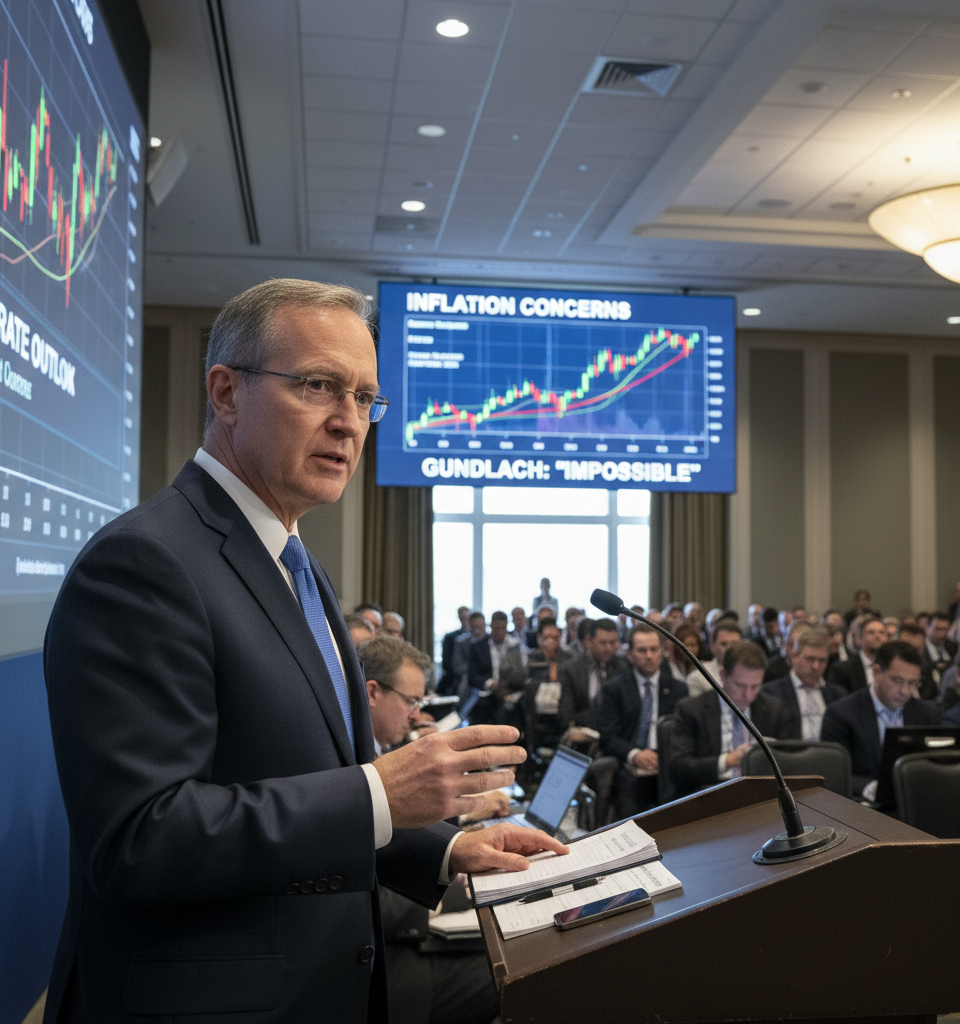
Jeffrey Gundlach, the influential chief executive officer of DoubleLine Capital LP, has delivered a blunt assessment of the Federal Reserve's immediate policy trajectory, stating unequivocally that a rate cut at the upcoming Federal Open Market Committee (FOMC) meeting is "just not possible." Speaking recently, Gundlach underscored his belief that current economic conditions, particularly persistent inflationary pressures, severely restrict the Fed's room for maneuver, challenging widespread investor expectations for monetary easing.
Contextualizing the Fed's Dilemma
Gundlach's remarks come at a critical juncture for central bank policy. After aggressively hiking rates by 525 basis points between March 2022 and July 2023 to combat surging inflation, the Fed has held its benchmark federal funds rate steady in the range of 5.25% to 5.50% since last summer. While inflation has cooled from its 9.1% peak in June 2022, recent data, such as a stubbornly high personal consumption expenditures (PCE) price index, which is the Fed's preferred inflation gauge, has signaled that the path back to the 2% target remains bumpy. The market's anticipation of multiple rate cuts this year, initially predicting as many as six at the start of the year, has steadily moderated as economic data has proven more resilient and inflation stickier than expected.
Market Impact and Investor Sentiment
The bond market, a primary focus for Gundlach, has been particularly sensitive to shifting expectations. Yields on U.S. Treasuries have seen considerable volatility, with a perceived higher-for-longer rate environment translating into increased borrowing costs for governments and corporations alike. Gundlach's comments serve as a cold shower for equities markets, which often rally on the prospect of lower interest rates stimulating economic growth and corporate earnings. A prolonged period of elevated rates could temper consumer spending and business investment, potentially slowing economic momentum.
According to CME Group's FedWatch Tool, the probability of a rate cut at the immediate next meeting is currently negligible, with most analysts looking towards later in the year. However, investors have been closely scrutinizing Fed commentary for any hawkish or dovish signals, often reacting sharply to minor shifts in tone from policymakers. Gundlach's strong conviction adds another layer of caution, suggesting current market pricing for a cut later in the year may still be overly optimistic given the underlying economic realities.
Expert Perspectives on Policy Constraints
Many economists and strategists echo Gundlach's sentiment, pointing to several factors constraining the Fed. A tight labor market, robust consumer spending, and the potential for a rebound in commodity prices all contribute to the risk of re-accelerating inflation. "The Fed's dual mandate includes both maximum employment and price stability," noted one senior strategist at a major investment bank, who wished to remain anonymous due to internal policy. "While employment remains strong, the battle against inflation is far from over. Cutting rates prematurely would jeopardize all their hard work."
Conversely, some argue that maintaining high rates for too long risks tipping the economy into recession, highlighting the Fed's delicate balancing act. However, recent economic growth figures, which have generally exceeded forecasts, diminish the immediate urgency for cuts based on recession fears.
Inflationary Headwinds and Fiscal Policy
Gundlach specifically highlighted the ongoing challenges posed by deficit spending and its impact on inflation. "When you have the government spending as much as it is, you're going to have an inflationary bias," he observed. This perspective suggests that fiscal policy may be undermining the Fed's monetary efforts, creating a structural issue for price stability. The sheer volume of government debt and the associated interest payments also complicate the Fed's exit strategy from its current restrictive stance.
What's Next: The Path Ahead
Looking ahead, the Federal Reserve will continue to emphasize data dependency in its policy decisions. Upcoming inflation reports, labor market statistics, and consumer confidence surveys will be paramount. The central bank's next Summary of Economic Projections (SEP), often referred to as the "dot plot," will provide crucial insights into individual FOMC members' expectations for future rate paths. Investors will also keenly monitor public statements from Fed Chair Jerome Powell and other governors for any signs of a definitive pivot. While a rate cut appears off the table for the immediate horizon, the debate over the timing and magnitude of future adjustments will continue to dominate financial market discourse, with Gundlach's influential voice likely to continue shaping expectations.
As the economic landscape evolves, the Fed's commitment to its 2% inflation target remains unwavering, suggesting that significant and sustained evidence of disinflation will be required before any serious consideration of rate reductions. For the foreseeable future, a "higher for longer" interest rate environment appears to be the prevailing expectation among influential market observers like Gundlach.