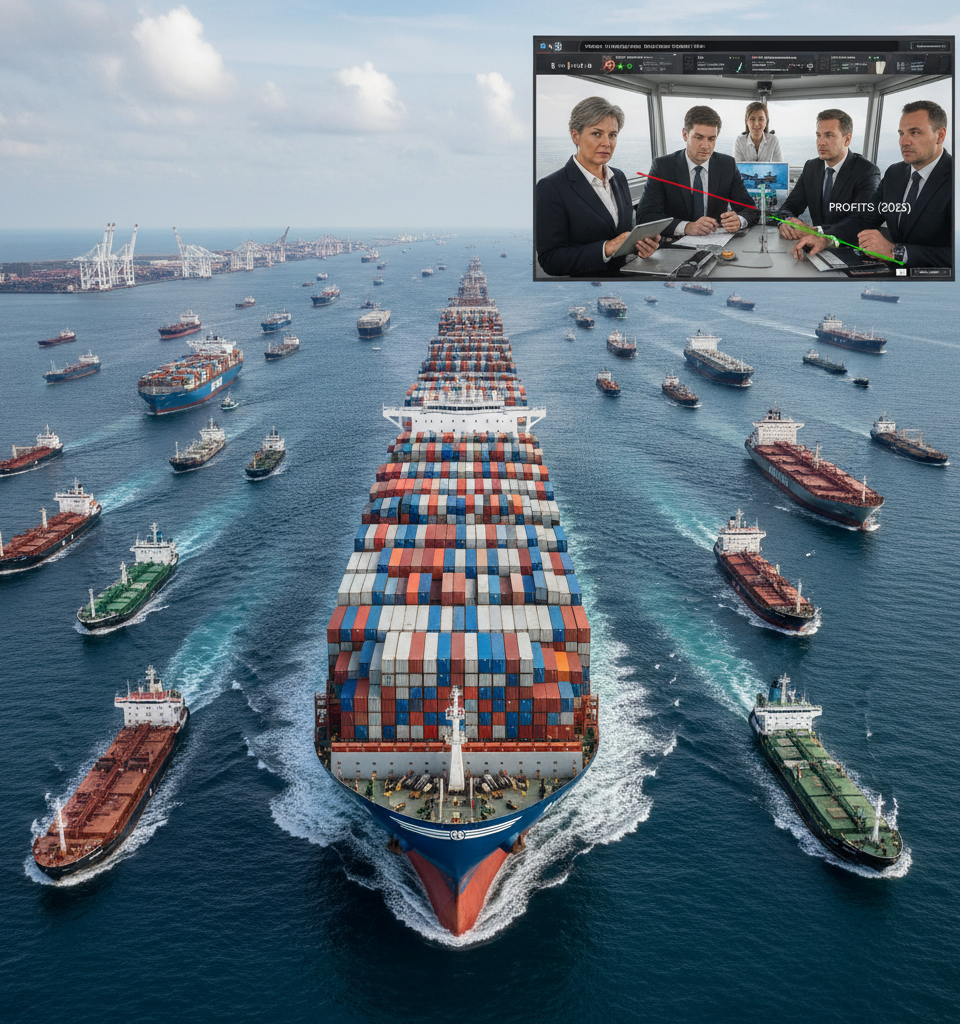
Hamburg, Germany – Hapag-Lloyd AG, one of the world's leading container shipping lines, announced a precipitous decline in its 2025 financial performance, with profits tumbling sharply despite an uptick in cargo volumes. The German carrier's stark warning of a challenging year ahead reverberates across the global shipping sector, highlighting the volatile interplay of escalating operational costs and an increasingly complex geopolitical landscape that continues to disrupt established trade routes.
This downturn marks a significant departure from the extraordinary profitability witnessed in much of the pandemic-era shipping boom. The industry, having enjoyed unprecedented freights and margins, is now grappling with a normalization of demand alongside a surge in input costs, particularly for fuel and crew wages. Hapag-Lloyd serves as a crucial barometer for global trade health, and its latest figures underscore a broader economic recalibration that is impacting maritime logistics worldwide.
Sources close to the company indicate that while total cargo volumes saw a modest increase of approximately 3% year-on-year, this growth was insufficient to offset the substantial erosion of profit margins. This phenomenon is largely attributable to persistently high bunker fuel prices, ongoing supply chain bottlenecks in key ports, and the additional expenses incurred from rerouting vessels to avoid geopolitical flashpoints. Specific figures reveal that average freight rates experienced a significant contraction of over 20% compared to the previous year's peak, translating directly into the diminished profitability.
The implications for the broader container shipping market are profound. Hapag-Lloyd's woes suggest that the 'super-cycle' of container shipping profits has definitively concluded, giving way to a more competitive and cost-intensive environment. Smaller carriers, already operating on thinner margins, could face severe pressure, potentially leading to market consolidation or operational restructuring. Furthermore, the ripple effect extends to global supply chains, with shippers facing increased uncertainty regarding transit times and potentially volatile pricing structures as carriers adjust to the new economic realities.
Financial analysts and logistics experts largely concur with Hapag-Lloyd's assessment. Dr. Elara Vance, a senior maritime economist at the Global Shipping Institute, commented, "Hapag-Lloyd's results are not an isolated incident but a clear indicator of the headwinds facing the entire industry. The interplay of macroeconomic slowdowns, persistent inflationary pressures, and the unquantifiable risk of geopolitical events, particularly in critical chokepoints, creates a perfect storm for carriers. We anticipate continued rate volatility and a renewed focus on operational efficiencies and cost control across the board." She further emphasized the increasing role of digital transformation and green shipping initiatives as potential avenues for future resilience, albeit with substantial upfront investment.
Looking ahead, Hapag-Lloyd has indicated that it is implementing a series of strategic initiatives aimed at bolstering resilience, including optimizing vessel deployment, enhancing digital transparency with customers, and exploring further investments in its terminal network to improve operational control. The company also reiterated its commitment to decarbonization targets, acknowledging the future costs associated with sustainable shipping. However, the short-to-medium term outlook remains guarded, with executives noting that visibility remains low due to the dynamic nature of international trade and political tensions. The industry will be closely watching for signs of economic recovery and the stabilization of geopolitical hotspots to gauge the timing and extent of any potential rebound.