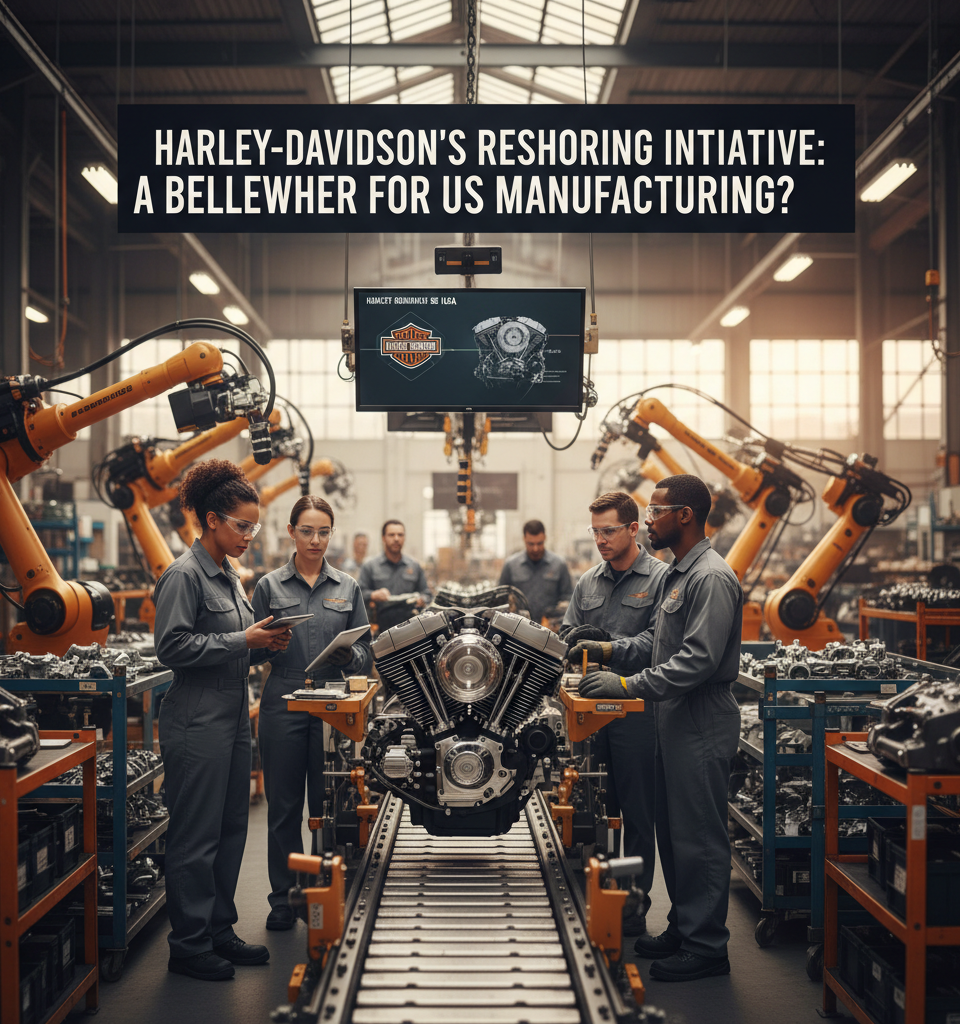
Milwaukee, WI – Iconic American motorcycle manufacturer Harley-Davidson is making headlines with its decision to return a portion of its engine production to plants located in Pennsylvania and Wisconsin. This strategic pivot signals a potentially significant shift in the company's manufacturing footprint, bringing operations closer to its domestic market.
This move by Harley-Davidson arrives at a time of heightened scrutiny over global supply chains, labor costs, and geopolitical stability. For decades, many American companies, including those in heavy industry, have optimized production through offshore manufacturing to leverage lower labor expenses and access new markets. Harley-Davidson's reported reshoring effort could reflect a re-evaluation of these long-standing strategies, emphasizing resilience and domestic control over purely cost-driven decisions.
The specifics of the reshoring initiative, while not fully detailed, involve facilities in key industrial states. These plants, long part of Harley-Davidson's manufacturing network, are expected to absorb the increased production volume. The decision likely entails significant logistical recalibrations, potential upgrades to existing machinery, and a renewed focus on domestic workforce development to handle the specialized intricacies of engine assembly. The impact on local economies in Pennsylvania and Wisconsin, through job creation and increased industrial activity, is expected to be positive.
Harley-Davidson's move holds broader implications for the American manufacturing sector. It raises critical questions about the practical challenges and opportunities associated with reshoring for other companies that have extensively offshore production. While the appeal of shorter supply chains, reduced transportation costs, and enhanced quality control is undeniable, the viability often hinges on factors like available skilled labor, regulatory environments, and the ability to compete with established global cost structures.
From an industry perspective, this development could serve as a litmus test. If Harley-Davidson successfully navigates the complexities of reshoring sophisticated engine production, it might encourage other manufacturers, particularly those in heavy equipment or high-value components, to re-evaluate their own global strategies. The trend toward automation and advanced manufacturing technologies in the U.S. could also play a crucial role in making reshoring more economically attractive than in previous decades.
The Reshoring Debate: Practicalities for Other Manufacturers
The practicality of widespread reshoring for other manufacturers remains a subject of intense debate. While Harley-Davidson's brand identity is intrinsically linked to American craftsmanship, allowing it a certain premium, other industries might find the economic calculus more challenging. Considerations such as the availability of raw materials, energy costs, and the presence of a robust supplier ecosystem in the U.S. are pivotal.
Experts suggest that successful reshoring often requires a blend of government incentives, technological advancements, and a re-investment in vocational training to address potential skill gaps. The long-term benefits of reduced lead times, greater intellectual property control, and enhanced corporate social responsibility could, for some companies, outweigh the initial costs of transitioning manufacturing back home.
Future Outlook for Domestic Production
Looking ahead, Harley-Davidson's reshoring project will be closely watched as a potential bellwether for a broader trend in American manufacturing. Its success or challenges could provide valuable insights for other corporations contemplating similar moves. The initiative underscores a growing sentiment across various industries that supply chain resilience, rather than solely cost minimization, is becoming a paramount strategic objective.
This shift could foster greater domestic manufacturing investment and potentially reshape the competitive landscape for goods produced in the United States. Observers will be keen to see if this is an isolated strategic adjustment by Harley-Davidson or the leading edge of a more substantial wave of industrial repatriation.