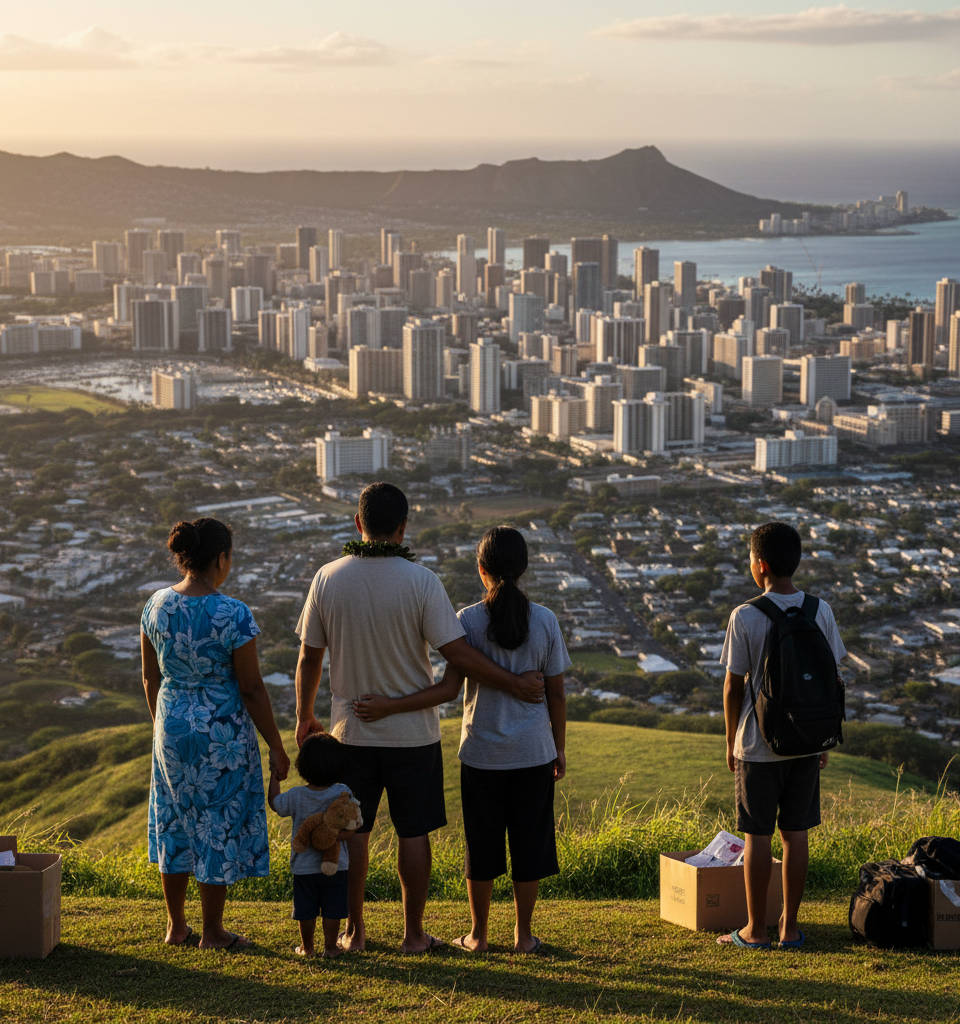
HONOLULU, HI – The sun-kissed shores of Hawaii, long synonymous with paradise, are now shadowed by an escalating housing crisis pushing local families to the brink. A severe shortage of affordable residences, exacerbated by a surging demand from affluent mainlanders and a constrained residential supply, has rendered homeownership an insurmountable aspiration for many native Hawaiians and long-term residents. This crisis, intensifying over the past decade, threatens not only the economic stability of countless households but also the very cultural fabric of the islands, as younger generations are forced to seek more affordable futures on the mainland. This dire situation is not merely an economic footnote; it represents a profound socio-cultural shift. Hawaii consistently ranks among the states with the highest cost of living, with housing affordability being the primary driver. For generations, families have built their lives and legacies on these islands, often with deep ties to the land and tradition. However, the current economic pressures are severing these connections, leading to a palpable sense of displacement and disenfranchisement among the local population. The dream of raising families in the same communities as their ancestors is increasingly out of reach, sparking concerns about the preservation of Hawaiian identity and community cohesion. The numbers paint a stark picture of the crisis. According to reports from the Hawaii Housing Finance and Development Corporation (HHFDC), the median price of a single-family home on Oahu, the most populous island, soared to a record-breaking $1.15 million in 2023. This figure is more than double the national median and places homeownership firmly out of reach for a significant portion of Hawaii's workforce, where the median household income hovers around $84,000. Rental costs are equally punishing, with a median two-bedroom apartment often exceeding $2,800 per month. Developers face significant hurdles, including limited land availability, stringent environmental regulations, and high material and labor costs, which contribute to a chronic underproduction of housing units, particularly those in the affordable to middle-income range. Estimates suggest that Hawaii needs to build at least 50,000 new housing units by 2030 to adequately address the current shortfall. The ripple effects of this housing scarcity are felt across every sector of Hawaii's economy. Businesses struggle to attract and retain employees who cannot afford to live within a reasonable commute, leading to labor shortages in critical industries like healthcare, education, and tourism. The tourism industry, the lifeblood of the Hawaiian economy, while a significant contributor to the high cost of living due to demand for short-term rentals, itself relies on a workforce that can no longer afford to live on the islands it serves. This creates a precarious cycle where the very industry that supports the state also contributes to its existential housing dilemma, impacting service quality and operational efficiency across the board. Economists and housing policy experts are sounding alarms over the long-term consequences. Dr. Carl Bonham, Executive Director of the University of Hawaii Economic Research Organization (UHERO), notes, "Hawaii's housing market is fundamentally broken. It's not just a matter of supply and demand; it's a structural issue compounded by external investment and a persistent inability to build at scale. If we continue on this path, Hawaii risks becoming a playground for the wealthy, devoid of its true local essence and workforce diversity." Experts advocate for a multi-pronged approach, including increased public-private partnerships for affordable housing development, innovative land-use policies, and potentially, measures to regulate speculative real estate investment. Looking ahead, several initiatives are underway, though their impact remains to be seen. The state legislature recently passed bills aimed at streamlining the permitting process for affordable housing projects and allocating additional funds to the HHFDC. There's also growing discussion around the establishment of land trusts and community-owned housing models designed to preserve affordability in perpetuity. However, progress is slow, and the urgent need for housing far outpaces the current rate of development. The coming years will be critical in determining whether Hawaii can reverse this trend and ensure its future generations have a place to call home in the islands they cherish. The outcome of this crisis will redefine Hawaii's identity. Without significant, sustained intervention, the continuous migration of its youth and workforce will inevitably lead to a culturally diluted and economically vulnerable state. The challenge is immense, demanding not just policy shifts but a collective commitment from all stakeholders to prioritize the housing needs of Hawaii’s people over market forces alone. The question is no longer whether Hawaii can maintain its allure as paradise, but whether it can remain a home for its own.
Hawaii's Exodus: Soaring Housing Costs Force Native Families Out of Paradise
Key Takeaways
Read this first — then go as deep as you need.
Discussion
Loading comments...
Enjoying this article?
Get more like it delivered to your inbox — free.
This article was compiled by GlobalSell News from publicly available reporting and has been edited for clarity and length. For full details, read the original source.