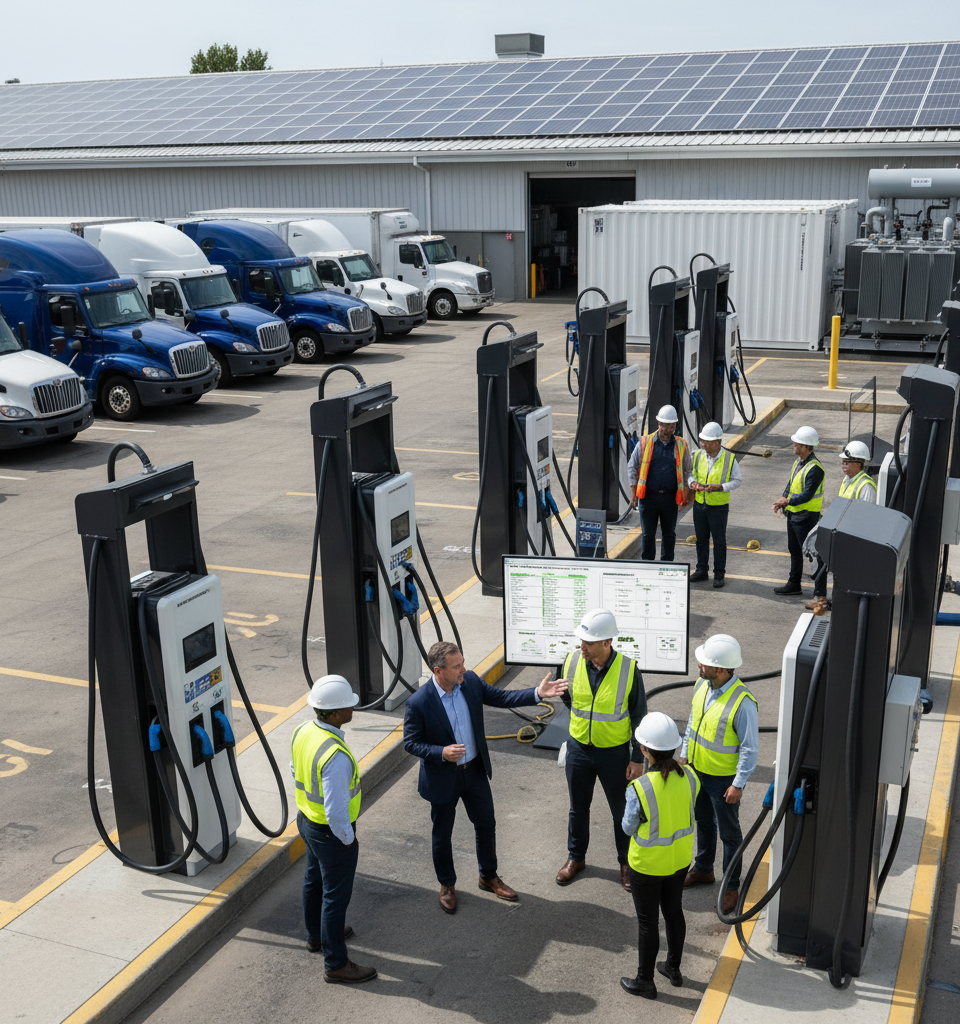
The economic dynamics surrounding heavy-duty electric vehicle (EV) infrastructure are experiencing a profound shift, largely influenced by evolving regulatory frameworks and the increasing imperative for reliable on-site power solutions. This new environment is compelling both fleet operators and infrastructure providers to strategically adapt their operational models and investment priorities to support the wider adoption of electric trucks.
The Evolving Infrastructure Landscape
Historically, the deployment of charging infrastructure for heavy-duty EVs has presented unique challenges, primarily due to the substantial power requirements of these larger vehicles compared to passenger cars. The recent regulatory changes have not only set more ambitious targets for electrification within the commercial transport sector but have also introduced new incentives and mandates that are reshaping how fleets plan for and implement their EV transitions. This includes considerations ranging from vehicle performance benchmarks to the complexities of grid integration at existing and new depot locations.
Adapting to New Economics
The fundamental economics of heavy-duty EV charging are being redefined. What was once primarily a question of capital expenditure for chargers is now a multifaceted equation involving energy management, utility tariffs, and the potential for distributed energy resources. Companies like Zeem, an infrastructure provider, are at the forefront of this adaptation. Paul Gioupis, CEO of Zeem, has highlighted the critical interplay between vehicle performance, robust infrastructure, and seamless grid integration as key pillars of this new economic paradigm. His insights underscore the necessity for a holistic approach that considers not just the charging hardware but also the energy sourcing and management strategies.
On-Site Power and Grid Integration
A pivotal trend emerging from these shifts is the increased emphasis on on-site power generation and advanced grid integration. For heavy-duty fleets, relying solely on the existing utility grid for substantial charging loads can be problematic due to capacity constraints and demand charges. Consequently, solutions such as solar arrays, battery energy storage systems (BESS), and even microgrids are becoming more attractive. These on-site power assets can provide critical resilience, reduce operational costs by mitigating peak demand charges, and offer a more sustainable energy supply. Furthermore, intelligent grid integration technologies allow for optimal charging schedules, vehicle-to-grid (V2G) capabilities, and enhanced energy management, crucial for balancing grid stability with fleet demands.
Market Impact and Future Outlook
The ripple effects of these developments are widespread across the transportation and energy sectors. Charging providers are rapidly innovating, offering more comprehensive "as-a-service" models that bundle infrastructure, energy management, and even financing. Fleet operators, in turn, are evaluating their long-term strategies, prioritizing partners who can offer integrated solutions that de-risk their EV investments. The regulatory push is creating a more predictable investment climate, encouraging further capital deployment into advanced charging technologies and supporting infrastructure. This synergy between regulatory guidance, technological innovation, and evolving business models is accelerating the transition towards an electrified heavy-duty transport system.
Zeem's Perspective
Gioupis's commentary suggests that the industry is moving past initial pilot projects and grappling with the realities of scaling EV operations. The focus is shifting from simply procuring electric trucks to building an entire ecosystem that can reliably power them at scale. Understanding the nuances of vehicle duty cycles, battery chemistries, and regional grid capabilities is becoming paramount. Gioupis's emphasis on infrastructure and grid integration points to the understanding that actual vehicle performance is inextricably linked to the charging ecosystem that supports it.
Navigating Future Developments
Looking ahead, the industry is poised for continued innovation in power electronics, battery technology, and smart grid solutions. Further regulatory refinements are expected, potentially offering additional incentives for distributed generation or updated utility rate structures that favor EV charging. The ongoing dialogues between utilities, fleet operators, charging providers, and policymakers will be crucial in overcoming remaining hurdles, such as permitting processes, grid upgrade timelines, and standardized charging protocols. The collective efforts to refine these economic and operational models will ultimately dictate the pace and success of heavy-duty EV adoption in the coming years.