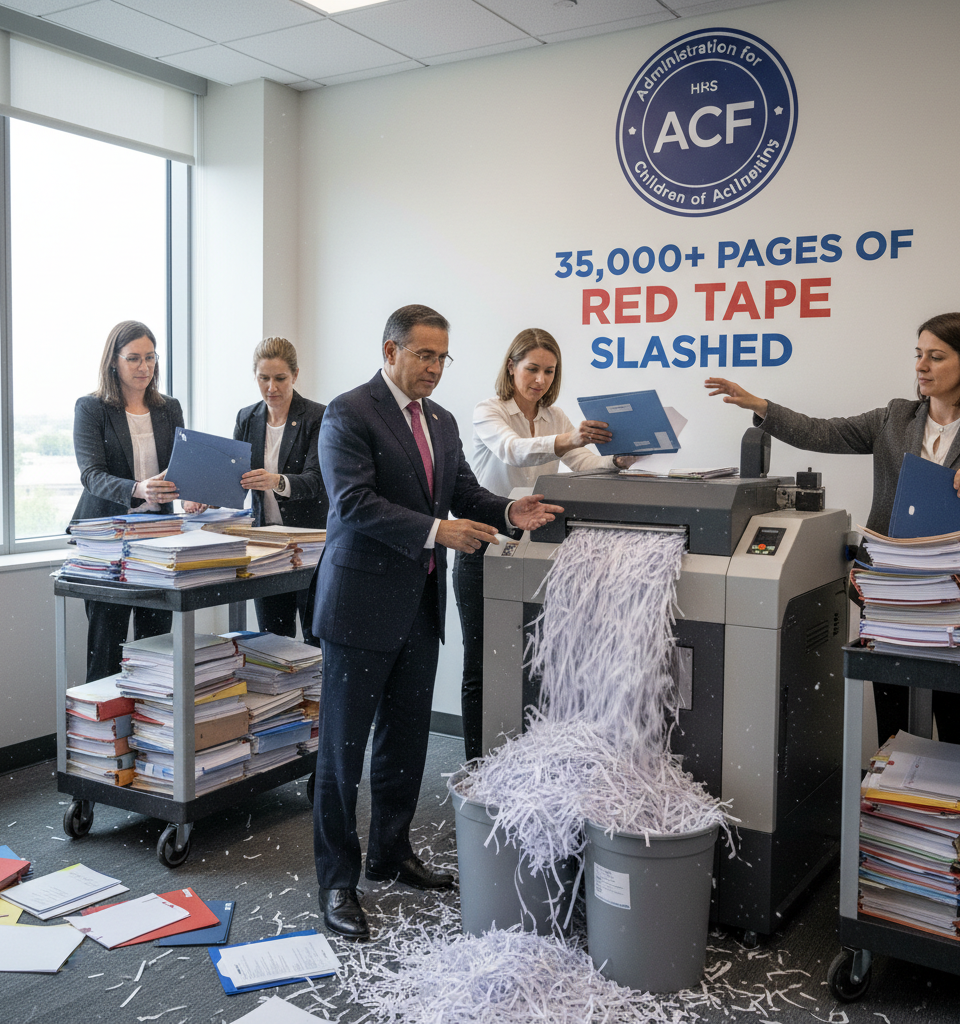
HHS's ACF Slashes 35,000+ Pages of Red Tape in Landmark Regulatory Overhaul
James Broughel, Contributor•April 19, 2026•4 min read
Key Takeaways
Read this first — then go as deep as you need.
HHS's ACF Unveils Massive Regulatory Overhaul, Eliminating Thousands of Pages of Guidance WASHINGTON D.C. – November 15, 2023 – The U.S. Department of Health and Human Services (HHS) Administration for Children and Families (ACF) has announced a monumental effort to reduce bureaucratic burdens, successfully rescinding 35,781 pages of sub-regulatory guidance. This widespread initiative, described as one of the clearest federal examples of 'zero-based regulation,' aims to simplify compliance, improve responsiveness, and ultimately enhance the delivery of critical social services across the nation. The sweeping cleanup reflects a strategic pivot towards greater efficiency and clarity in federal oversight of programs designed to support children, families, individuals, and communities. This robust regulatory recalibration is born out of a broader federal push to identify and eliminate outdated or redundant guidelines that have historically complicated grant administration and service delivery for states, tribes, and local organizations. For years, sub-regulatory guidance—often in the form of memos, FAQs, or directives—accumulated without systematic review, creating a dense thicket of rules that sometimes contradicted, duplicated, or superseded formal regulations. The sheer volume of rescinded pages speaks to the scale of this accumulated complexity, impacting a wide array of programs from Head Start to foster care and child support enforcement, directly affecting millions of American families. Key to this reform is the concept of 'zero-based regulation,' where rather than incrementally adjusting existing rules, agencies review their entire regulatory landscape as if starting from scratch, justifying each piece of guidance. The ACF's effort, which also includes a burst of cleanup rulemakings, involved a systematic scrubbing initiated by leadership to ensure that only essential and clearly articulated guidance remains. While specific financial savings are still being quantified, the anticipated benefits include reduced administrative costs for grant recipients, faster program implementation, and greater flexibility for local entities to adapt services to community needs without fear of non-compliance due to opaque directives. This decisive action by the ACF has significant implications for the broader landscape of social services and federal grant management. For state and local agencies, as well as non-profit organizations that receive ACF funding, the reduction in complex guidance promises a less burdensome reporting and compliance environment. This could free up resources that were previously dedicated to navigating intricate federal requirements, allowing them to be reallocated directly to program services. In an era where demand for social safety net programs remains high, streamlining administrative processes could lead to more efficient allocation of taxpayer dollars and improved outcomes for beneficiaries. Analysts are largely applauding the ACF's proactive stance. Dr. Eleanor Vance, a senior policy expert at the Center for Public Administration, remarked, “This move by the ACF is a textbook example of good governance. By systematically dismantling unnecessary bureaucratic layers, they’re not just cutting red tape; they’re fostering an environment where local partners can be more agile and innovative in their service delivery. It sets a powerful precedent for other federal agencies wrestling with similar issues of regulatory bloat.” Concerns, however, linger regarding the potential for overcorrection, with some experts advising continued vigilance to ensure essential safeguards and programmatic integrity are maintained even amidst simplification efforts. Looking ahead, the ACF's work is not entirely concluded. The agency is expected to continue its review processes, ensuring that new guidance is clear, concise, and necessary, and that existing regulations align with current policy goals. Further cleanup rulemakings are anticipated, with regular feedback mechanisms established to engage stakeholders in ongoing efforts to refine federal oversight. The success of this initiative could serve as a blueprint, inspiring other federal departments to undertake similar “zero-based” approaches to regulation, potentially ushering in a new era of streamlined and responsive governance across the federal landscape.
Discussion
Join the discussion
Sign in to leave a comment on this article.
Loading comments...
Enjoying this article?
Get more like it delivered to your inbox — free.
This article was compiled by GlobalSell News from publicly available reporting and has been edited for clarity and length. For full details, read the original source.