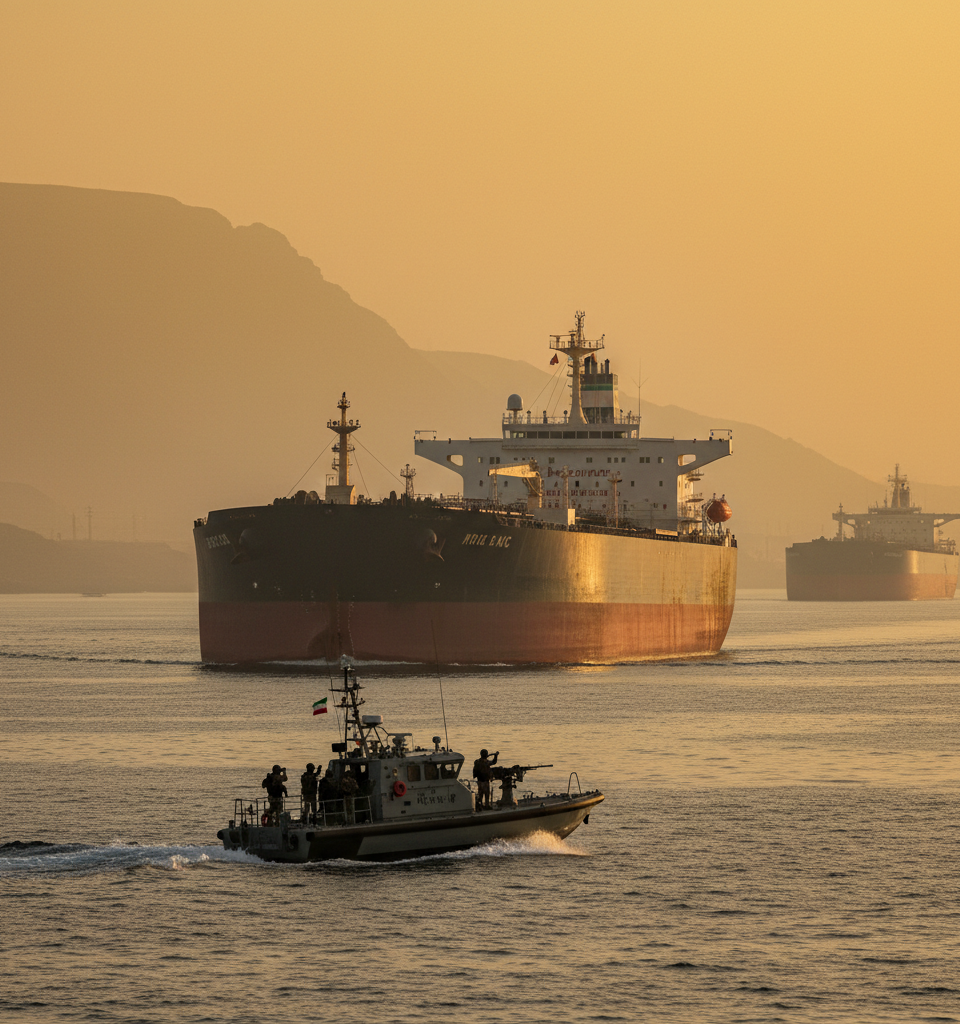
London, UK – A protracted maritime conflict in the Persian Gulf, primarily involving Iran, is orchestrating an extensive and largely underappreciated disruption to global oil flows, according to a recent analysis by marine intelligence firms and energy economists. Despite what appears to be a relatively stable crude oil pricing environment, the ongoing hostilities are preventing vast quantities of oil from reaching international markets, creating a deeper supply shock than current headline prices accurately reflect. This hidden crisis stems from a complex interplay of increased shipping risks, higher insurance premiums, and rerouting efforts, collectively impacting the efficiency and cost-effectiveness of oil transportation from the world's most critical energy artery.
The Unseen Impact: Why This Crisis Matters
The Persian Gulf remains the lifeblood of global oil trade, accounting for approximately 20% of the world's total petroleum liquids production and a significant portion of its LNG. The Strait of Hormuz, a narrow chokepoint at the mouth of the Gulf, sees roughly 21 million barrels of oil per day (bpd) pass through it. Historical precedents, such as the 1980-1988 Iran-Iraq War, known as the "Tanker War," demonstrated the devastating potential of regional conflicts on global oil supplies and prices. During that period, attacks on shipping led to sharp price spikes and a global scramble for alternative supplies. While the current situation has not yet escalated to that level of overt conflict, the persistent threat posed by Iranian actions, including seizures of commercial vessels and suspected attacks on tankers, is incrementally strangling the smooth flow of crude.
Rising Costs and Diversionary Tactics
The immediate impact of the heightened tensions is evident in the burgeoning costs associated with shipping oil from the region. Marine insurance premiums for voyages through the Persian Gulf have reportedly surged by as much as 400% in recent months for some routes and vessel types, according to Lloyd's Market Association. This translates directly into higher operational expenses for oil companies and ultimately, higher costs for consumers, even if the benchmark crude price remains steady. Furthermore, a growing number of tanker operators are opting for longer, more circuitous routes to avoid the Strait of Hormuz, adding days and even weeks to transit times, burning more fuel, and increasing logistical complexities. This diversion, while improving safety, inherently reduces the available shipping capacity and extends delivery schedules for millions of barrels of oil.
Broader Market Repercussions
The hidden supply disruption is reverberating across the broader global energy landscape. Increased shipping lead times mean that strategic petroleum reserves (SPRs) in consuming nations are being drawn upon more frequently or stand at lower levels than publicly reported data might suggest for current demand. Major international oil companies (IOCs) and national oil companies (NOCs) are reportedly factoring in higher 'risk premiums' into their long-term supply contracts, subtly escalating the baseline cost of oil. Moreover, the unpredictable nature of the conflict injects significant volatility into futures markets, making long-term investment decisions more challenging and potentially stifling new exploration and production outside of the region, as companies prioritize security over immediate returns.
Expert Insights on the Shadow Supply Crisis
Energy analysts are increasingly vocal about the divergence between market perception and reality. "We're witnessing a 'shadow supply crisis' where the full magnitude of the disruption isn't immediately visible in Brent or WTI figures," states Dr. Eleanor Vance, Senior Energy Economist at Global Insights Group. "The cumulative effect of delayed shipments, canceled contracts, and soaring non-crude-price related costs means billions of dollars in economic activity are being stifled. The market is absorbing this through increased inventory draws and a creeping inflation in the logistics chain, rather than a sharp price spike that would typically signal such a deep supply issue." Other experts point to the psychological impact on traders, leading to a 'risk premium' that is embedded but not explicitly quantified in daily price movements.
Future Implications and Geopolitical Tensions
The long-term implications of this sustained, low-level conflict are significant. Should tensions persist or escalate, the global energy security architecture could be fundamentally reshaped. Countries heavily reliant on Persian Gulf oil may accelerate diversification efforts, investing in alternative energy sources or forging new supply chain agreements with less volatile regions. This could lead to a fragmentation of the global oil market and the emergence of more regionalized supply networks, potentially driving up overall costs due to reduced efficiencies of scale. The ongoing diplomatic efforts to de-escalate tensions remain crucial, but without a resolution, the world must brace for a continued, albeit often invisible, squeeze on its most vital energy resource.