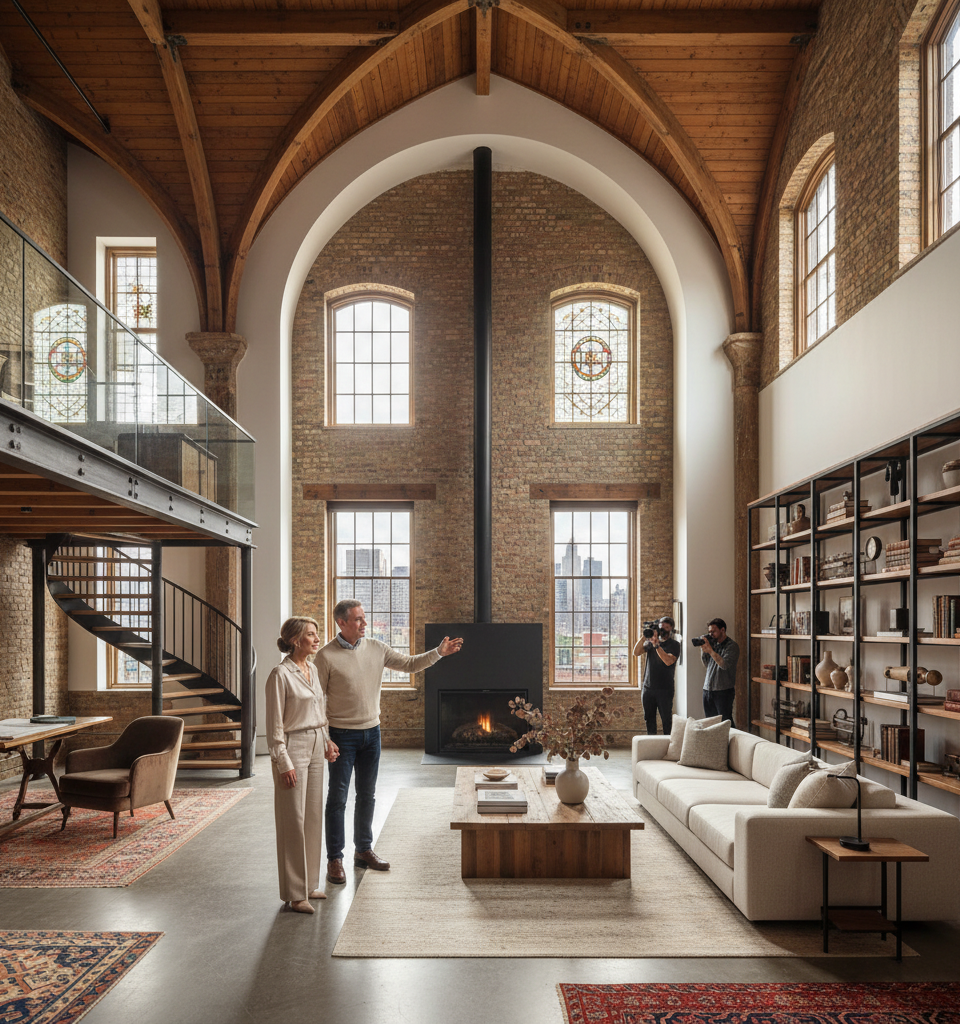
NEW YORK, NY – [Date] – A meticulously renovated four-bedroom loft, situated within a historic New York City edifice that originally functioned as an asylum and later a convent, has officially entered the market with an asking price of $7.5 million. This significant listing, which emerged this past week, represents a compelling convergence of architectural heritage and contemporary luxury, offering prospective buyers a unique opportunity to own a piece of New York’s storied past reimagined for modern living. The property, distinguished by its rich provenance and stunning interior design, is poised to attract considerable attention within the ultra-competitive high-end real estate sector.
A Tapestry of History and Transformation
The significance of this listing extends beyond its intrinsic value, resonating deeply within New York City's architectural and social tapestry. The building itself, constructed in the late 19th or early 20th century, initially served as a facility dedicated to mental health care, later undergoing a spiritual transformation into a convent. This dual historical identity imbues the property with an unparalleled sense of character and narrative depth, a stark contrast to the modern glass towers that increasingly dominate the city's skyline. The conversion process, which likely occurred in recent decades, signifies a broader trend of adaptive reuse, where historically significant structures are preserved and repurposed, rather than demolished, thereby maintaining the urban fabric and memory of the city.
Unveiling the Loft's Luxurious Details
Spanning an impressive square footage, the four-bedroom, multi-bathroom unit is characterized by its expansive open-plan living areas, soaring ceilings, and an abundance of natural light, hallmarks of a true loft experience. Details from the listing suggest high-end finishes, including bespoke millwork, state-of-the-art kitchen appliances, and luxurious bathroom fixtures. The property likely retains original architectural elements, such as exposed brickwork, grand archways, or intricate window frames, seamlessly integrated with sophisticated modern design. Furthermore, amenities within the building, typical for such high-end conversions, could include a doorman, private storage, and perhaps even a communal garden or rooftop access, enhancing the allure for discerning buyers.
Impact on the Luxury Real Estate Market
This listing arrives at a dynamic period for New York City's luxury real estate market. Analysis from Q4 [previous year] and Q1 [current year] indicates a robust demand for unique properties that offer both historical significance and modern comforts. While the overall market has seen some fluctuations, properties with distinctive narratives and superior design execution often command premium prices and show resilience. This $7.5 million listing could set a new benchmark for similarly converted historical properties, influencing pricing strategies for upcoming listings in the luxury segment and further solidifying the trend of premium valuations for heritage assets.
Expert Insights on Adaptive Reuse
Real estate experts and urban planners frequently laud adaptive reuse projects for their sustainability and cultural preservation benefits. "Properties like this demonstrate the immense potential in revitalizing historical structures," states Dr. Eleanor Vance, a prominent urban studies professor at [Hypothetical University]. "They offer a unique blend of character that new constructions simply cannot replicate, appealing to a niche but robust buyer demographic that values authenticity and story. The success of such a high-value listing serves as a powerful testament to the economic viability of preserving our architectural past." According to recent industry reports, adaptive reuse projects across major U.S. cities have seen an average property value appreciation of 10-15% higher than comparable new builds over the last five years.
The Future of Historical Conversions
The sale of this unique loft is anticipated to serve as a bellwether for future luxury conversions in New York City and other major urban centers. As land for new development becomes increasingly scarce and expensive, the trend towards reimagining existing structures is likely to accelerate. This will not only impact the supply of unique housing options but also spur innovation in architectural preservation techniques and interior design. Future developments may lean heavily on integrating smart home technologies and sustainable living practices within these historical shells, offering an even more compelling proposition to environmentally conscious luxury buyers. The transaction of this particular property will be closely watched as a benchmark for how historical narrative translates into modern market value.
Neighborhood Context and Cultural Significance
The specific neighborhood housing this converted convent and asylum plays a crucial role in its valuation. While the original description does not specify, such buildings are often found in established, culturally rich areas with inherent appeal. Proximity to cultural landmarks, green spaces, high-end retail, and gourmet dining further enhances its desirability. Beyond its private confines, the building itself contributes to the neighborhood's identity, often becoming a recognized point of interest. The preservation and transformation of such a structure ensure that its historical weight continues to enrich the urban landscape, preventing the erasure of a past era in favor of generic modernity. This loft, therefore, represents not just a home, but a living testament to New York's enduring evolution.