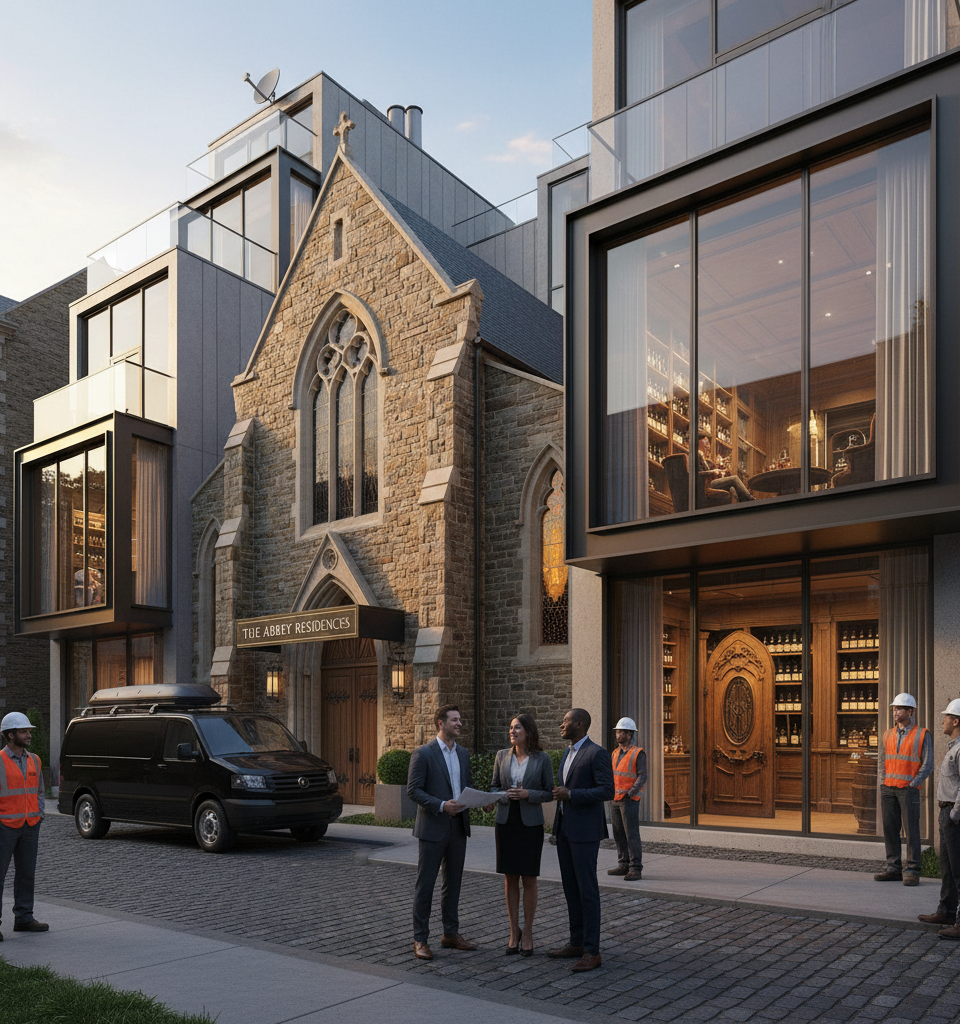
A historic church in Washington State, originally completed in 1908, has been meticulously reimagined as a collection of sophisticated townhomes, offering a unique blend of historical reverence and contemporary living. Among these bespoke residences, one unit stands out, not only for its commitment to preserving the building's original stained-glass windows but also for an intriguing hidden feature: a 'secret' whiskey room. This transformation reflects a growing trend in urban redevelopment, where developers are breathing new life into venerable structures, adapting them for modern residential use while honoring their architectural heritage.
Historical Context and Adaptive Reuse
The building, which served its congregation for decades, embodies a common challenge faced by communities across the nation: how to preserve aging religious structures when their original purpose can no longer be sustained. In many instances, declining church attendance, escalating maintenance costs, and shifts in urban demographics compel congregations to sell their properties. Adaptive reuse, like this Washington project, offers a sustainable solution, preventing demolition and allowing these architectural landmarks to continue contributing to the urban fabric. This particular church, after its congregation moved to a new location, presented an opportunity for developers to repurpose its robust structure and distinctive aesthetic into high-end residential units.
Architectural Details and Modern Amenities
Each townhome within the converted church offers a distinct living experience, but the unit featuring the 'secret' whiskey room exemplifies the project's innovative design philosophy. The original stained-glass windows, once casting kaleidoscopic light upon parishioners, now illuminate contemporary living spaces, providing a dramatic focal point and connecting residents to the building's past. The 'secret' whiskey room, accessible through a subtly disguised entrance, adds an element of intrigue and luxury, catering to modern homeowner desires for unique, personalized amenities. These homes typically feature multiple levels, open-concept designs, high ceilings characteristic of ecclesiastical architecture, and premium finishes throughout, appealing to affluent buyers seeking character and exclusivity.
Impact on the Luxury Real Estate Market
This trend of converting historic properties, especially churches, into luxury residences is significantly impacting the high-end real estate market. These projects command premium prices, often ranging from $1.5 million to upwards of $3 million, depending on location, size, and bespoke features. The scarcity of such unique offerings, combined with their inherent architectural charm and historical significance, makes them highly desirable. This niche market appeals to discerning buyers who prioritize individuality, stories behind their homes, and proximity to urban centers, often seeking alternatives to traditional new builds that lack distinctive character. The successful execution of projects like this encourages further investment in adaptive reuse.
Expert Perspectives on Heritage Preservation
Real estate analysts and urban planners view these conversions as a dual victory: providing much-needed housing in desirable areas while simultaneously preserving architectural heritage. Dr. Eleanor Vance, an urban conservation specialist, notes, "Adaptive reuse is increasingly vital for sustainable urban development. It not only saves historic buildings from decay or demolition but also imbues new housing stock with invaluable character and a sense of place that new construction simply cannot replicate." She adds, "The premium prices these units fetch reflect the market's appreciation for unique historical artifacts that have been thoughtfully updated for modern living." The integration of contemporary amenities, like a 'secret' whiskey room, demonstrates how preservation can coexist with luxury and innovation.
Future Implications for Urban Development
The success of this Washington church conversion serves as a model for other communities grappling with underutilized historic buildings. As urban cores continue to densify and demand for unique living spaces rises, more developers are likely to explore similar adaptive reuse projects. This could lead to a revitalization of historic districts, transforming former schools, factories, and other institutional buildings into vibrant residential or mixed-use developments. Future projects may even push the boundaries further, integrating smart home technology and sustainable building practices within these venerable structures, ensuring they are not only preserved but also equipped for the demands of the 21st century. The trend signals a broader cultural shift towards valuing historical continuity within modern urban landscapes.