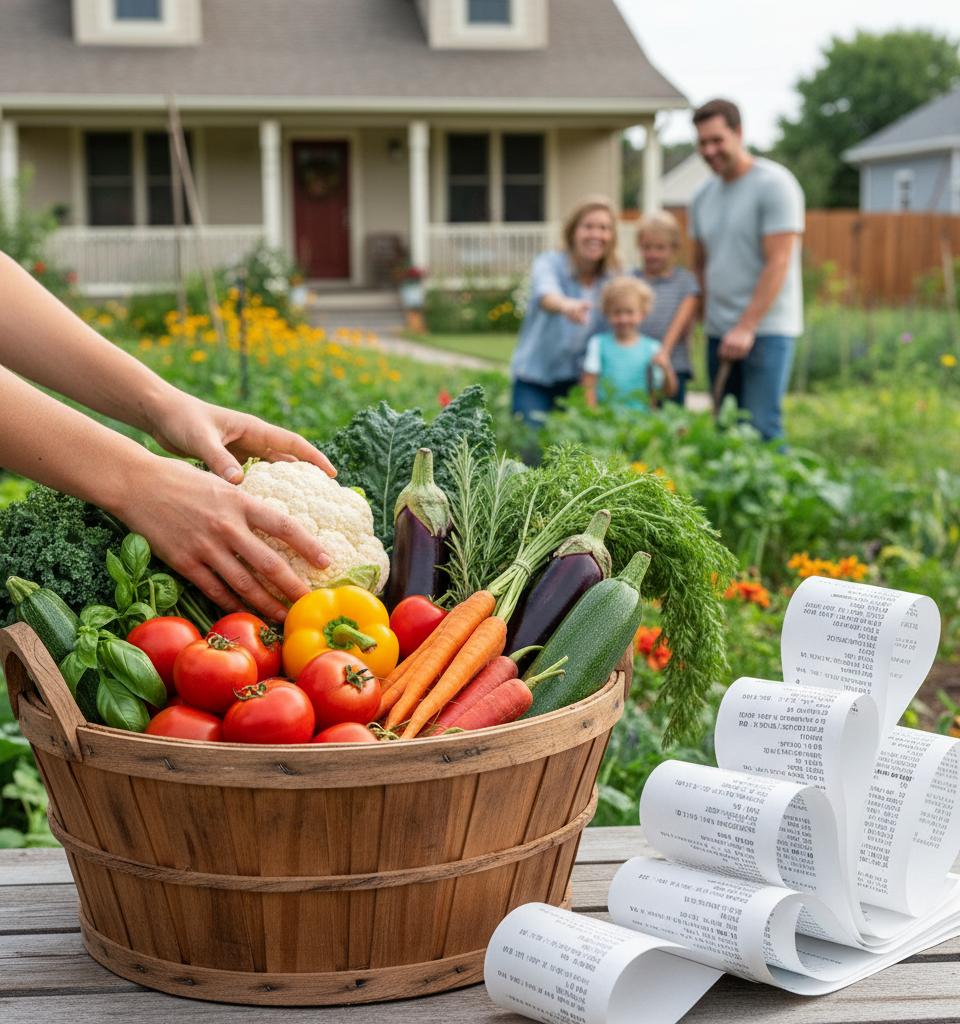
The Rising Cost of the Grocery Cart
The impetus for this renewed interest in home gardening is undeniable. Data from the U.S. Bureau of Labor Statistics indicates that food at home prices surged by 11.4% in 2022, following a 3.5% increase in 2021. While the rate of increase has moderated slightly in early 2023, with year-over-year food at home prices still up approximately 7.1% as of June, cumulative increases have left many consumers feeling the pinch. Staples like eggs saw a staggering 70.1% price increase in one 12-month period ending January 2023, while dairy and fresh produce also experienced significant hikes. This economic reality has forced many to seek alternative strategies to manage their food expenses, with backyard plots and container gardens emerging as a seemingly viable option.
The True Cost of Cultivation However, the notion that home gardening is inherently cheaper than supermarket shopping often overlooks the initial outlay and ongoing maintenance.
A basic setup for a moderately sized vegetable garden (e.g., 100 sq ft) can easily cost hundreds of dollars. This includes expenses for raised beds, quality soil, amendments, seeds or starter plants, gardening tools, watering systems, and fencing. For instance, a cubic yard of organic topsoil can cost anywhere from $30 to $60, while a robust set of gardening tools might run $100-$200. Seed packets, while seemingly inexpensive at $3-$5 each, can quickly accumulate. Furthermore, ongoing costs include water, pest control, and potential replacements for tools or plants. A 2022 study by Cheapism.com estimated that a first-year garden could cost between $300 and $700 to establish, with annual maintenance costs thereafter ranging from $50 to $200. While proponents argue that the cost per pound of homegrown tomatoes or lettuce is significantly lower than store-bought, achieving this efficiency requires consistent effort, knowledge, and avoiding common pitfalls like crop failure.
Beyond Financial Metrics: Quality, Health, and Environment
The impact of home gardening extends far beyond mere financial savings. Many enthusiasts cite the superior taste and nutritional value of freshly picked produce, free from pesticides and long-distance transportation. The physical activity involved in gardening offers health benefits, and the connection to nature can reduce stress. Environmentally, homegrown food reduces carbon footprints associated with commercial farming, packaging, and logistics. This multifaceted value proposition often justifies the investment for many, even if the purely monetary savings are not immediately superior to discount grocery shopping. The security of knowing precisely where and how one's food is grown provides an intangible but significant benefit in an era of complex food supply chains.
Expert Perspectives on ROI Economists and agricultural experts offer nuanced perspectives. Dr. Eleanor Vance, an agricultural economist at Purdue
University, notes, “For a typical household, breaking even in the first year or two on a new garden, purely from a financial standpoint, can be challenging. However, over a 3-5 year horizon, especially with rising food costs, the economic returns become much clearer. The key variables are the gardener's efficiency, the types of crops chosen, and local climate conditions.” She advises focusing on high-cost, high-yield crops like specialty greens, herbs, and certain fruits for maximum financial impact. Conversely, high-maintenance crops or those requiring significant space for minimal yield may not be fiscally optimal.
Market Shifts and Industry Response
The surge in home gardening has not gone unnoticed by related industries. Seed companies, garden supply stores, and even urban farming technology providers have reported significant upticks in sales and interest. Companies like Burpee and Johnny's Selected Seeds have seen sustained demand, while online retailers for hydroponic and indoor gardening systems are expanding their product lines. This reflects a broader societal shift towards self-sufficiency and localized food systems, which could have long-term implications for the traditional agricultural supply chain if this trend persists and scales. Supermarkets might find themselves competing not just with other retailers, but with consumers' own backyards for certain categories of produce.
The Future of Food: Personal Gardens and Resilient Systems
Looking ahead, the role of home gardening is likely to mature from a transient coping mechanism to an integral component of household financial planning and community resilience. As climate change impacts agricultural yields and supply chain vulnerabilities become more apparent, the ability to produce a portion of one's food locally, or even personally, will gain increasing strategic importance. Further innovation in gardening technology, such as automated watering systems, vertical farming kits for urban dwellers, and disease-resistant plant varieties, will make gardening more accessible and productive. While not a silver bullet for inflation, home gardening represents a tangible step towards greater food security, offering a blend of economic prudence, personal satisfaction, and environmental responsibility that resonates deeply in our contemporary landscape, making it a trend likely to endure and evolve.